Boutique hotel marketing: how to win more direct bookings without giving up the booking sites
Boutique hotel marketing: direct bookings versus Booking and Airbnb, the booking engine, Google free booking links, bright photos, email, reviews and tracking.
Part of the guide: Digital marketing for small business: the whole system, in the order to build it
Boutique hotel marketing is mostly about winning direct bookings without giving up the booking sites. Booking, Airbnb and similar platforms bring guests who had never heard of the hotel, and charge a commission for them. The hotel’s own website brings bookings with no commission and a direct relationship with the guest. What moves guests from the first channel to the second: a website with a good booking engine, a Google presence including free booking links, bright and inviting photography, Instagram, email to past guests, seasonal packages, reviews, and fast answers on WhatsApp.
The website itself, the booking engine, room pages and languages, is covered in our guide to hotel websites and direct bookings. This page is about what brings people to that website, and what brings them back.
Direct bookings and booking sites: two channels, two jobs
Booking sites, the OTAs, are a distribution channel. They show the hotel to people searching by city and dates, and take a commission on every booking. The rate is set in each platform’s contract and depends on the country, the contract type and any visibility programmes the hotel has joined. So take the exact figure from your own contracts, not from an article.
The right comparison is not “commission versus zero”. A direct booking has costs too: the booking engine, payment processing, advertising, photography and content. What to work out each month: what an average booking cost through each OTA, and what a direct booking cost once you divide direct marketing spend by the number of direct bookings. That difference, together with owning the guest relationship, is what justifies investing in the direct channel.
| Booking sites (Booking, Airbnb and others) | Direct booking on the hotel’s site | |
|---|---|---|
| What they give you | Reach to guests who did not know the hotel | Guests who already know or searched for the hotel |
| Cost | Commission per booking, per the contract | Booking engine, payments, advertising and content |
| Guest relationship | Goes through the platform | Direct: email, phone, preferences |
| Terms and price | Under the platform’s contract and policies | Controlled by the hotel |
| Where they are strong | Low season, international guests, a new hotel | Returning guests, packages, searches for the hotel’s name |
On price: OTA contracts often included parity clauses that stopped a hotel from offering better prices elsewhere. In the European Union, since 14 November 2024, the Digital Markets Act has required Booking.com to let hotels offer different, including better, prices and conditions on their own websites and other channels (European Commission announcement). Outside that case, what applies depends on your contracts and jurisdiction, so have them checked. Even at the same price, a guest who books direct can get something the OTAs do not show: breakfast, a late check-out, a bottle of wine in the room.
The website and booking engine
Every marketing channel ends on the website, and that is where a booking is either made or lost. What decides it:
- Dates and price from every page. A guest who picks dates on a room page should not have to pick them again.
- A booking engine that looks like the site and keeps the dates on the hand-off.
- A clear final price before the payment step, taxes and extras included.
- Testing on a phone, all the way to payment, since many guests book from a phone.
- Speed, even with many large images.
The full detail, from room pages to languages and currencies, is in our guide to hotel websites.
Google: Business Profile, free booking links and ads
Hotel searches often start on Google, and sometimes end there. Three things:
- The Business Profile. The name as on your sign and website, per Google’s Business Profile guidelines, the right category, amenities (pool, parking, breakfast), and current photos of every room type.
- Free booking links. Google shows links alongside hotel ads where the hotel’s own site can appear with a rate for the guest’s dates, and according to Google Hotel Center Help there is no cost for clicks on them. Hotels join through Hotel Center, and are sometimes already connected through their reservation system provider, so ask yours.
- Ads on the hotel’s name. Someone searching for your hotel by name has already chosen it, and OTAs can appear in ads on that same search. A small search campaign on the name sends that guest to your site rather than a booking site. Local campaign settings are in our guide to Google Ads for a local business.
Photography: bright, sunny and inviting
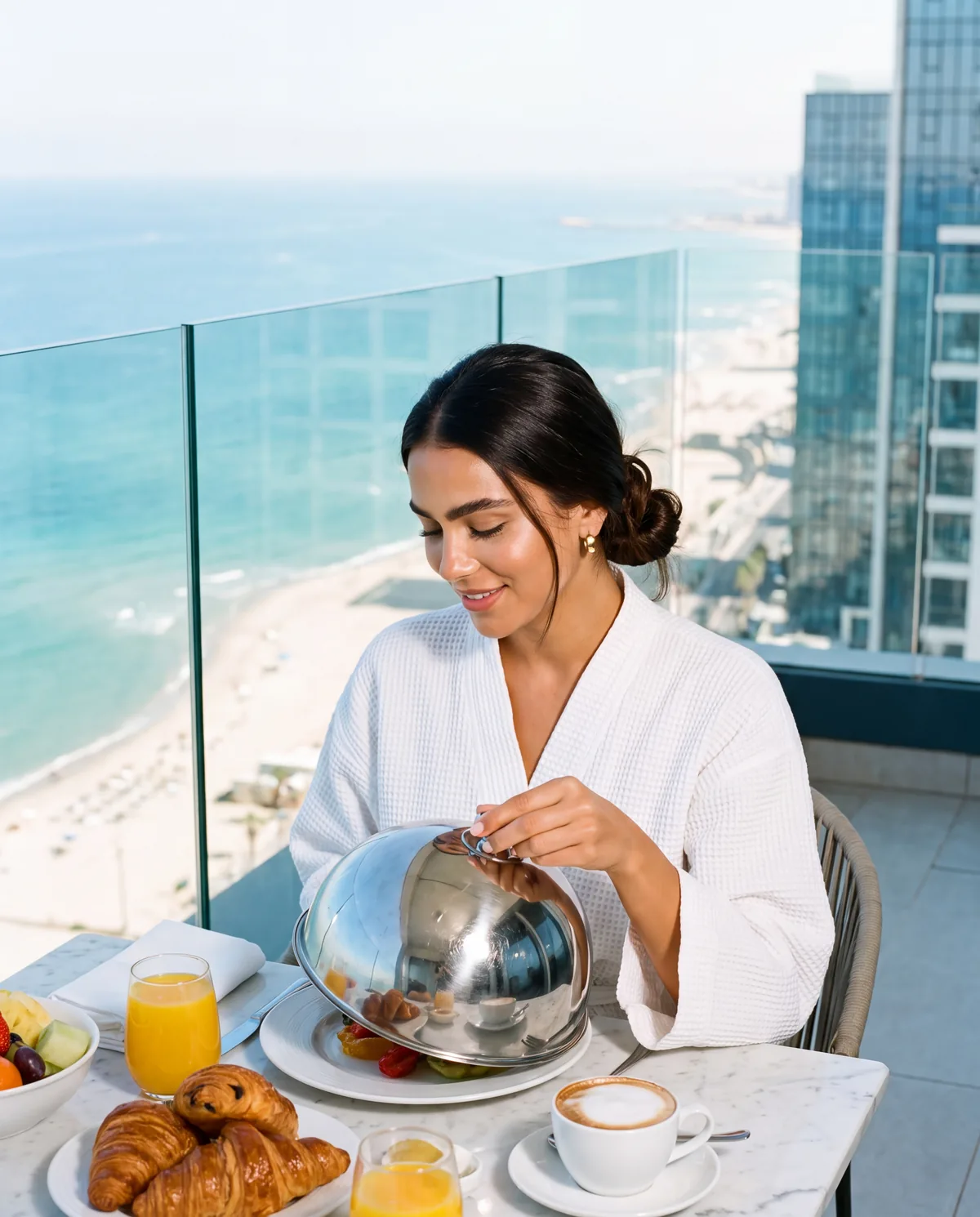
Guests choose a hotel from its photos before reading a word. What sells a boutique hotel is light: sun on the bed, a blue pool on a clear day, breakfast on a terrace. A cool, dark or greyed-out grade, however fashionable it looks, makes a hotel feel empty and unwelcoming. The rules:
- Daylight, at the hours when each room looks its best, with the windows open.
- Every room type, including the bathroom and the view, so guests know what they are booking.
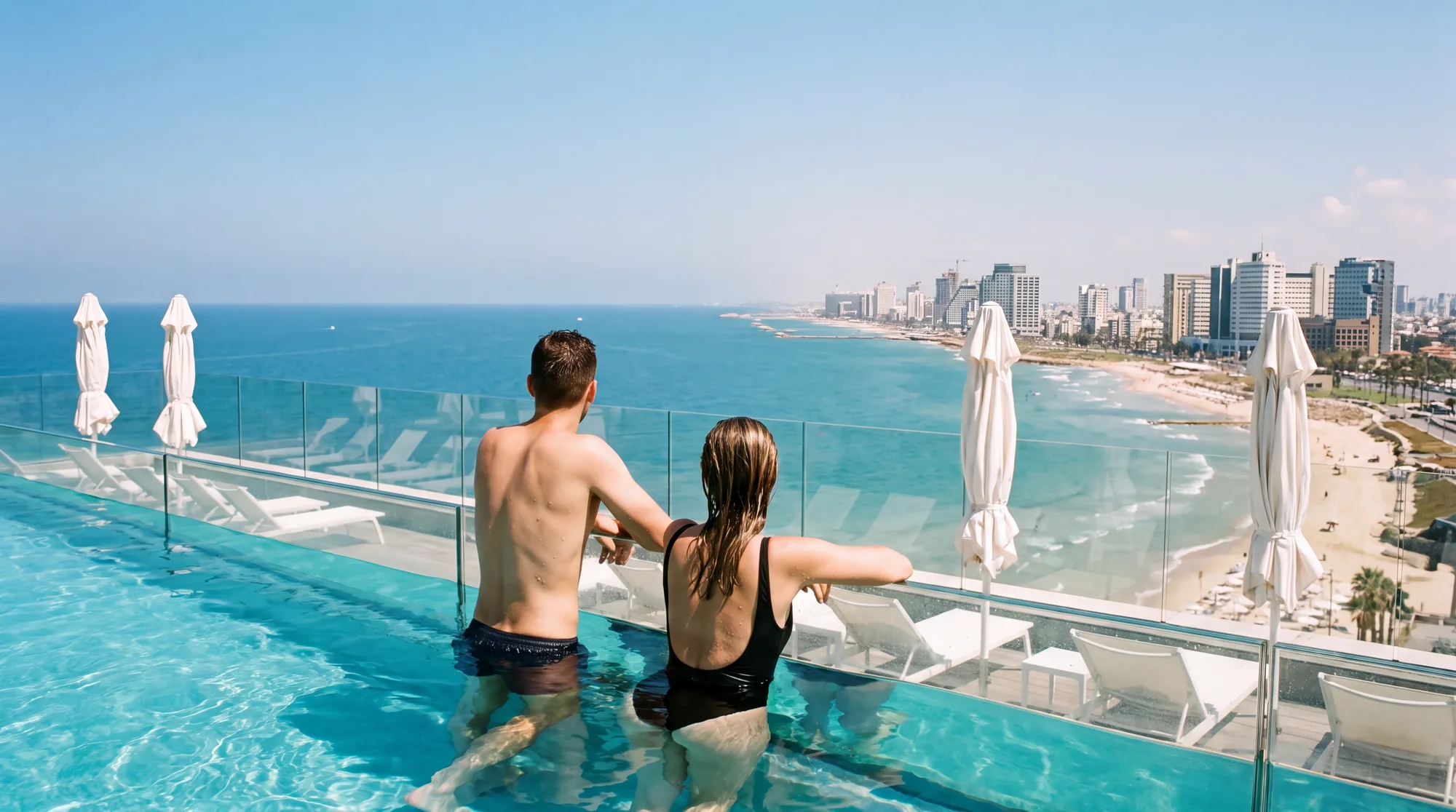
- People enjoying the place: a couple in the pool, breakfast, a walk through the neighbourhood. Like the photo at the top of this page.
- The neighbourhood: the sea, the market, the café on the corner. A boutique hotel sells its location too.
- The same photos everywhere: the website, the Google profile and the booking sites.
AI-generated content can serve a campaign, a mood or a season, but the rooms themselves are photographed as they are. A picture of a room that does not exist is a promise the guest will find broken, and say so in a review. When AI fits and when a shoot does is in our guide to AI content for business.
Instagram and content
For most small hotels Instagram is the main visual channel. It does not replace the website; it is what makes someone save the hotel for their next trip.
- What to shoot: rooms in the light of different hours, mornings, the pool, the team at work, the neighbourhood, the seasons.
- Short reels with real movement: a door opening onto the view, coffee on a balcony, water in the pool.
- A link in bio to the booking page, with UTM tags.
- Fast replies to messages, since an Instagram DM is often a question just before booking.
- Guest content only with permission, and with credit.
How to build a monthly content calendar you can keep up is in our guide to social media content.
Past guests, packages and seasons
A guest who stayed and was happy is the cheapest audience for a return visit, and they sit on the hotel’s list rather than the OTA’s, provided you collected an email. A few rules:
- Consent first. Marketing email is regulated almost everywhere. In Israel, section 30A of the Communications Law requires the recipient’s explicit prior consent for advertising by email or SMS, which can be withdrawn at any time (the amendment as enacted, in Hebrew). Ask for it at booking or check-in, separately from the booking confirmation.
- Email by season, not on a fixed calendar: before summer, before the holidays, before quiet midweeks in winter.
- Packages with a reason: midweek stays, dinner at the hotel restaurant, spa, a birthday. Each package gets its own page with dates and a price.
- Something for returning guests: a small extra the OTAs do not show.
Reviews
Reviews on Google and the booking sites are part of every new guest’s decision. Ask every guest for a review after check-out, with a direct link. Under Google Maps’ content policy you may not offer incentives such as a discount or an upgrade in exchange for a review, and you may not ask only happy guests or discourage negative reviews. Reply to every review: a short thank-you for good ones, and for bad ones a factual answer that says what was done. Future guests read the reply as closely as the review.
WhatsApp and concierge
Before and after booking, guests ask a lot: is there parking, when can they arrive, are dogs welcome, how do they get there from the station. An AI agent on WhatsApp can answer from the hotel’s own information, send a booking link with the dates filled in, and pass any special request to reception. We cover how this works in our article on WhatsApp AI agents. Automated pre-arrival messages, such as confirmations and check-in details, go through the WhatsApp Business API, with its own templates, 24-hour window and pricing; see our article on the WhatsApp Business API.
Measurement
- One key event: a completed booking, with its value. Google describes key events as actions that are important to your business (Google Analytics Help). When the booking engine sits on another domain, set up cross-domain measurement, or every booking looks as if it came from the booking engine itself.
- UTM tags on every link from Instagram, email and WhatsApp.
- One monthly table: bookings and room nights by channel, direct versus OTA, and what each channel cost.
- The direct share of all bookings, compared with the same month last year, because a seasonal hotel cannot compare July with November.
Examples from the studio
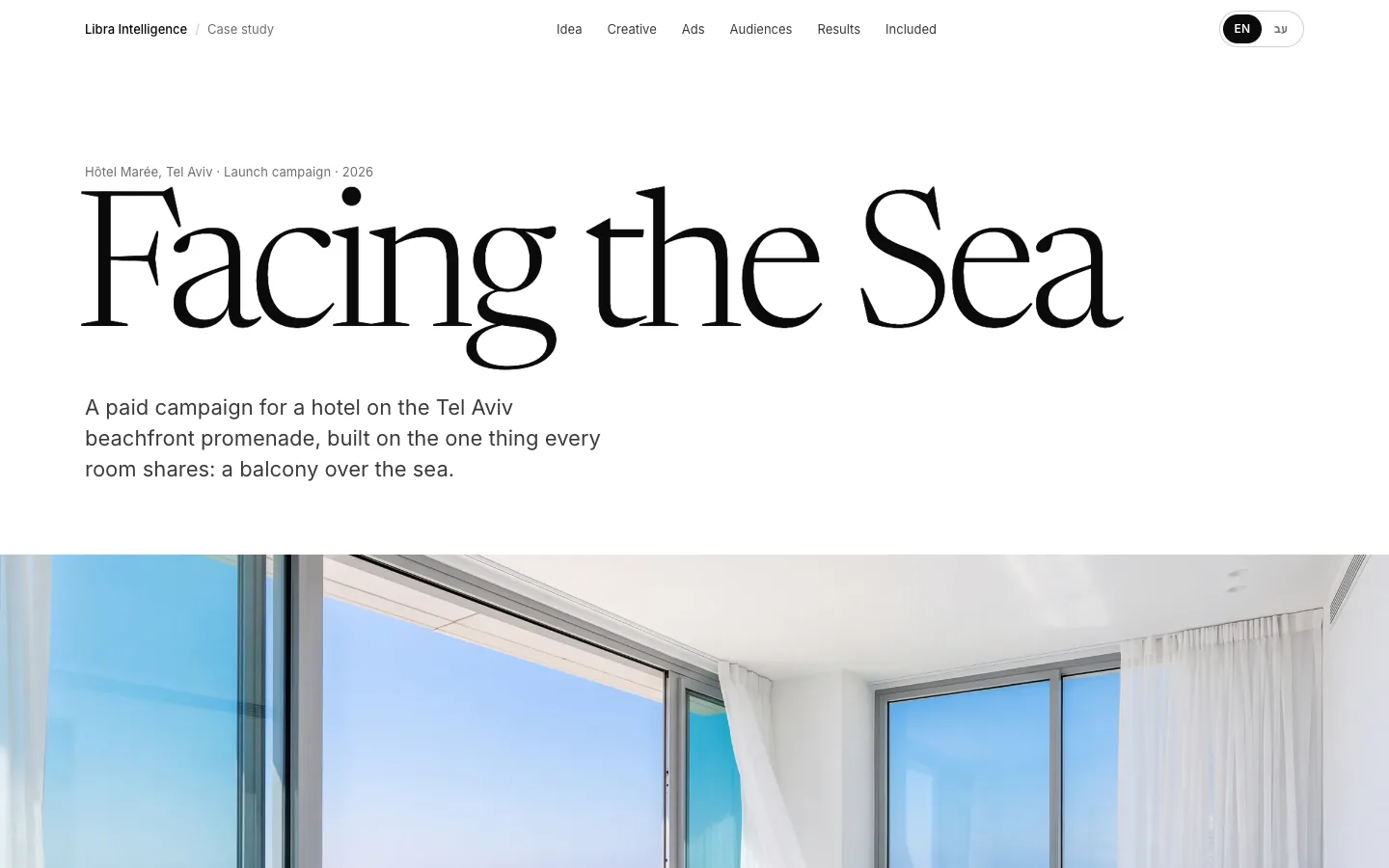
The Hôtel Marée launch campaign, for a boutique hotel in Jaffa, shows the creative, the ads for each platform and the budget week by week, like the photo at the top of this page. The EMBER AI agent answers guests on WhatsApp, Instagram and the website and books in the reservations system, and the EMBER website is a hospitality site with a menu and table booking. These are concepts we built with fictional businesses.
Boutique hotel marketing at Libra
For hotels we build a website with an integrated booking engine, bright photography and content, package and season pages, campaigns on Google and Meta, email to past guests and a WhatsApp AI agent, in Hebrew and English. Our hospitality work is described on hospitality, and our website work on websites, landing pages and stores. Send a brief with the number of rooms, your reservation system and today’s share of direct bookings. We reply by email with a direction, a written price and a date.
No term matches.
Questions
How can a boutique hotel get more direct bookings?
With a website whose booking engine works well on a phone, Google’s free booking links, a search campaign on the hotel’s name, bright and inviting photos, and email to past guests who opted in. A small perk for booking direct, such as a late check-out, also helps.
Should a boutique hotel leave Booking.com?
Usually not. Booking sites bring guests who did not know the hotel, especially in low season and from abroad. The aim is to grow the direct share, mainly from returning guests and people already searching for the hotel by name, without losing the reach.
How much commission do booking sites charge?
The rate is set in each platform’s contract and depends on the country, the contract type and any visibility programmes the hotel joined. Take the exact figure from your contracts and compare it with the full cost of a direct booking, including ads and the booking engine.
What are Google free booking links for hotels?
Links Google shows alongside hotel ads, where a hotel’s own site can appear with a rate for the guest’s dates at no cost per click. Hotels join through Hotel Center, or through their reservation system provider if it is already connected.
What should boutique hotel photos look like?
Bright and sunny, in daylight: every room type, the bathroom, the view, breakfast, people enjoying the place and the neighbourhood. A cool or dark grade makes a hotel look empty. The same photos should appear on the website, on Google and on the booking sites.
Can a hotel offer guests a perk in exchange for a review?
Not on Google. Google Maps’ content policy prohibits offering incentives such as a discount or an upgrade in exchange for a review, and prohibits asking only happy guests. Ask every guest, with nothing in return, and reply to every review.
Getting started
Want this for your business?
Send a short brief: three required questions, the rest only if you like. We reply by email with a direction, a written price and a date.