Social media content for brands: how to build a month of posts, reels and stories
How to plan social media content for brands: content pillars, a monthly calendar, Instagram formats and sizes, AI production, captions, approvals and what to measure.
Part of the guide: AI content creation for brands: what you can make, how it works, and what to check before you publish
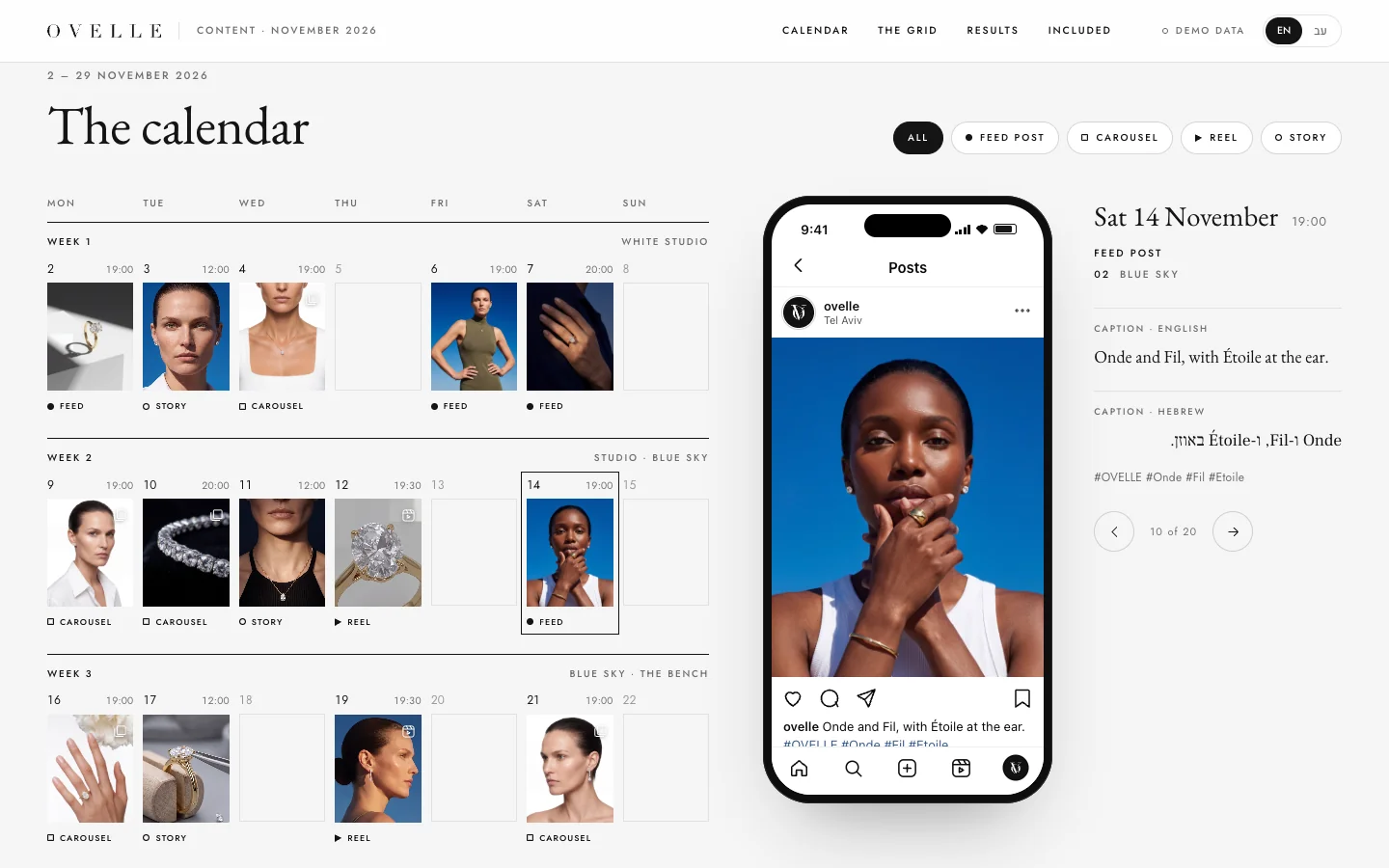
Social media content for brands works when it is built as a month, not a post: three to five fixed content pillars, a monthly calendar that decides in advance what goes out and when, a mix of posts, carousels, reels and stories in the right sizes, and production in batches from one pool of products, character and visual language. At the end of the month you look at saves, shares and profile activity, and change the next month based on what you learned.
This article walks through building such a month, step by step: pillars, calendar, formats and sizes, production with AI, captions, approvals and measurement. The wider context of producing AI content for a brand is in AI content creation for brands, and where social fits within a business’s whole digital marketing is in digital marketing for small business.
Content pillars: what the brand talks about every month
Content pillars are three to five fixed themes the brand returns to. They turn planning from a blank page into a simple question: what do we say this month in each one. For a jewellery brand, for example:
- The product: one piece at a time, in close-up, with one detail worth knowing.
- Worn: how the piece looks on the body, with the brand’s recurring character.
- How it is made: from sketch to workbench, materials, process.
- Moments: a gift, an occasion, a season, and the piece that fits.
- Service: sizing, care, delivery, packaging.
Another business has other pillars, but the logic is the same: each pillar answers a question customers actually ask or a moment they actually live. In OVELLE’s content calendar, a fictional jewellery house we built to show the work, each week is built around one pillar: the ring, the pieces worn, and from the drawing to the box.

A monthly content calendar: what goes out and when
The calendar is closed at the start of the month, not on the day of posting. It says how many posts, reels and stories go out each week, on which day and at what time, under which pillar and with which product. A steady pace you can keep beats a high pace that breaks mid-month. For most brands we work with, three to five feed posts a week plus running stories is a pace that holds.
| Week | Pillar | Feed | Reels | Stories |
|---|---|---|---|---|
| 1 | Launch of a piece or product | Product post, worn post | A 10–15 second product reel | Behind the scenes, a poll |
| 2 | Worn | How-to-wear carousel, character post | Character reel | Questions and answers |
| 3 | How it is made | Process carousel | Studio reel | Material close-ups |
| 4 | A moment or season | Gift post, service post | Packaging reel | Delivery reminder before an occasion |
The table is a skeleton, not a recipe. What matters is that every post knows which pillar it belongs to, and that the whole month reads as one brand.
Instagram formats and sizes
Wrong sizes are the fastest way to cut a product in half. These are the sizes according to Meta, at the time of writing:
- Feed image: according to the Instagram Help Center, an image keeps its original resolution when it is up to 1080 pixels wide with an aspect ratio between 1.91:1 and 3:4; other ratios are cropped. Portrait takes more of the screen.
- Reels: Meta’s ads guide recommends 9:16, and keeping about 14% at the top, 35% at the bottom and 6% on each side free of text and logos so the app interface does not cover them. The same logic holds for organic reels.
- Stories: full vertical screen, with the same safe zones for text.
- Carousels: several images in one ratio that tell a sequence: before and after, steps, angles of a product.
So every scene is planned from the start with room for each crop: vertical for reels and stories, 4:5 or 3:4 for the feed, landscape for the website and banners. That way one image serves several places without cutting the product.

Producing social media content with AI
Social content gains most from AI, because it needs many variations quickly. It is also the content that loses its identity fastest when every post is generated on its own. The order that works for us starts from a pool, not a post:
- A product sheet for every item, from every angle and with dimensions, from which every scene is generated.
- A consistent character who returns all month; how one is built is in AI models for fashion and jewellery brands.
- A defined visual language: light, colour, camera distance and kinds of location.
- Production in batches of a week or two, in the same light and world.
- A full-size check of every file: the product, the hands, the face, the text on the product.
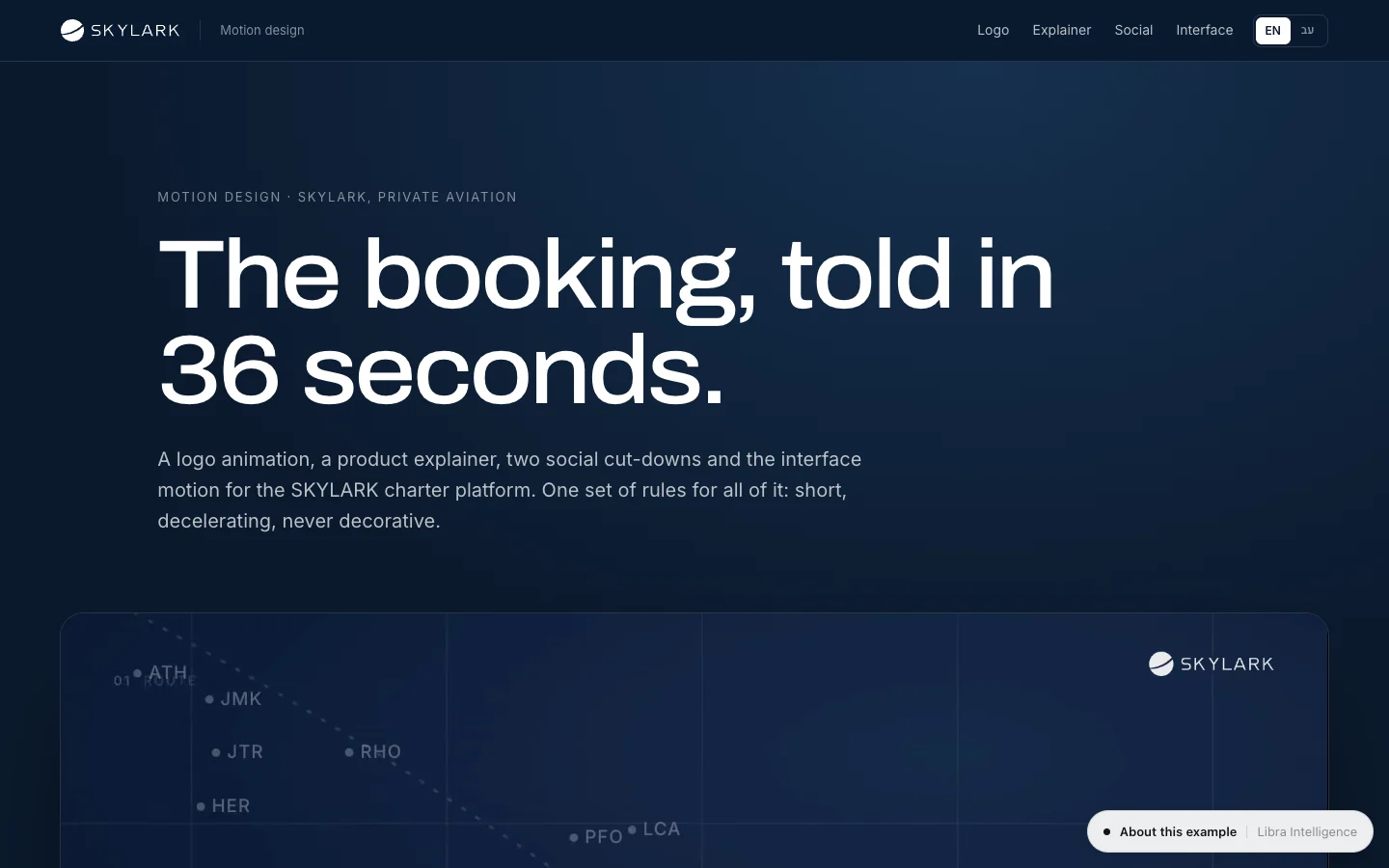
Reels are produced from approved frames, not text, so the product and character stay identical; you can see this in the Hôtel Marée launch campaign, a fictional boutique hotel in Jaffa, and in SKYLARK’s motion design cut for social. On labelling: Meta labels images it detects as AI-generated and requires disclosure of realistic video and audio, so check before you upload.
One pool, several channels
The same pool serves more than Instagram. A vertical reel also runs on TikTok and Facebook, a feed image goes into the newsletter and the product page, and a pre-holiday delivery story can become a WhatsApp message to customers. For that to work, plan the files for all those places from the start, and check that on-screen text is not cropped in any of them. What to avoid: posting the same file with the same caption everywhere. Each channel has its own pace, length and audience, and the caption should fit each one.
Captions that work
A good caption is short, plain and says one thing. A few rules we follow:
- The first line carries the point, because it is what shows before “more”.
- One fact about the product beats three adjectives.
- Product and brand names stay consistent in every post and language.
- If the brand speaks to more than one language audience, write a caption for each rather than translating word for word. Mixed right-to-left and left-to-right text, such as Hebrew with English product names, needs a check on a phone before posting.
- No invented testimonials and no results that were not measured.

Approvals: how not to stall the month
A month almost always stalls in approvals, not production. What helps: approve the whole calendar at the start of the month, approve content in batches rather than post by post, and comment on the file itself, at the exact spot that needs fixing. In the client-workspace concept we built, comments are pinned to a point on the image, and every file is checked against the brand’s rules before it reaches approval.
What to measure at the end of the month
Likes are the easiest metric to see and the least instructive. On Instagram, the insights for each post include views, interactions such as likes, comments, saves and shares, and profile activity after someone interacted with the post. These are the metrics worth looking at:
- Saves: someone wanted to come back to it. A good sign for useful content or a piece people want to remember.
- Shares: someone passed it on. A sign of content that speaks for the audience.
- Profile activity: visits, follows and link taps. The step closest to a sale.
- Reel views: how many watched, and above all where they stopped.
- Enquiries and orders: what reached the website, WhatsApp or the store from social.
There is no right number for every business. Compare the month with the same account’s previous months, and decide what to continue, change or drop. Content that did well organically is also a good candidate for an ad; building creative for ads is covered in Meta ads creative.
Monthly social media checklist
- The month’s pillars are set, each with a product or moment.
- The calendar is closed: days, times, formats and number of posts per week.
- Product and character sheets are current, with a sheet for every new product.
- Every file is produced in the sizes of every place it will run, with safe zones for text.
- Every file is checked at full size against the real product.
- Captions are written for each language and checked on a phone.
- The calendar and content are approved in batches, with comments on the files.
- AI labelling matches what the platform requires.
- At month end: saves, shares, profile activity and enquiries, against the previous month.
- Three decisions for next month are written down.
Monthly content at Libra
At Libra we build brands a whole month of content: the calendar, posts, carousels, reels and stories, from one pool of products, character and visual language, with captions in Hebrew and English. The details are on our AI models, product imagery and content page.
To start, send a brief with your products, the networks you are active on and what has worked so far. We reply by email with a direction for the first month, a written price and a date.
No term matches.
Questions
How often should a brand post on social media?
There is no number that fits every business. A steady pace you can keep matters more than a high one; for most brands we work with, three to five feed posts a week plus stories is a reasonable pace.
What are social media content pillars?
Three to five fixed themes a brand returns to every month, such as the product, how it is used, how it is made and service. They turn monthly planning into a question of what to say under each theme.
What size should Instagram images be?
According to Instagram, an image 1080 pixels wide with an aspect ratio between 1.91:1 and 3:4 keeps its original resolution. Reels and stories use 9:16 with margins kept free of text.
Can brands produce social media content with AI?
Yes, provided every scene is generated from a product sheet and a consistent character, and every file is checked at full size against the real product. That keeps the month reading as one brand rather than a pile of images.
Which social media metrics matter for brands?
Saves, shares, profile activity, reel views and enquiries that came from social. Compare with the same account’s previous months rather than a general benchmark.
Can the same content run on Instagram, TikTok and Facebook?
Yes, if the files were planned for every crop from the start and on-screen text sits in the safe zones. Adapt the caption to each channel, because each has its own pace, length and audience.
How far ahead should you plan social content?
A month ahead. The calendar is closed at the start of the month, and content is produced and approved in batches of a week or two.
Getting started
Want this for your business?
Send a short brief: three required questions, the rest only if you like. We reply by email with a direction, a written price and a date.