AI models for fashion and jewellery brands: building one face that stays the same
How fashion and jewellery brands build a consistent AI model: character sheet, casting, hands, metal and stones, what to check, consent and AI labels.
Part of the guide: AI content creation for brands: what you can make, how it works, and what to check before you publish
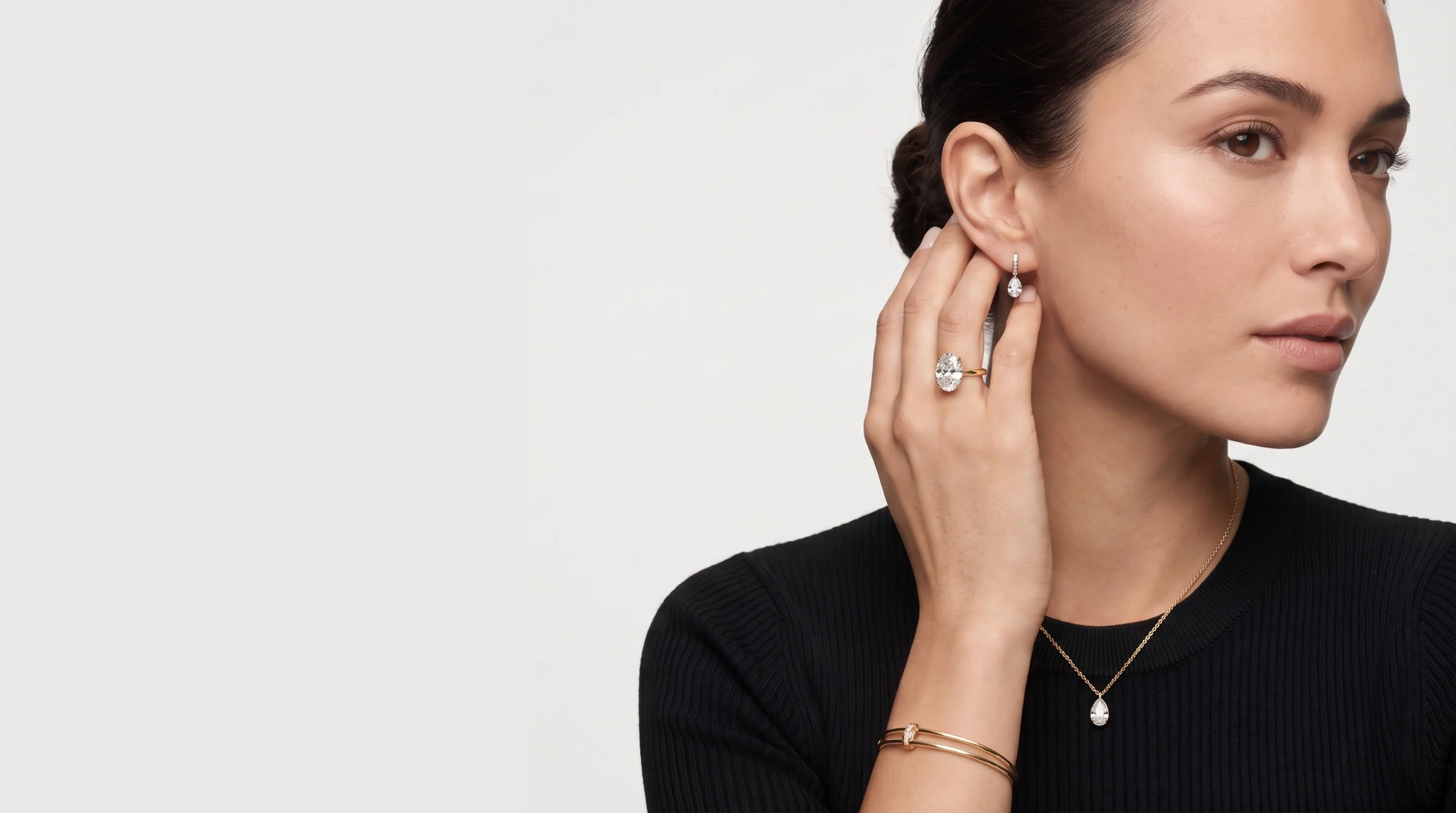
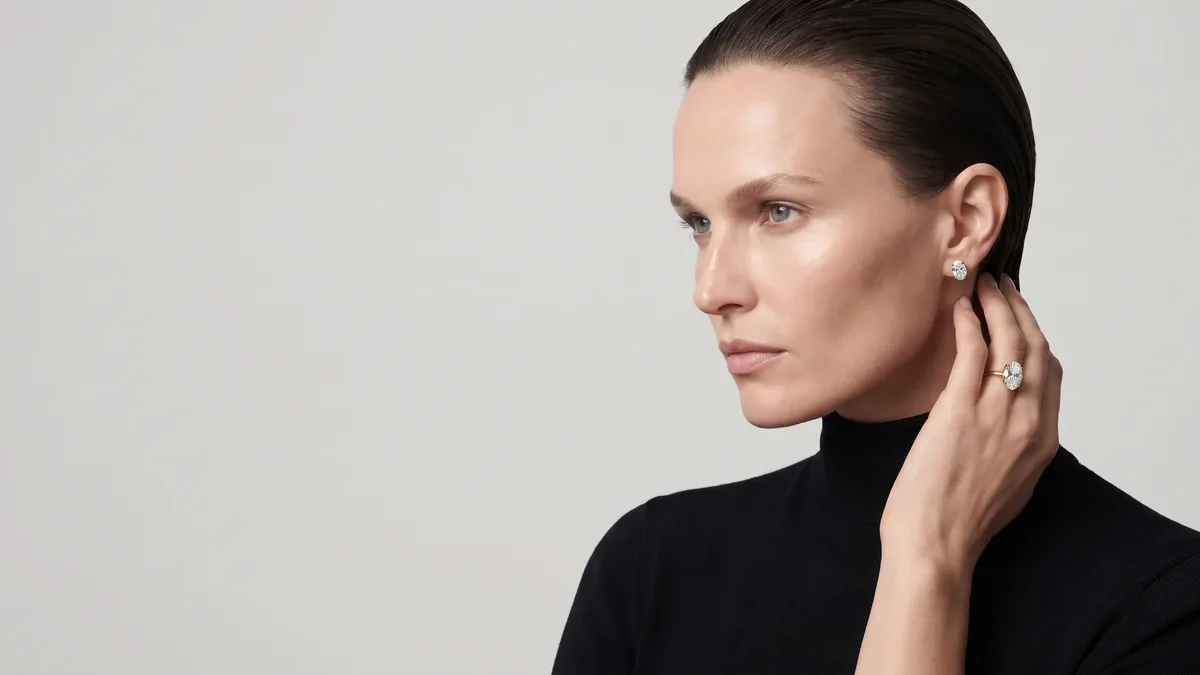
An AI model for a fashion or jewellery brand is a character built once for the brand, with a defined face, body, hair and style, and stored as a fixed reference in the generation system so she returns identical in every image, campaign and film. She wears the real product, generated from a product sheet rather than a written description. It works when the identity is defined in words and pictures, when every file is checked at full size against that reference, and when the character is not built on a real person’s face without consent.
This article goes deep on the character itself: why consistency is the whole point, how an identity is defined and kept, how to cast a character that fits the audience, what is specific to jewellery and to clothing, what to check, and what to know about consent and labelling. The wider picture of AI content for a brand, from brief to delivery, is in our guide to AI content creation for brands.
Why a brand needs one AI model, not a new face in every image
A model given only text, “a woman in her thirties, dark hair, black top”, produces a different woman every time. In a single image nobody notices. Across a month of posts, a category page or a six-frame campaign, it reads as a stock library rather than a brand. Audiences learn to recognise a face the same way they learn a logo or a colour.
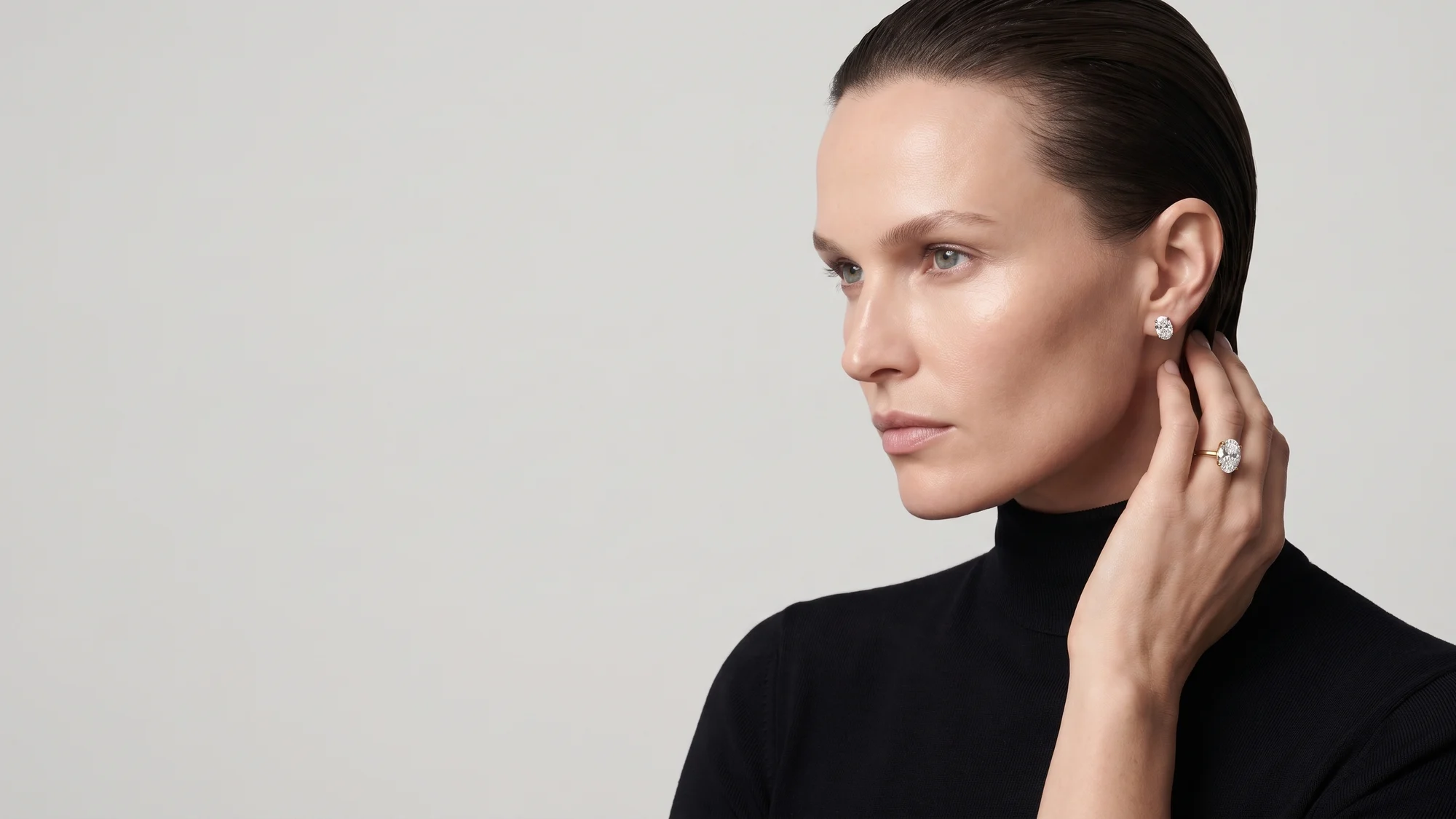
A fixed character has a second advantage: you can add frames to a series next month, next season or for the next collection without reassembling a crew or tracking down the same model. In the OVELLE store concept, a fictional jewellery house we built to show the work, one character wears the whole collection, from the product page to the campaign film.
How to define an AI model’s identity
An identity is not one good prompt. It is a working file every scene is built from, and it should belong to the brand, not the supplier. These are its parts:
A character sheet
Several face images from different angles, front, three-quarter and profile, in neutral light, plus a full-length image. From this sheet a fixed reference is built in the generation system, called an element or a character in some tools, and every scene is generated from it rather than from text.
An explicit written description
Alongside the images, a description of what must never change: the shape of the eyes and brows, the jawline, skin tone and undertone, hair colour and length, distinguishing marks. Models tend to “beautify” faces towards an average, and the description is what pulls them back to the character.
Style rules
What she wears when the product is jewellery, how the hair is done, which make-up, which poses suit the brand and which do not. A quiet luxury brand, for example, has no wide smile to camera and no fast-fashion catalogue poses.
A “never” list
Sunglasses that hide the eyes, tattoos that were not on the sheet, a change of age between campaigns. The list saves rounds, because it stops mistakes before they are generated.
Casting: which character fits the brand
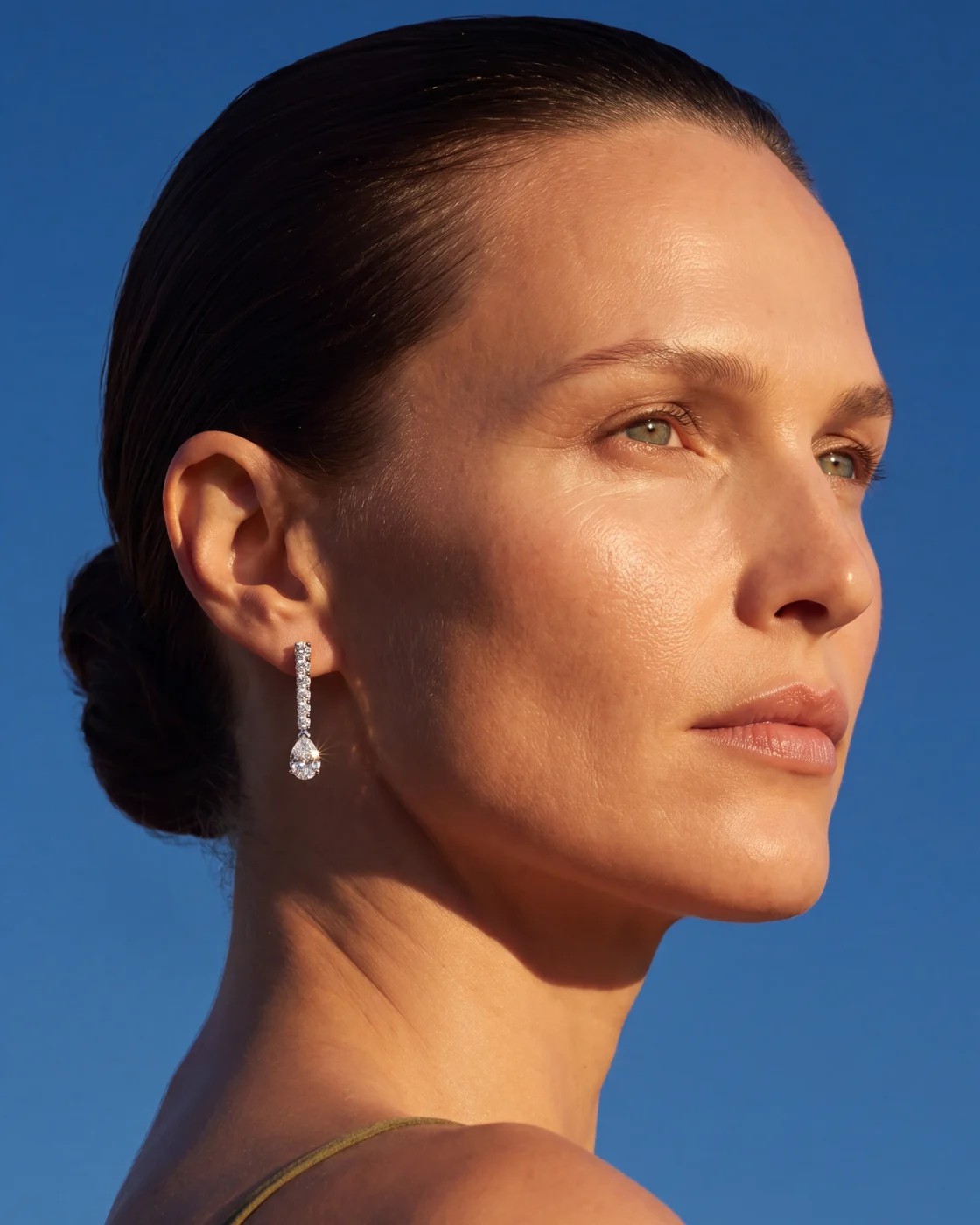
Casting an AI character is the same decision a brand makes when choosing a face for a campaign, except it lasts for years. A few questions help settle it:
- Who the customers actually are, and who they want to be. The character should be close to both, not only to the ideal.
- Whether you need more than one character: for a bridal line, a men’s line, or so customers see the product on different skin tones.
- The character’s age, and whether she should age with the brand or stay fixed.
- How she looks in black and white and in colour, in close-up and at a distance, because jewellery is shot very close.
In our experience, a character who starts from real campaign photographs as references for style, light and pose looks more natural than one built from a description alone. The reference sets the light and the angle; the identity comes only from the character sheet. When a reference photo of another person enters the system without that separation, their face leaks into the character, which is a legal problem as well as an aesthetic one.
What is specific to jewellery
Jewellery is a small product that people inspect up close. Everything a garment gets away with shows on a ring. These are the places an AI jewellery model fails, and what to do about each:
| What to check | What goes wrong | How to hold it |
|---|---|---|
| Scale on the body | A ring twice its size, an earring covering the lobe | Real dimensions in the product sheet, checked against a hand or ear of known size |
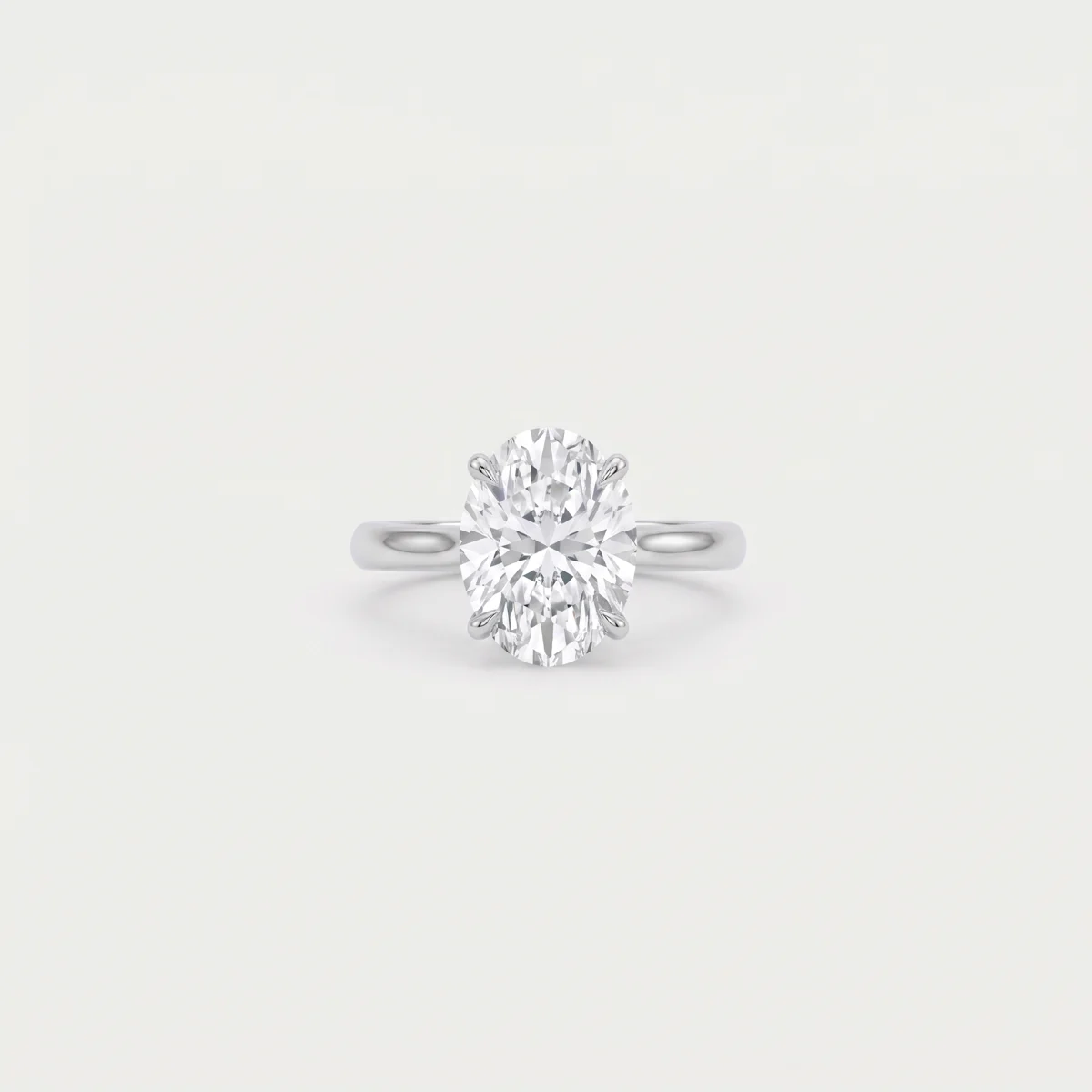
| Stones and setting | A different stone count, another cut, missing prongs | A product sheet from every angle with close-ups, and a count on every file |
| Metal | Gold that changes tone between images, platinum that reads as silver | Fixed lighting for the series and manual colour balancing in finishing |
| Hands | Extra fingers, unnatural joints, a grip that holds nothing | Simple hand poses, and manual correction on every selected file |
| Chains and pendants | A chain that sinks into the skin or detaches from the pendant | A continuity check along the whole chain |
| Logo and engraving | Letters that are similar but not the same | Place the original logo in finishing; never let the model draw it |
The principle behind the table is simple: the character, the light and the background can be generated; the piece has to be the piece. How a product sheet is built, and why a text description redraws a different product, is covered in AI product photography.
What is specific to fashion
With clothing the difficulty is not scale but how the fabric behaves: how it falls, where it creases, how a print continues across a seam. An AI model wearing a garment needs the garment itself as a reference, ideally shot on a mannequin or flat from several sides, with close-ups of the fabric and fastenings. An exact fabric shade is still one of the hardest things to hold, so when the shade is the product, such as a piece in a seasonal colour, a real shoot is worth considering. We weigh that decision in AI product photography vs a photoshoot.
How to keep the character consistent over time
Even with a fixed reference, models lose the character now and then, mostly in close-ups, in profile and in scenes with several people. That is not a one-off glitch but part of the work, so it needs a routine:
- Every scene from the reference. Never duplicate a previous image and never start from a photo of someone else.
- Check against the sheet. Open each file next to the character’s front image and compare the eyes, nose and jawline.
- Reject, do not repair. A file where the face has drifted is rejected and regenerated. Retouching a face into place creates a third person.
- Light on the face. Models tend to render faces too dark; write the light into the instruction and lift it in finishing.
- Test when the tool updates. A new model version can change the character. Generate a test scene before going on.
The same routine works in video. In the commercials we produced for three fictional businesses, the same faces and the same product return in every shot, because each shot starts from an approved still rather than from text.
Consent, likeness and disclosure
The first rule: never build a character from a real person’s face without written consent, and never from a photo of a celebrity. Many jurisdictions protect a person’s likeness. In Israel, where we work, the Privacy Protection Law lists the use of a person’s name, image or voice for profit (section 2(6), in Hebrew) as an infringement of privacy. If a character is based on a real model, you need a contract that defines the use, the period and the fee. Who owns the output and what the tools’ terms allow is covered in can you use AI images commercially.
The second rule: present an AI character as the face of the brand, not as a real customer. Do not use her for testimonials, reviews or before-and-after images. The third: label wherever a platform asks. Meta, for example, labels images it detects as AI-generated and requires users to disclose photorealistic video and realistic audio that was digitally created or altered. The rules change, so check them before each campaign.
Checklist before you publish
- The face matches the character sheet: eyes, nose, jaw, skin tone and hair.
- The piece matches the product sheet: shape, stone count, metal tone, proportion to the body.
- The hands are sound: five fingers, natural joints, a real grip.
- The logo and engraving are the original file, not the model’s drawing.
- The light is consistent across the series, and the face is lit.
- No real person’s face appears without consent.
- The image is not presented as a customer testimonial or a real result.
- Labelling matches what the platform requires.
The character in monthly content
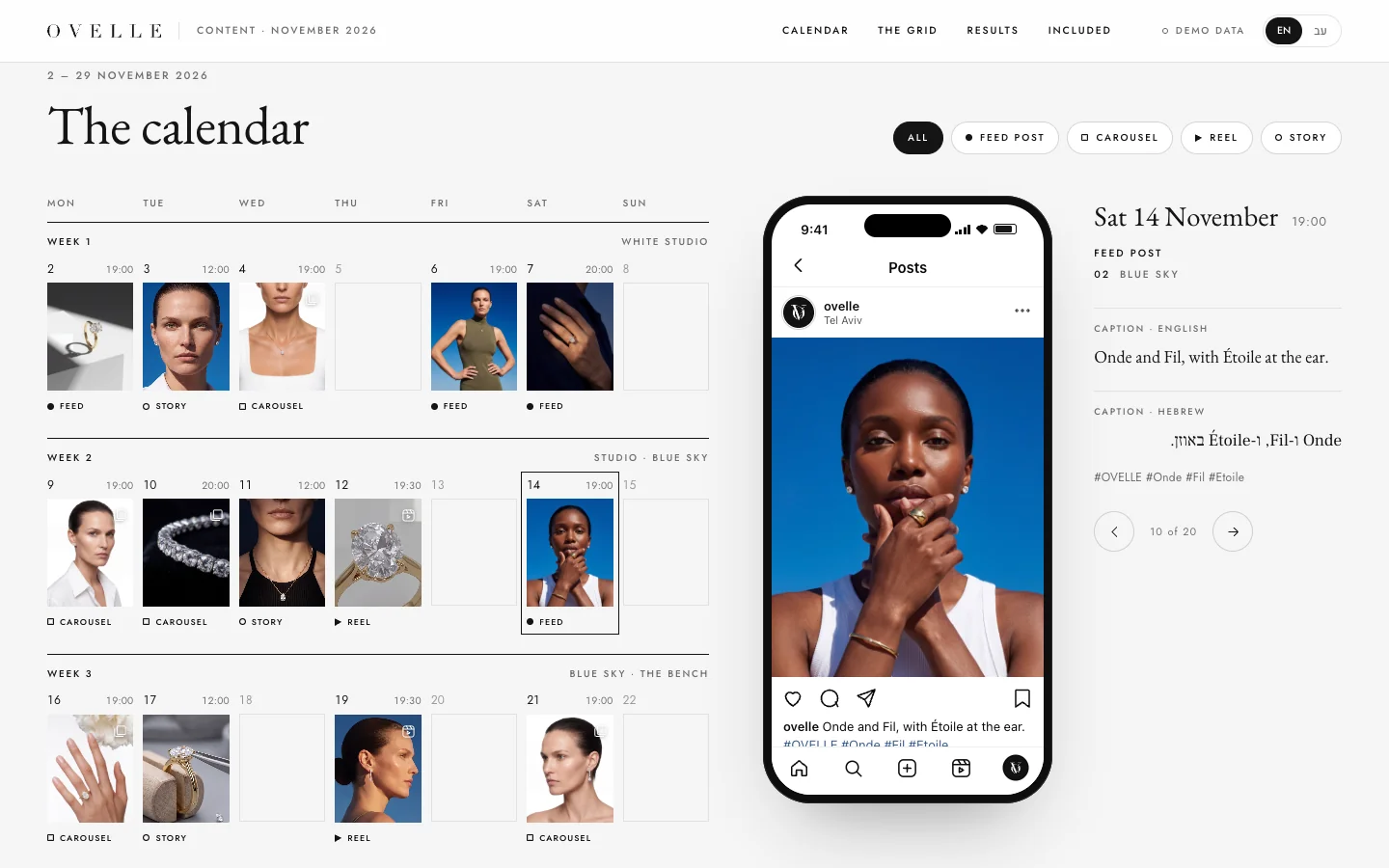
A brand character is worth most when she returns: in the feed, in reels, in stories and in ads. In OVELLE’s monthly content calendar, the same character wears the ring in Wednesday’s post and the necklace in the next week’s carousel, so the month reads as one brand. How to plan such a month, how much to post and what to measure, is in social media content for brands.
AI models for brands at Libra
At Libra we build fashion and jewellery brands a consistent character with a character sheet the brand keeps, generate the product from a product sheet, and check every file at full size before delivery. The details are on our AI models and product imagery page.
To start, send a brief with the products, a description of your audience and three to five inspiration images. We reply by email with a direction for the character, a written price and a date for the first sample.
No term matches.
Questions
What is an AI model for a brand?
A character built once for the brand and stored as a fixed reference, so she returns identical in every image and campaign. She wears the real product, generated from a product sheet.
How do you keep the same AI model face across images?
Build a character sheet from several angles with an explicit description of the features, generate every scene from that reference, and check each file against the sheet. A file where the face drifted is rejected and regenerated.
Do AI models work for jewellery?
Yes, provided the piece is generated from a product sheet with real dimensions and every file is checked at full size for stone count, metal tone, scale on the body and hands.
Can I base an AI model on a real model or celebrity?
Not without written consent. Many countries protect a person’s likeness; Israel’s Privacy Protection Law, for example, treats using someone’s image for profit as an infringement of privacy.
Do AI model images need to be labelled?
It depends on the platform and the country. Meta labels images it detects as AI-generated and requires disclosure of realistic AI video and audio, so check the rules before each campaign.
Who owns the character if we change supplier?
Agree in the contract that the character sheet, the description and the source files belong to the brand and are delivered to it, so the character moves with you to any tool or supplier.
Getting started
Want this for your business?
Send a short brief: three required questions, the rest only if you like. We reply by email with a direction, a written price and a date.