Business branding guide: what branding includes, from strategy to trademark
What business branding is and what it includes: positioning, name, voice, logo, colour, type and applications. When you need it, timing, costs and trademarks.
Business branding is deciding what a business stands for, who it is for and why it is different, and then turning that decision into a name, a voice, a logo, colours, typography, imagery and every place customers meet the business: the website, packaging, signage, decks and invoices. A logo is one part of it, not the whole. For a small or mid-sized business, a full identity typically takes 6 to 14 weeks and, as a rough conversion of the ranges we see in the Israeli market, costs somewhere around $4,000 to $11,000, depending on scope and on whether a new name is part of it.
This guide covers everything branding includes: the difference between a brand, a logo and an identity, each component and what it is for, when a business needs branding and when it needs rebranding, time and cost, protecting the brand with a trademark, choosing a studio, and the mistakes we see most often. The stage-by-stage process has its own article, branding a business from zero, and the document that records the rules has another, what goes in a brand book.
What is branding for a business
People use the word “branding” for three different things. Separating them before you ask for a quote saves a lot of disappointment:
- A brand is what people think and feel when they hear the business’s name. It is built from every contact with the business: the product, the service, the price, the tone of a reply and the box it arrives in. You cannot design it directly, but you can steer it.
- A brand identity is the set of tools the business controls: name, logo, colours, typefaces, photographic style, voice and the rules for using them. This is what a studio designs and delivers.
- Branding is the process that runs from strategic decisions to the identity, and from the identity to real applications.
The distinction matters because it decides what you receive. If you order “branding” and get a logo file in three colours, you bought a logo. If you get a strategy deck with no visual identity, you bought half the job. Complete business branding connects the two: every design decision can be explained by a strategic one, and every strategic decision is visible in the applications.
Why a small business needs branding at all
A small business competes for attention on the same screens as large ones. A customer arriving from Google, Instagram or a recommendation opens the website or profile and decides within seconds whether the business looks serious and right for them. Good branding does not replace a good product, but it lets a customer understand quickly what you do, who you are for and why to choose you over the business next door. It also saves the business time: once there is a system, every post, deck and sign is built from it instead of being reinvented.
What does business branding include
Full business branding has five layers. Not every business needs all of them at the same depth, but knowing what exists lets you decide what goes into a quote and what stays out.
| Component | What it is | What it is for | What you actually receive |
|---|---|---|---|
| Strategy and positioning | Who the business is for, how it differs and what it promises | Every other decision is tested against it | A one- or two-page document and a single positioning sentence |
| Name | The business or product name, sometimes names for services too | Recognition, memorability and legal protection | A name checked against trademarks and domains |
| Verbal identity | Tone of voice, key messages, words you use and words you avoid | Every text sounds like the same business | Voice pages with before-and-after examples |
| Logo | A wordmark, a symbol, or both, in several versions | Fast recognition at any size | Vector files, horizontal and stacked versions, black, white and colour |
| Colour | Primary and secondary palette with exact values | Recognition and consistency across screen and print | HEX, RGB, CMYK and Pantone values where needed |
| Typography | Typefaces for headings and text, in every script you use | Character and readability | Font names, licences and a size hierarchy |
| Imagery and graphic elements | How photos, icons, patterns and frames look | Every image belongs to the brand | Examples, rules and reference images |
| Applications | Website, packaging, signage, decks, stationery, social, uniforms | Where customers actually meet the brand | Print- and screen-ready files and templates |
| Brand book | The document that holds all the rules | Others can work without the designer | A PDF or internal site, with source files |
Strategy and positioning
This is the layer nobody sees and the easiest to skip. It answers four questions: which customer the business wants, what that customer is weighing up, which competitors they compare you with, and what you can promise that those competitors cannot. The answer does not need to be a thirty-page document. One page and one positioning sentence that every partner agrees with is enough. Without that sentence, the logo discussion turns into a discussion about personal taste, and it never ends.
Name
Not every branding project includes a name. An established business with a working name should not change it. But for a new business, a new product or a brand heading into a new market, the name is the decision that is hardest to undo, because it ends up in the domain, the trademark, the sign and customers’ memory. A good name is easy to say in every language you trade in, does not sound like a competitor and is free to register. We cover how to find one, test it and protect it in how to name a business.
Verbal identity and tone of voice
Customers read a business before they see it: in a chat reply, an email, a caption or a quote. Verbal identity decides how the business speaks: formal or informal, whether it uses technical terms or explains them, how long its sentences are and which words never appear. The most useful tool here is a list of examples, the same message written the right way and the wrong way. It helps far more than a list of adjectives such as “warm” or “professional”. If you sell in more than one language, each language needs its own voice notes rather than a translation of the other.
Visual identity: logo, colour, typography and imagery
This is the part most people call “branding”. The logo has to work as a phone icon and as a shopfront sign, in colour and in black and white, on light and dark backgrounds. Colours need exact values for screen and for print, because the same colour looks different on paper and on a display. Typography is a double challenge for any business that works in two scripts, as most businesses in Israel do with Hebrew and English: you need a pairing that matches in height, weight and character, with licences for web, print and apps. Imagery sets how product, people and place photos look: light, background, distance and grading. Without imagery rules, even an excellent logo disappears inside a feed of pictures that do not belong together.
If you only need a logo, without the rest of the system, we cover prices separately in what logo design costs.
Applications: where the brand actually happens
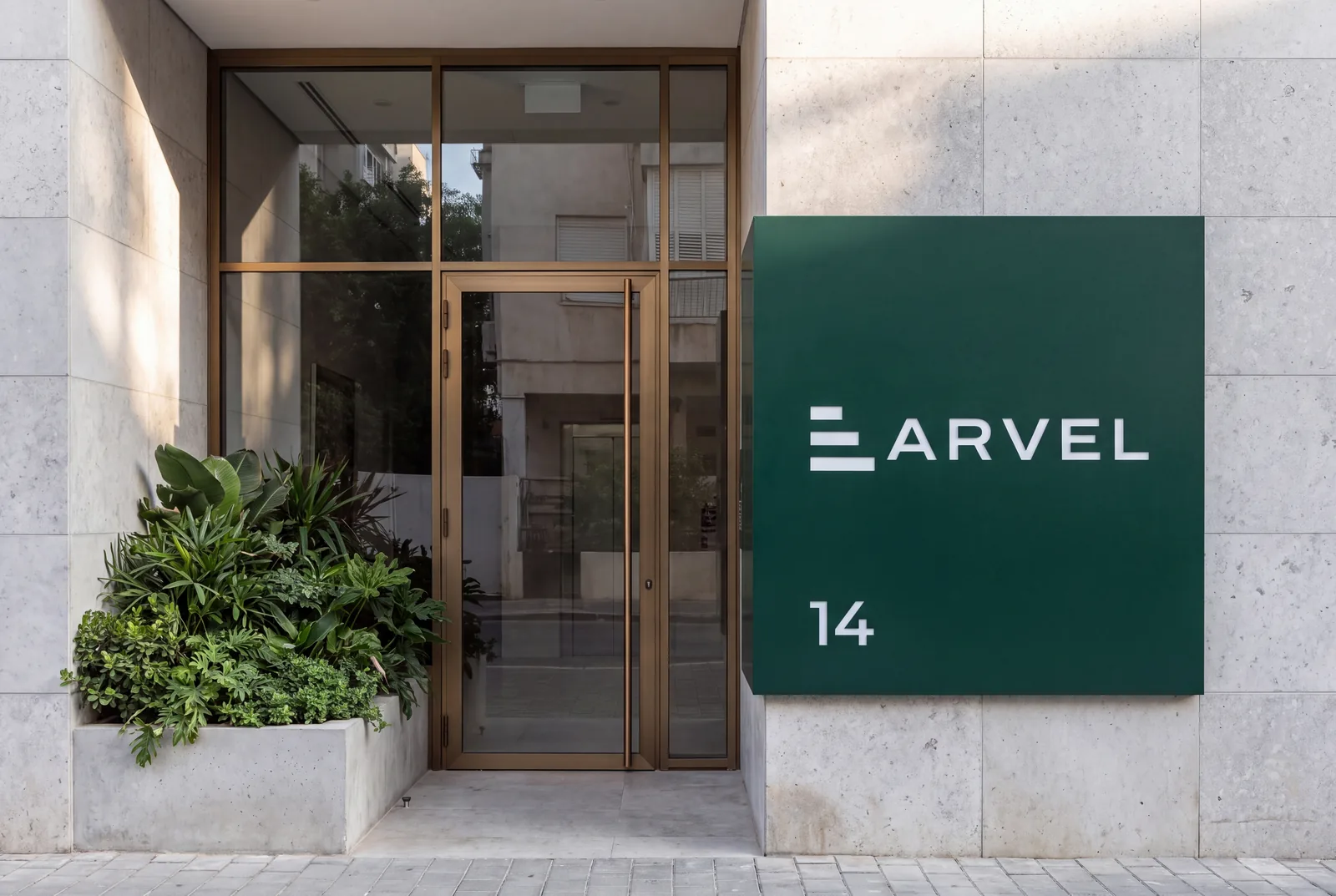
An identity that has not been applied is a PDF. Applications are where customers meet the business, and they differ by sector. For a restaurant: signage, menus and uniforms. For an online store: the website, packaging and emails. For a professional firm: the website, a deck, a proposal template and a LinkedIn page. Some need extra expertise. Packaging has to fit the production line and the printer, which we cover in the packaging design process. A website needs structure, content and development, which is the subject of how to build a business website.
When does a business need branding
Branding is an investment, and not every moment suits it. These are the situations where it usually pays for itself:
- Before launch. It is cheapest to build a brand before signs are printed, domains registered and packaging ordered.
- When the business has outgrown its identity. What was made for a one-person business does not always hold a team, a second location or a new audience.
- When prices went up and the image did not. A business priced like a premium brand that looks like a start-up loses customers at the comparison stage.
- When every piece looks different. The website in one typeface, the deck in another, the sign in a third colour. That means there are files but no system.
- Before entering a new market. A name that works in one language may not work in another, and a trademark registered in one country does not protect you in the next.
- Before raising money or selling the business. Investors and buyers also judge by presentation.
When is it too early? When it is not yet clear what the business sells and to whom. At that stage a simple interim logo is better: start trading and learn from the first customers. Full branding for a business that is still changing direction will have to be done again.
Branding or rebranding
An established business that feels its identity no longer fits has two options: a refresh, which improves what exists and keeps what customers already recognise, or a rebrand, which changes the positioning and sometimes the name. The choice depends on what is broken. If the problem is the design, a refresh is usually enough. If the business now serves a different audience or sells something different, you have to start from strategy. We cover the trade-offs, the risks and how to switch without losing customers in rebranding a business.

How long does business branding take
A full identity for a small or mid-sized business, without naming, usually takes 6 to 10 weeks. With a new name and availability checks, 9 to 14 weeks or more. A basic identity, meaning logo, colour, typography and a few applications, can be done in three to five weeks. We break down each stage in branding a business from zero.
The biggest variable is not the studio’s pace but the speed of decisions inside the business. A one-week wait for feedback at every stage adds a month. If three partners each approve separately, agree in advance who has the final word. Applications also stretch the schedule: packaging and signage depend on suppliers, proofs and production times the designer does not control.
How much does business branding cost
There is no single price list, because “branding” can mean a logo alone or a full brand with a name, strategy and dozens of applications. The table gives rough USD conversions of the ranges we see in Israel, the market we work in, before tax. It is not a price list; agencies in the US, UK or Western Europe often charge considerably more for the same scope.
| Scope | What is usually included | Rough range (USD) | Suits |
|---|---|---|---|
| Logo only | One mark in several versions and files | See what logo design costs | A new business that needs an interim mark |
| Basic identity | Logo, palette, a type pairing, business card, social templates, a short rules sheet | Roughly $1,600–$4,000 | A small business, freelancer or clinic |
| Full identity | Positioning, logo and visual system, imagery, voice, 5–10 applications, brand book | Roughly $4,000–$11,000 | A mid-sized business, restaurant, store or firm |
| Full brand | Research and strategy, name, verbal and visual identity, packaging, signage, decks, a detailed brand book | Roughly $11,000–$27,000+ | A product brand, a chain, a real estate project, an international launch |
These ranges exclude production: printing, sign fabrication, packaging runs, commercial font licences, photography and trademark fees. Ask for them as a separate line in the quote, even as an estimate.
What drives the price
- Depth of strategy. Customer interviews, competitor research and a workshop with leadership take time. A business that already knows its positioning pays less.
- Naming. Developing a name, including trademark and domain checks, is separate work with its own rounds.
- Directions and revisions. Two or three directions and two rounds of revisions are normal. Every extra direction adds work.
- Two scripts. A logo that needs Hebrew and Latin versions, and typefaces that must work together, is more work than a single-language brand.
- Number of applications. Every application, from a business card to a shopfront sign, is design work plus production prep.
- Studio experience and team. A studio with a strategist, a designer and a writer costs more than a solo designer, and covers more.
- Ownership and files. Full transfer of rights and open source files are part of the price and are not always included by default.
How to protect your brand: trademarks and ownership
An unprotected brand can be copied, and an unchecked name can turn out to belong to someone else after the signs are printed. There are two separate issues: the trademark, which protects the name and logo as identifiers of your goods or services, and copyright, which decides who owns the design itself.
Registering a trademark in Israel
In Israel, trademarks are registered with the Israel Patent Office at the Ministry of Justice. According to its trademark application page (in Hebrew), applications can be filed online, including by private applicants without a lawyer; applicants from abroad need an address for correspondence in Israel or a local representative. A designed mark is uploaded as a JPEG image. The fee is paid per class of goods or services, and after a formal check the application waits for examination against the Trade Marks Ordinance. Registration is valid for ten years from the filing date and can be renewed. Once a mark is accepted and published, third parties have three months to oppose it, so search first: the Israeli trademark database can be searched free by words, owner and class.
- Search the trademark database in each market you sell in for the name and its key words, in your classes.
- Check domains and social handles before you fall in love with a name.
- Choose your classes. Goods and services are grouped under the international Nice Classification, and each class is a separate fee, so register what you do and plan to do, not the whole list.
- Decide whether to register the name as words, the logo as a designed mark, or both.
- If you sell abroad, look at WIPO’s Madrid System, which lets you file one international application and pay one set of fees to seek protection in many countries.
- For a mark that matters to the business, work with a trademark attorney. This guide is not legal advice.
Registering a company name or a trading name is a separate process from registering a trademark, in Israel and in most countries. The registered company name does not replace protection of the mark.
Who owns the logo you commissioned
This surprises many businesses. Under section 35 of Israel’s Copyright Law (in Hebrew), the first owner of copyright in a commissioned work is its creator, unless agreed otherwise between the commissioner and the creator. Rules differ between countries, but the safe practice is the same everywhere: make sure the contract transfers full rights in the logo and identity to you on final payment, includes open source files, and lists the licences for the typefaces and images used.
How to choose a branding studio
A strong portfolio is necessary but not sufficient. What matters is whether the studio can build a system that keeps working after it leaves. These are the questions worth asking, in writing:
- What exactly is included, by name: strategy, name, logo, colour, typefaces, imagery, voice, which applications and a brand book.
- How many design directions will be shown, and how many revision rounds are included.
- How the studio reaches decisions: is there a strategy stage, and what does it produce.
- Whether the logo and typefaces were tested in every script you use, at small sizes and in black and white.
- Which files you receive, in which formats, and whether open source files are included.
- Who owns the rights, and what the font licences allow (web, print, app).
- Who supervises printing and production, and what that costs.
- A schedule with dates for each stage, and what happens if your feedback is late.
- Brands the studio built that are in use, not only concepts.
How a studio responds to your brief is also information. A studio that sends a quote without asking a single question about your customers is selling design, not branding. If you are not sure what to write, how to brief a design studio helps you put the information in order first.
Freelancer, studio or agency
A good freelance designer suits a basic identity, a small business on a limited budget and working directly with the person who designs. A studio suits projects that also need strategy, writing, imagery or a website, when it matters that all of these come from one hand. A large advertising agency mostly suits brands with media budgets, where branding is part of a wider campaign. There is no single right answer: the question is who will build what the business needs in the coming year, and who will be available when a new application is needed.
Red flags
- A very low logo price with “full branding” in the headline and no breakdown.
- Ten logo options within two days. That usually means templates or no thinking.
- Nothing about rights, source files or licences.
- A promise that branding will “double sales”. Nobody can promise that.
- No stage where anyone asks about your customers, competitors and prices.
Common branding mistakes
- Starting with the logo. Without positioning, the logo is chosen by taste, and taste changes every week.
- Designing for the owners, not the customers. A brand has to speak to the people who buy, even if the owners prefer something else.
- Copying the category leader. If everyone in your field uses the same colour and symbol, looking like them means disappearing.
- Forgetting the second language. A beautiful Latin logo with no working version in the other script causes problems on signs, invoices and the website.
- Not checking the name. Finding out after launch that someone registered a similar mark in your class is the most expensive mistake on this list.
- Receiving files without rules. Without a brand book, every new supplier reinvents the brand, and within a year there are five versions of the same logo.
- Leaving the rights with the designer. Without a transfer clause, the business may not own its own identity.
- Not applying it. A new identity that reaches only the website, while the sign, invoices and profiles stay old, signals disorder.
Good branding is measured in the months after delivery: whether a new employee, a supplier or another designer can make something that looks like the brand without asking anyone.
After the branding: keeping it consistent
The riskiest time for a brand is the six months after delivery. Files pass between staff, suppliers and marketers, and each one adjusts “a little”. A few simple rules keep order:
- One shared folder with all final files, clearly named, and no old versions.
- A short brand book people actually open, with examples of right and wrong use. We cover what it needs in what goes in a brand book.
- Ready templates for what repeats: post, story, deck, proposal, email.
- One person in the business who approves every new piece before it goes out.
- A yearly review: what works, what has worn out, and what needs a new application.

Examples from the studio
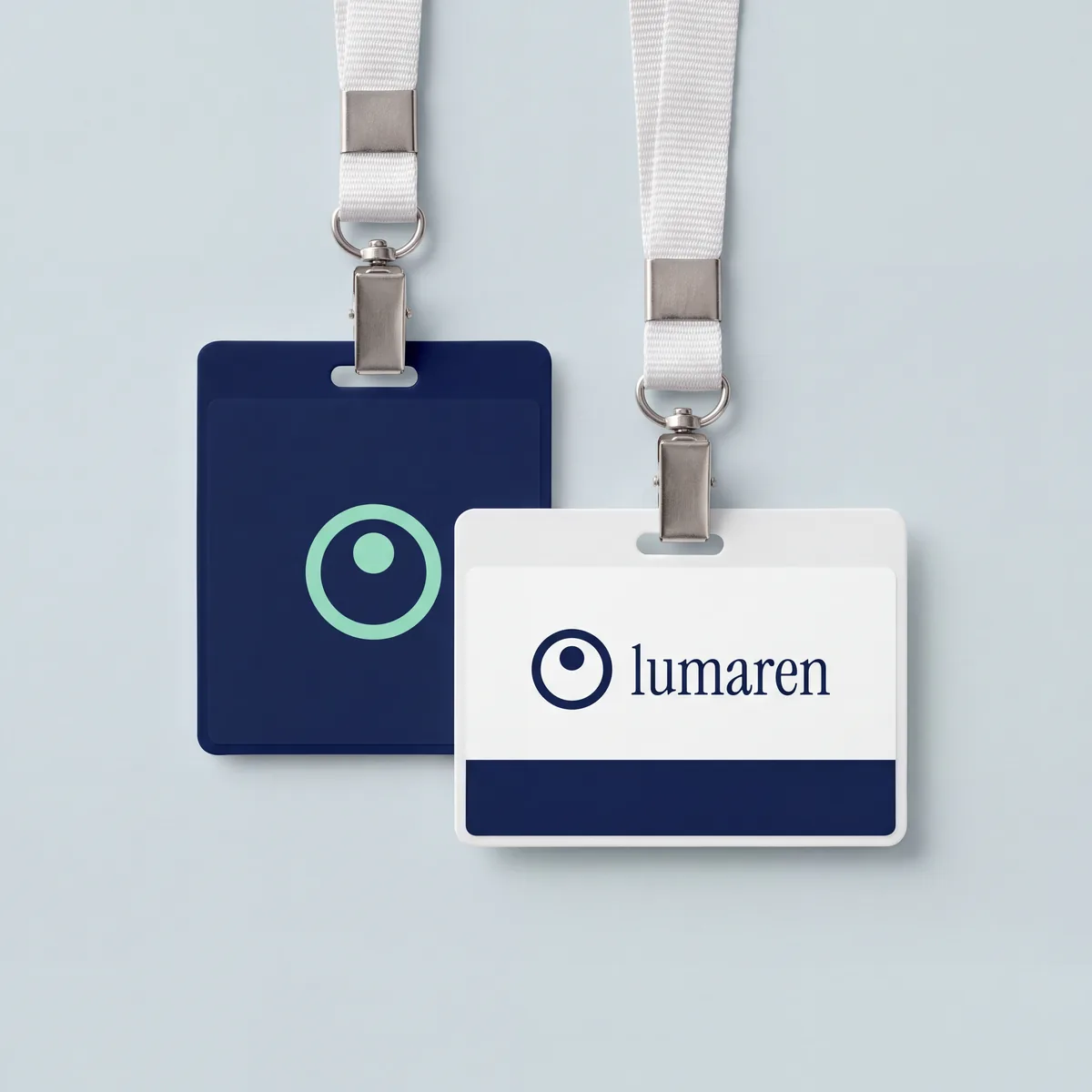
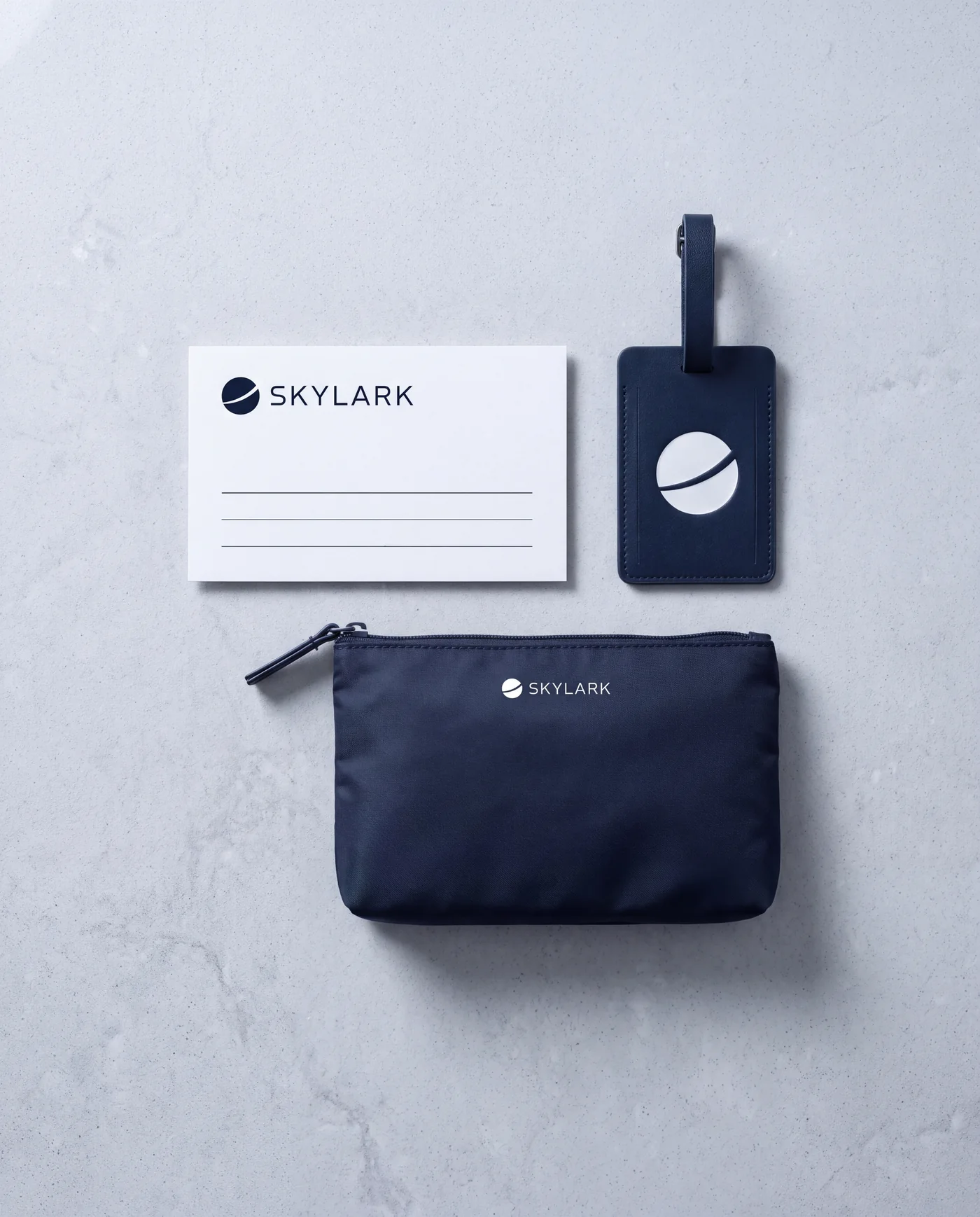
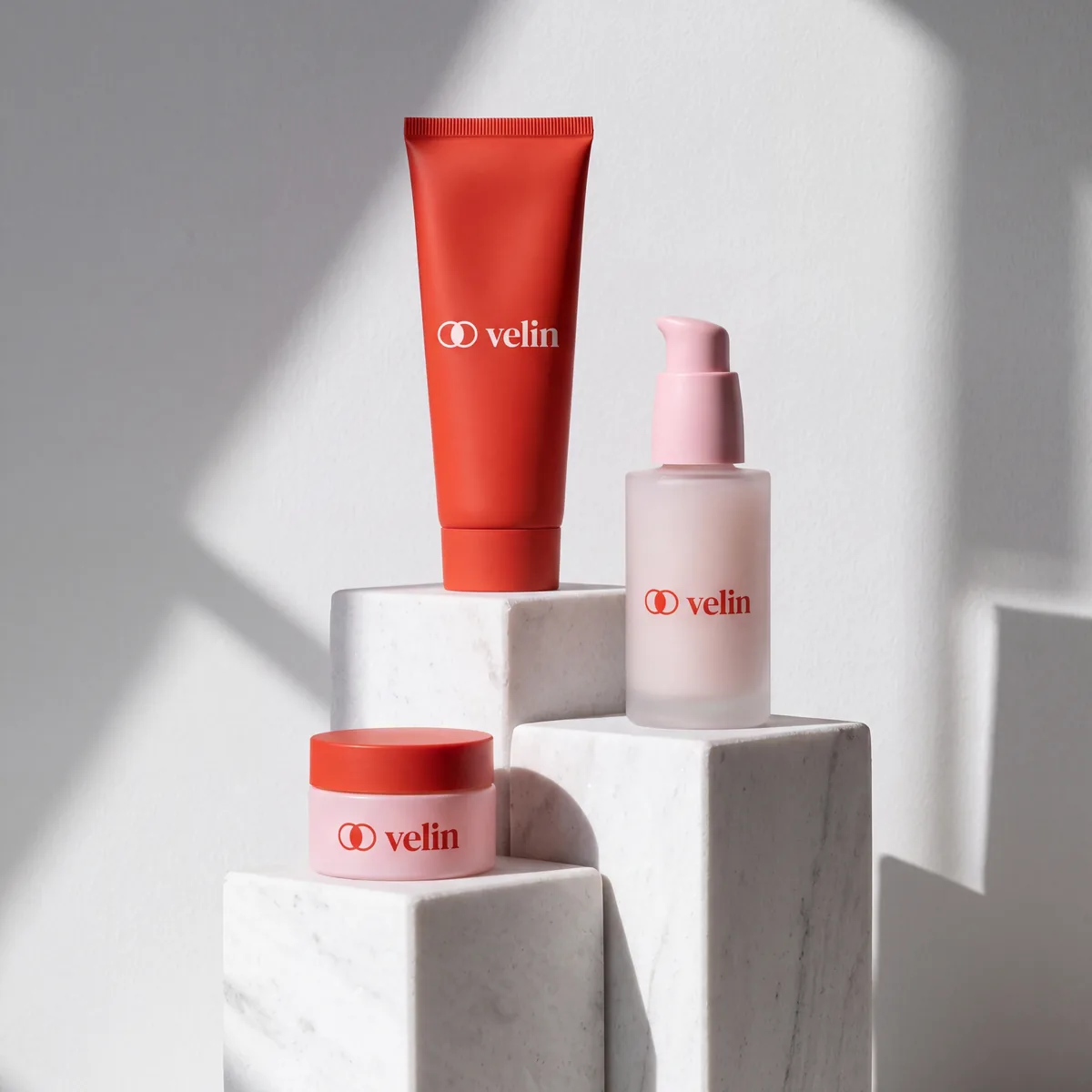
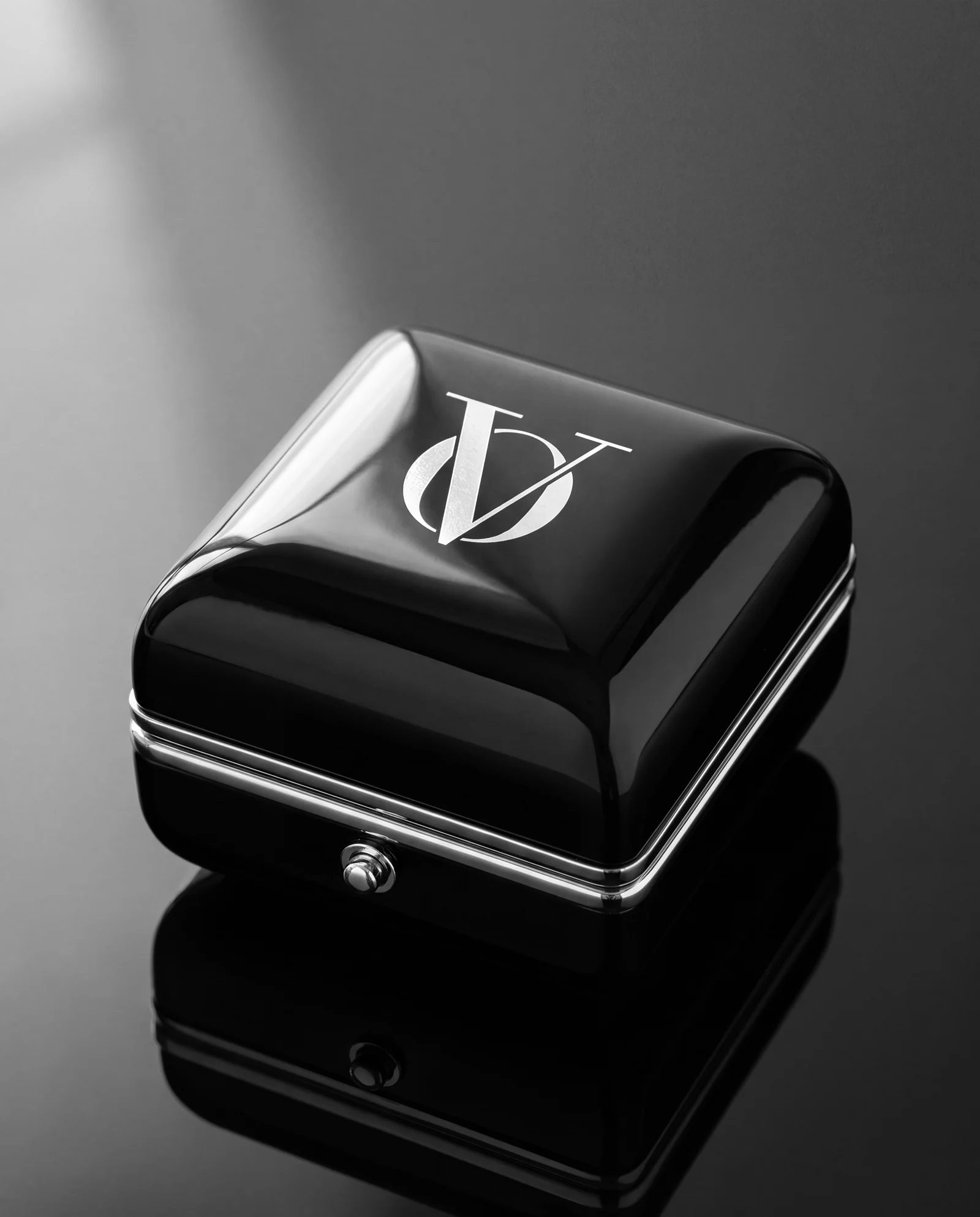
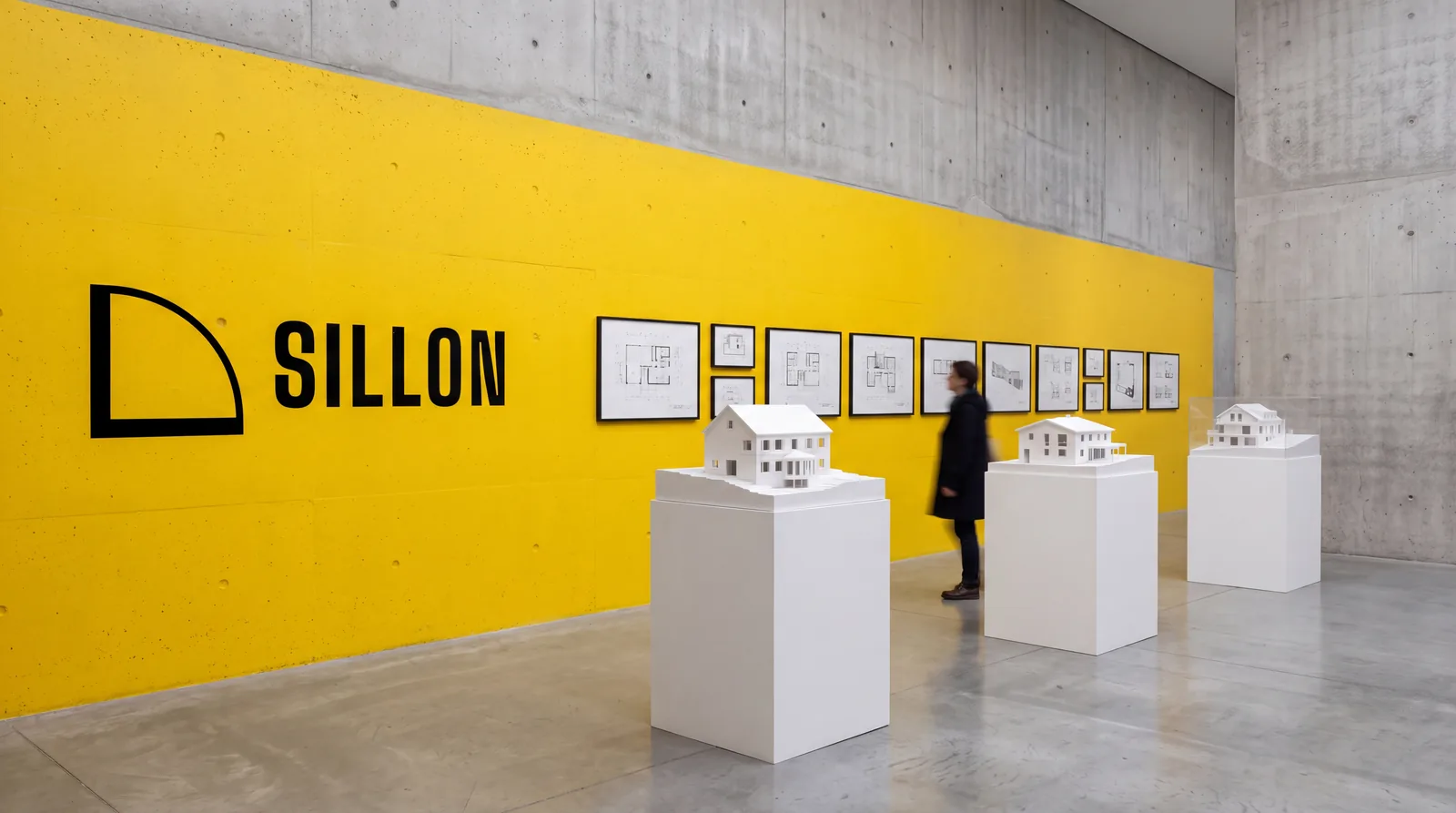
To show what complete branding looks like, not just a logo, we built several concepts with fictional businesses. The identity portfolio holds eight identities built from zero in eight sectors, each on one board: logo, colour, app, signage and merchandise. For SKYLARK, a fictional private aviation company, we built a brand from nothing: the name, the strategy and the identity, from the aircraft livery to the app. The OVELLE identity, for a fictional jewellery house, is a black-and-white system with a monogram and packaging with platinum foil, documented as brand guidelines. And the ALBA identity shows the branding of a residential project: logo, colour, type, signage and sales material.
Business branding at Libra
At Libra we build the brand together with what is built from it: the website, the imagery, the packaging and the decks, from one house, so the identity does not stay a file but works from day one. The service is described on our websites, landing pages, stores and branding page, and the package structure is on the packages page.
For an exact quote rather than a range, send a brief with what you already know about the business, your customers and the applications you need. We reply by email with a direction, a written price and a delivery date.
No term matches.
More on Branding
- Logo design cost: what you pay for, and what a logo delivery must includeWhat logo design costs by route: generator, marketplace, freelancer or studio. What drives the price, which files you should get, who owns the rights, and AI logo risks.
- How to name a business: from a long list to a name you can registerHow to name a business: what a good name does, types of names, working in two languages, and the availability checks to run: domain, handles, company register, trademarks.
- The packaging design process: brief, structure, materials, labelling and printThe packaging design process step by step: brief, dieline, materials and finishes, visuals, prototypes and print proofs, plus labelling rules, sustainability and cost.
- Rebranding a business: when to do it, what to keep, and how to switch without losing customers or searchRebranding an existing business: refresh or full rebrand, what to keep, a rollout plan for the website, Google, signage and documents, and how to tell customers.
- Branding a business from zero: what happens at each stageWhat a brand identity project includes: strategy, name, logo, colour, type and a system people can build with. What you receive, how long it takes and where projects stall.
- What goes in a brand book, page by pageWhat a brand book is, how it differs from brand guidelines, what it must contain, and how to test that it works in the hands of people who did not design it.
- How to brief a studio so the proposal comes back rightWhat to put in a brief for a website, a brand, content or automation: the goal, the audience, references, budget and timing, and what to attach so the proposal is accurate.
A short picker
What fits you?
What is closest to what you need?
Where are you now?
Questions
What is branding for a business?
Business branding is deciding what the business stands for, who it is for and how it differs, then expressing that in a name, voice, logo, colours, typography, imagery and applications such as the website, packaging and signage. A logo is only one part of it.
What is the difference between a logo and branding?
A logo is one identifying mark. Branding also covers positioning, the name, tone of voice, colours, typefaces, imagery and the rules that let you build a website, packaging, a deck and a sign that all look like the same business.
How much does branding cost for a small business?
As rough conversions of the ranges we see in the Israeli market, a basic identity costs around $1,600–$4,000 and a full identity with positioning, applications and a brand book around $4,000–$11,000, before tax and production. Agencies in the US or Western Europe often charge more.
How long does business branding take?
Without naming, usually 6 to 10 weeks; with a new name and availability checks, 9 to 14 weeks or more. How fast the business makes decisions affects the schedule more than anything else.
Should I register my logo as a trademark?
It is not mandatory, but it is the standard way to protect a name and logo. In Israel you file with the Israel Patent Office, pay a fee per class, and registration lasts ten years from filing and can be renewed; abroad, WIPO’s Madrid System allows one international application.
Who owns the rights to a logo I commissioned?
Under Israeli copyright law the creator owns a commissioned work unless agreed otherwise, and many countries have similar defaults. Make sure your contract transfers full rights and includes source files.
When should a business rebrand?
When it serves a different audience, sells something different or charges differently from what its identity suggests. If only the design has aged, a refresh of the existing identity is usually enough.
Getting started
Want this for your business?
Send a short brief: three required questions, the rest only if you like. We reply by email with a direction, a written price and a date.