Logo design cost: what you pay for, and what a logo delivery must include
What logo design costs by route: generator, marketplace, freelancer or studio. What drives the price, which files you should get, who owns the rights, and AI logo risks.
Part of the guide: Business branding guide: what branding includes, from strategy to trademark
A logo usually costs anything from nothing to a few hundred dollars from a generator or marketplace package, roughly $400–$1,600 from a freelance designer, and roughly $1,100–$2,700 for a logo alone from a design studio. A logo designed as part of a full brand identity costs more, because the price then covers colour, typography, applications and usage rules too. The gap is not about how long it takes to draw a mark. It is about what happens before and after: research, directions, testing, files and rights.
These are rough USD conversions of the ranges we see in Israel, the market we work in, before tax. They are not a price list, and studios in the US, UK or Western Europe often charge more for the same scope. This article covers the logo only: what it costs, what should come with it and how to compare quotes. For the wider picture of what branding includes beyond a logo, see our business branding guide.
How much does a logo cost for a small business
The table sets out the common routes by what you actually get. Read the middle column: two logos at the same price can arrive with very different files, testing and rights.
| Route | Rough range (USD) | What you usually get | Suits |
|---|---|---|---|
| AI generator or template | Free to a few hundred | A generic mark, often without a full vector file, a uniqueness check or usage rules | Exploring a direction, a one-off event |
| Marketplace or budget package | Roughly $30–$220 | A few quick sketches, limited revisions, basic files | A business that needs an interim mark fast |
| Freelance designer | Roughly $400–$1,600 | A questionnaire or briefing, 2–3 directions, revision rounds, a file set | A small business with a clear brief |
| Studio, logo only | Roughly $1,100–$2,700 | Competitor research, reasoned directions, versions, size and script testing, a usage sheet | A business planning to grow with this mark |
| Logo within a full identity | Roughly $4,000–$11,000 for the whole identity | The logo as part of a system: colour, typefaces, imagery, applications and brand guidelines | A business launching or rebranding |
None of these include trademark fees, a commercial font licence, printing or signage. If any of them matter to you, ask for them as a separate line in the quote.
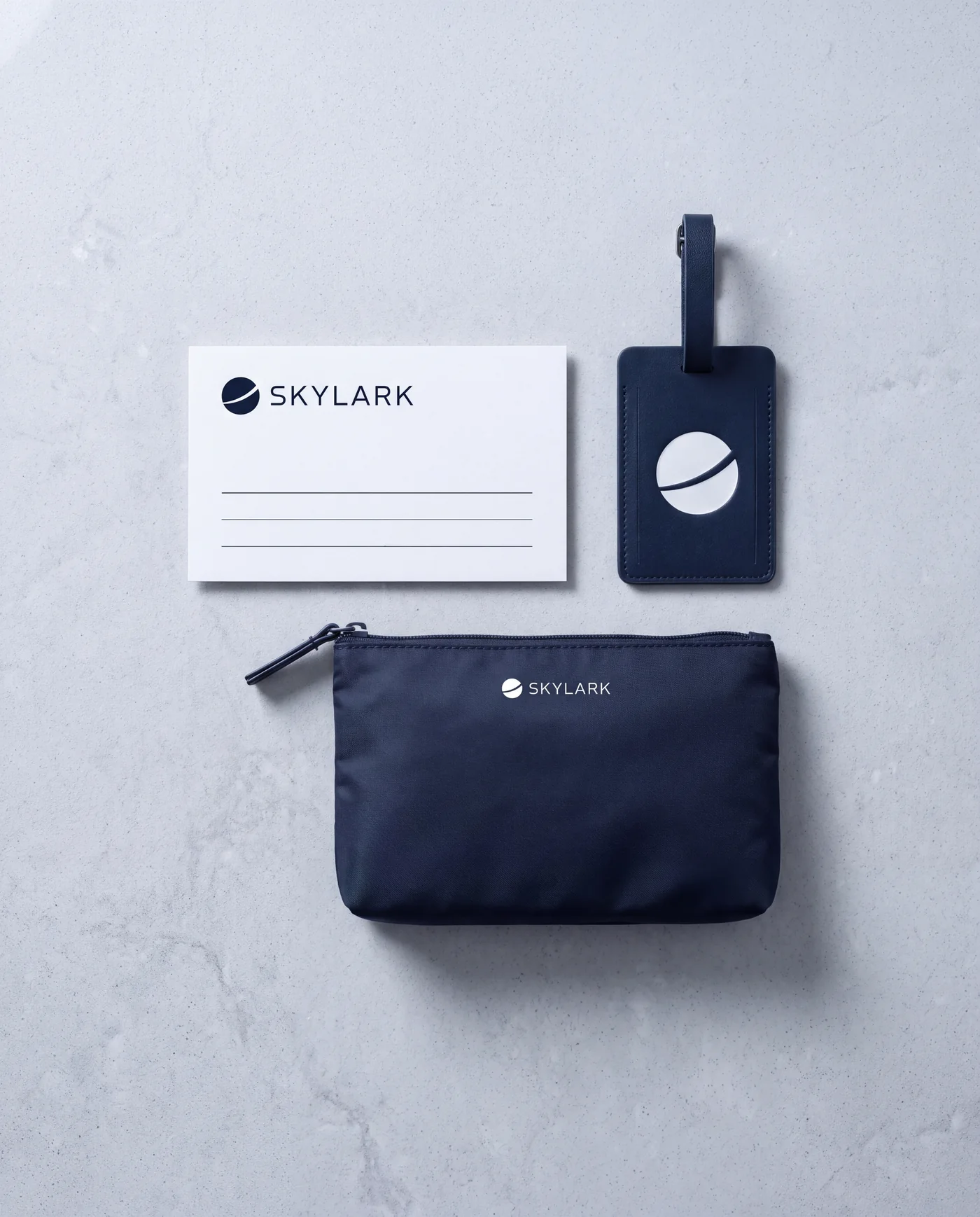
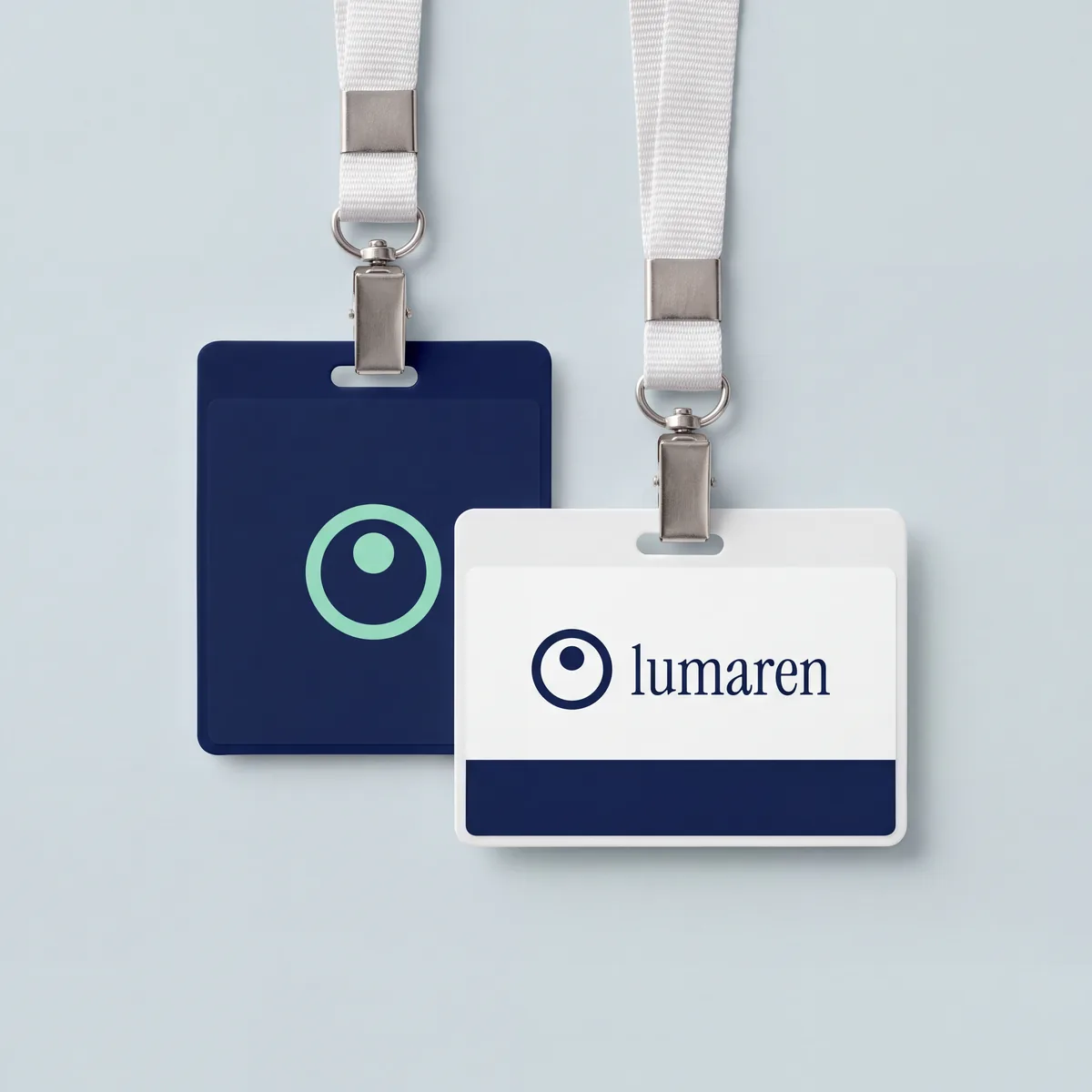
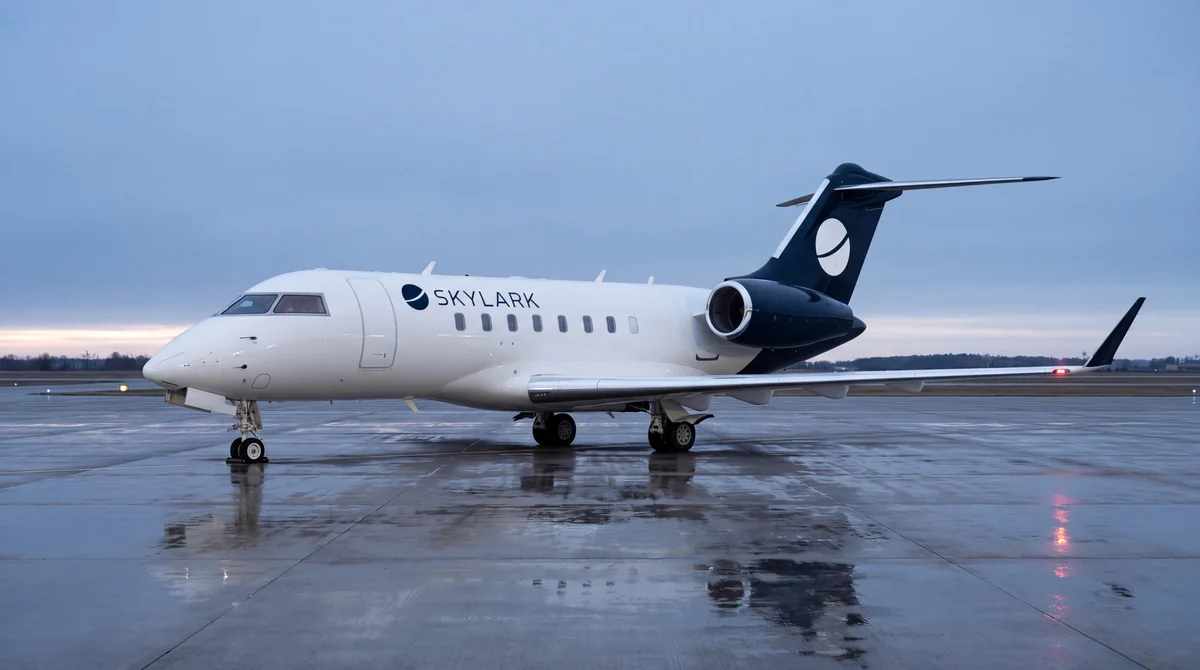
To see the difference between a mark and a system: in our branding portfolio each of eight identities is shown as a single board, and the logo is one tile out of five. In the picture at the top of this page, the Lumaren symbol, a ring with a point inside, works alone on a dark badge and beside the name on a light one. The SKYLARK brand shows the other side: one symbol on a card, a luggage tag, an aircraft and an app. These are concepts we built with fictional businesses.
What drives the price of a logo
- Discovery and research. A good logo starts with what the business needs to say and who it stands next to. A designer who studies competitors and customers before sketching bills more hours, and saves pointless rounds later.
- Directions and revision rounds. Two or three directions and two rounds of revisions are normal. “Unlimited revisions” sounds generous, but usually means a process with no decision point.
- Type of logo. A wordmark set in an existing typeface is simpler than a drawn symbol, and custom lettering is extra work. A symbol that must also stand alone as an icon needs more exploration.
- More than one script. A business that trades in two alphabets, as most businesses in Israel do with Hebrew and English, needs two versions that look like one family. That is close to designing two logos.
- Typeface and licence. A logo built on a commercial font needs a licence that covers logo use. Custom letters avoid the question but cost more.
- Testing. How the mark reads as a phone icon, in one colour, on a dark background, embroidered or embossed. Each test takes hours, and it is the difference between a logo that looks good in a presentation and one that works.
- Files and rights. A complete file set, source files and a full transfer of rights are part of the work and the price. Budget offers often leave them out.
What files should you get from a logo designer
Many businesses only discover when ordering a sign or setting up a profile picture that they own a single PNG on a white background. Ask for this list in writing before work starts:
| Item | Why you need it |
|---|---|
| Vector files (SVG, PDF, and usually AI or EPS) | Scaling without loss: signs, print, embroidery, engraving |
| Transparent PNGs in several sizes | Slides, documents and social media |
| Versions: primary, horizontal, stacked, symbol only | Narrow spaces, icons, profile pictures, the website favicon |
| Full colour, black and white | Dark backgrounds, one-colour print, foil and embossing |
| Colour values: HEX and RGB for screen, CMYK or Pantone for print | So the colour matches on the website, the business card and the sign |
| Clear space and minimum size | So the logo is not crowded or shrunk until it is unreadable |
| Typeface name and licence terms | So you can keep using it on the web, in print and in an app |
| Editable source files | So another designer can work with the logo later |
| A signed transfer of rights | So the logo belongs to the business, not just sits with it |
When the logo is part of a full identity, these items are gathered into brand guidelines along with the colour, typography and application rules. For a logo alone, a one- or two-page usage sheet is enough.
Do you own the copyright to your logo
Not automatically, in many countries. In Israel, under the Copyright Law (in Hebrew), the first owner of a commissioned work is its creator unless agreed otherwise (section 35), and a contract transferring copyright or granting an exclusive licence must be in writing (section 37). Other countries have their own rules, but the safe practice is the same: payment alone should not be assumed to transfer rights. Ask for a clause that assigns full rights in the logo to the business on final payment, includes source files, and lists any fonts or elements licensed from third parties. This is not legal advice; for a mark that matters, involve a lawyer.
Can you use an AI-generated logo
AI logo generators produce dozens of options in minutes, which is useful for thinking about direction. As a final logo they have three problems:
- Rights. In its January 2025 report on copyrightability, the US Copyright Office concluded that copyright does not extend to purely AI-generated material, and that prompts alone do not provide sufficient human control. Creative human modifications of the output can be protected. That is the US position; check the current position in your own country.
- Similarity to existing marks. A generator does not check whether its shape resembles another business’s logo. Trademark databases can be searched by image as well as by words: WIPO’s Global Brand Database searches international and many national collections by image similarity, and Israel’s trademark database by figurative classification.
- Sameness. Generators lean on what is already common. The result looks plausible, which is exactly why it looks like other logos in the same field.
If you do start from a generator, have a designer take the direction, rebuild it in vector, adapt it to every script you use and test it. We cover rights in AI output more broadly in can you use AI images commercially.
Red flags in a logo quote
- No list of files, or just “print and digital files”.
- Rights “stay with the designer”, or the quote says nothing about them.
- A logo in 24 hours at a fixed price, without a single question about the business.
- The designer cannot say which typeface the logo is built on or how it is licensed.
- No one-colour version and no test at small sizes.
- A portfolio full of marks that look familiar, or look like each other.
How to ask for a logo quote
A good quote starts with a good brief. Send every supplier the same points so the quotes can be compared:
- The final business name, in every language you trade in, and how it is pronounced. If the name is not settled, that comes first; see how to name a business.
- What the business does, who it serves and its main competitors.
- Where the logo will appear in the next year: website, sign, packaging, embroidery, app.
- Logos you like and dislike, and why.
- Whether you need only a logo, or colours, typefaces and applications too.
- Timeline and a budget range.
We explain how to write a complete brief in how to write a creative brief. If it turns out you need more than a logo, the full process stage by stage is in branding a business from zero.
Logos and identities at Libra
We design logos alone or as part of a full identity, in Hebrew and English or any pair of scripts, with a complete file set, a usage sheet and a transfer of rights, and we connect the logo to the website and content we build for the business. Our website and branding work is described on websites, landing pages and stores. For an exact price rather than a range, send a brief with what you already know. We reply by email with a direction, a written price and a date.
No term matches.
Questions
How much should a logo cost for a small business?
Roughly $400–$1,600 from a freelance designer and roughly $1,100–$2,700 for a logo alone from a studio, as rough conversions of the ranges we see in Israel; larger markets often charge more. The price depends on research, the number of directions, scripts, files and rights.
Why are some logos so expensive?
Because the price covers what happens around the drawing: discovery, competitor research, directions, testing at every size and colour, complete files and a transfer of rights. A cheap logo and an expensive one can look similar in a presentation and behave very differently on a sign or as an app icon.
What files should I get from a logo designer?
Vector files (SVG and PDF), transparent PNGs, horizontal, stacked and symbol-only versions, full colour and one colour, colour values for screen and print, the typeface name and licence, and editable source files.
Do I own the copyright to a logo I paid for?
Not necessarily. In Israel the creator of a commissioned work is the first owner unless agreed otherwise, and a transfer of copyright must be in writing; many countries have similar rules. Ask for a full assignment of rights in the contract.
Can I trademark or copyright an AI-generated logo?
Copyright is the harder part: the US Copyright Office has concluded that purely AI-generated material is not protected and that prompts alone are not enough. A generator also does not check similarity to existing marks, so use it for direction and have a designer build and check the final mark.
How long does it take to design a logo?
Usually one to three weeks with a freelancer and two to five weeks for a logo alone with a studio. The biggest variable is how quickly the business makes decisions.
Getting started
Want this for your business?
Send a short brief: three required questions, the rest only if you like. We reply by email with a direction, a written price and a date.