The packaging design process: brief, structure, materials, labelling and print
The packaging design process step by step: brief, dieline, materials and finishes, visuals, prototypes and print proofs, plus labelling rules, sustainability and cost.
Part of the guide: Business branding guide: what branding includes, from strategy to trademark
The packaging design process has seven stages: the brief, the structure and dieline, materials and finishes, graphics and copy, visualisation, a physical prototype, and a print proof before production. Good packaging is designed from the outside in: the product, the shelf, the shipment and the machine that packs it come first, and colour and logo come after. Labelling rules come early too, because they decide how much space is left for design: in Israel, the market we work in, consumer goods must carry mandatory details in Hebrew, and categories such as food, cosmetics and toys have extra rules.
This article covers designing the pack itself. How packaging fits into the whole brand, next to the name, logo and visual language, is explained in our business branding guide.
The stages of packaging design
| Stage | What happens | What comes out |
|---|---|---|
| 1. Brief | Product, dimensions, weight, where it sells (shelf, online, boutique), volumes, unit budget, competitors | One document every supplier works from |
| 2. Structure and dieline | Choosing the pack type and drawing the flat layout: cut, fold, glue lines and print area | A dieline file from the manufacturer or designer, to exact size |
| 3. Materials and finishes | Board, paper, glass, plastic or a mix; foil, embossing, varnish | A specification, and material samples in hand |
| 4. Graphics and copy | Hierarchy: brand, product name, what it does, mandatory details | Artwork on the dieline, for every panel |
| 5. Visualisation | The pack in 3D, on shelf, in hand, in a campaign image | Images to decide with, and to market before production |
| 6. Prototype | A plain structural sample, then a printed one | Proof that the product fits, closes and opens properly |
| 7. Proof and production | Colour and content proof from the printer, approval, production, first-run check | Finished packaging and a spec for future runs |
The stage most businesses skip is the second. Beautiful artwork on a box of the wrong size is work done twice, so get the dieline from the printer or packaging manufacturer before graphics begin.
Structure, materials and finishes
Structure decides the unit cost, the shipping weight and how the pack feels in the hand. Decisions that come up in every project:
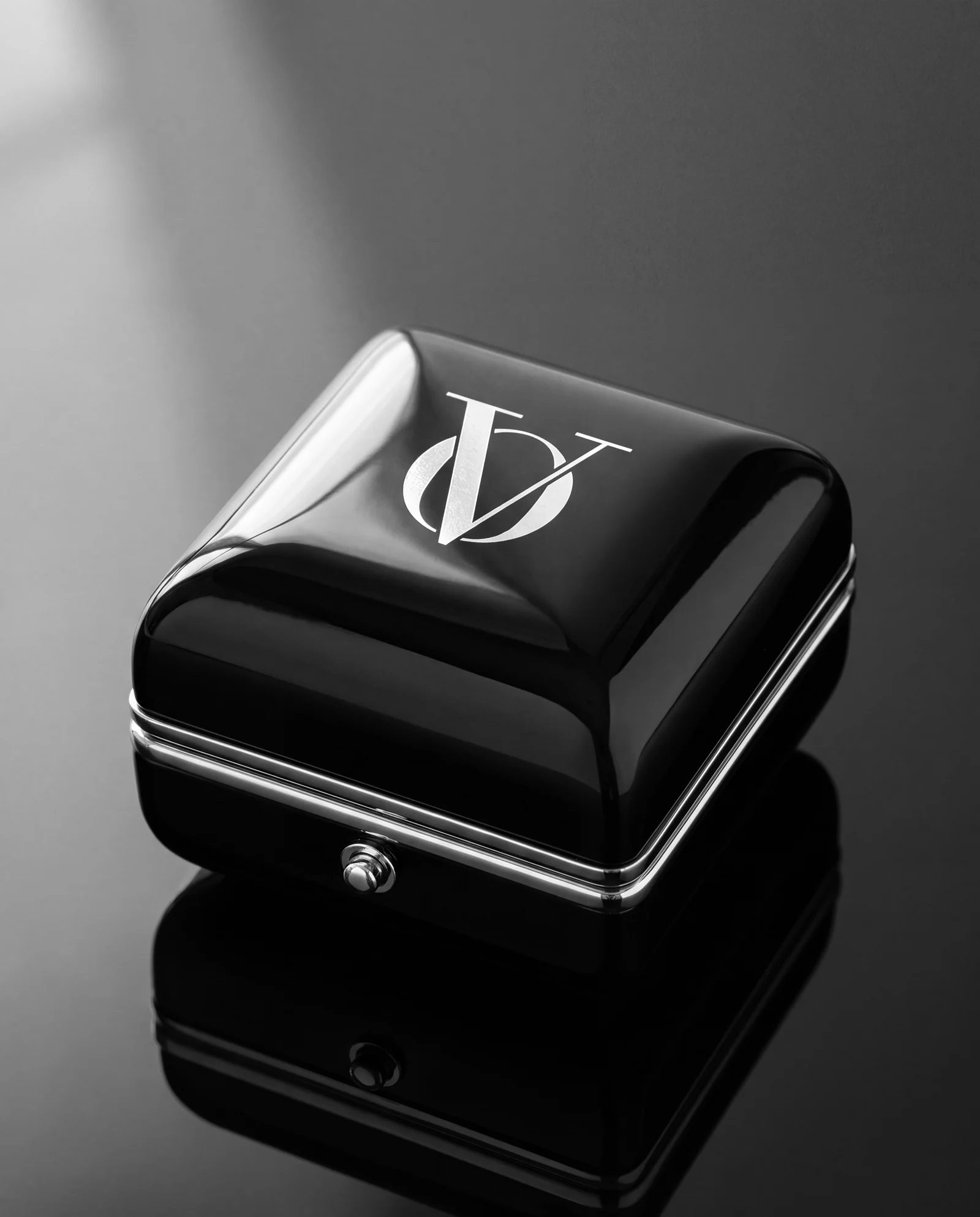
- Pack type. A folding carton is cheap to make and ship; a rigid box (magnetic lid, drawer or lift-off lid) feels expensive and costs more; a sleeve over a simple box gives a rich look for less; a label on a bottle or jar depends on the container you chose.
- Material. Board thickness, coated or uncoated paper, glass or plastic for the container. Each affects print: a colour that looks vivid on coated stock looks softer on uncoated.
- Finishes. Foil stamping, embossing or debossing, spot varnish, matte or gloss lamination, and spot colours (Pantone). Each finish is another production step, and sometimes another minimum order.
- Minimum quantities. Custom packaging is made in runs, and every manufacturer has a minimum. Check it before you fall for a finish.
- Shipping. A pack that goes straight to a customer has to survive a courier, not just a shelf. Online products usually need an inner pack for presentation and an outer one for transit.
Luxury packaging design principles
In luxury packaging the difference is not how much decoration there is but how many decisions were made. Principles that recur at good houses:
- Few elements. A name, a symbol, perhaps one line. Everything else moves to a card inside.
- One lead material. Heavy board in one colour, or one foil, not three finishes competing.
- Weight and feel. A rigid box that closes slowly says something about the product before anyone sees it.
- An opening sequence. What is seen first, second, where the product sits, where the card sits. It is planned like a web page.
- One system across the range. One set of rules for every size and line, so a new product can be added without redesign.
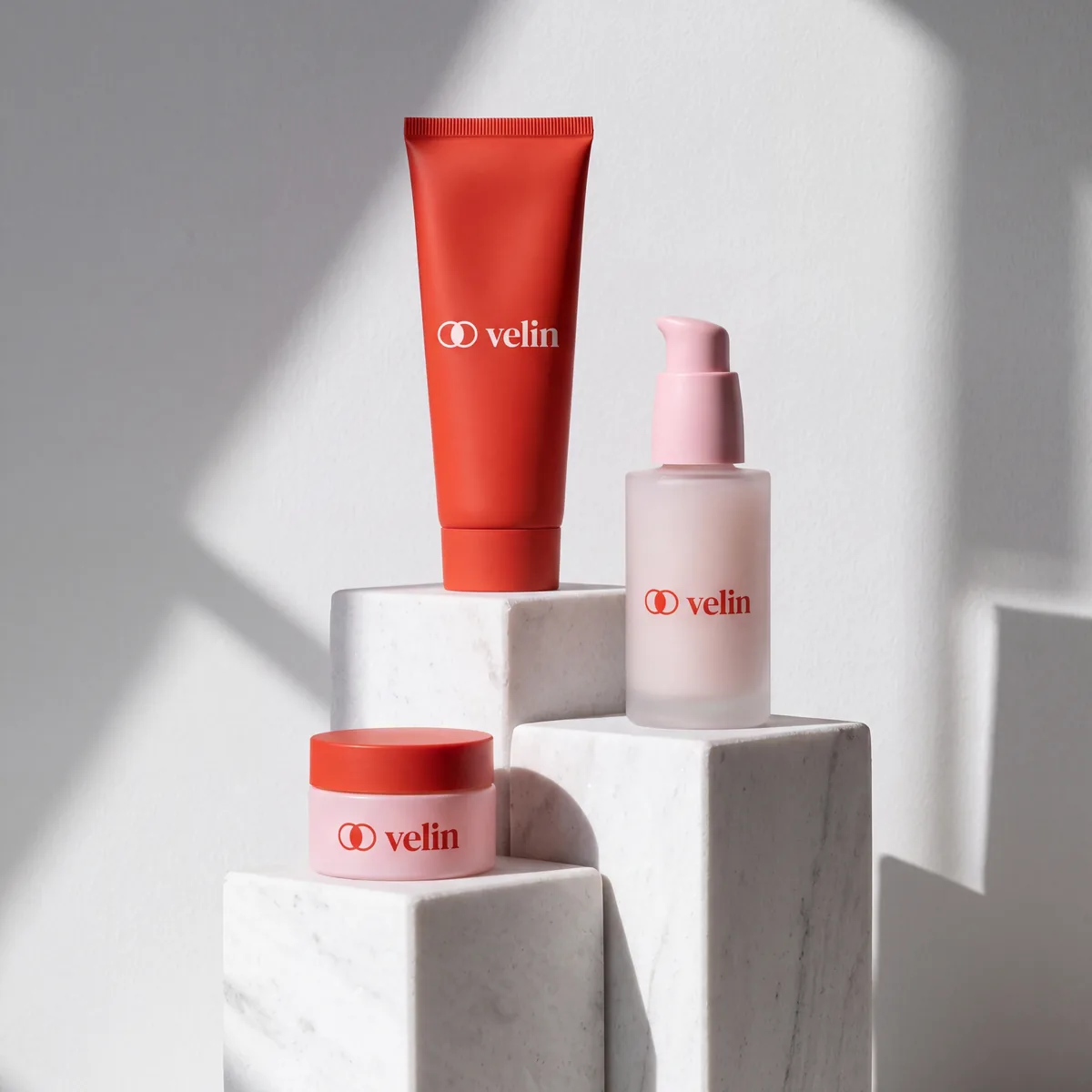
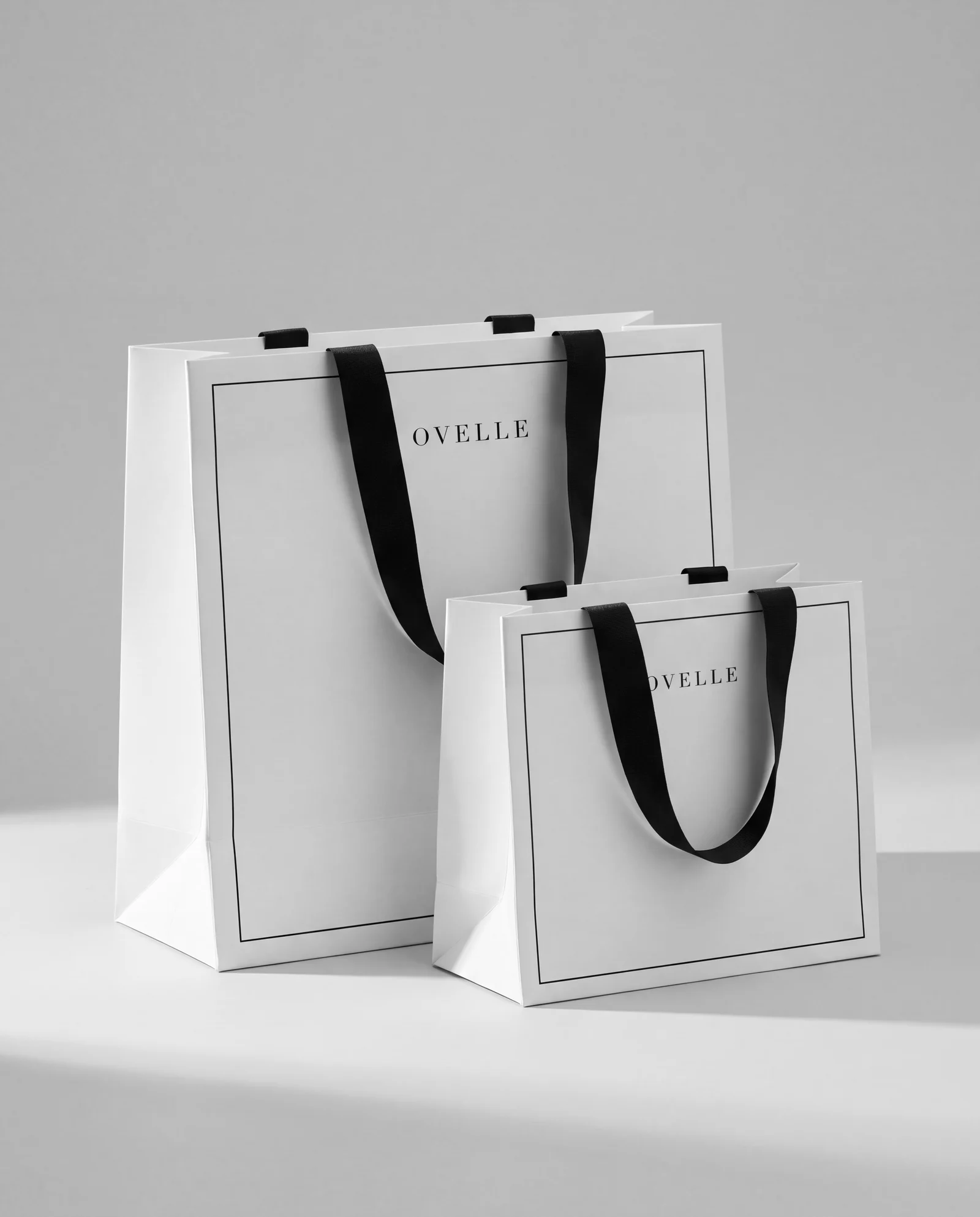
In the identity and packaging for OVELLE, a fictional jewellery house we built as a concept, the packaging is black and white with platinum foil and belongs to one system with the boutique and stationery. The picture at the top of this page, from our branding portfolio, shows the fictional skincare brand velin using two colours and one symbol across a tube, a bottle and a jar. Packaging as part of an online luxury purchase is covered in building an online store for a luxury brand.
Packaging labelling requirements
Labelling rules depend on the country and the product category, and they are worth settling before design because they decide the space left for everything else. As an example of how specific they are, Israel’s Consumer Protection Order (Marking of Goods) (in Hebrew) requires, among other things:
- The product name and trade name, the registered trademark if any, and the model and serial number if any.
- The manufacturer’s name and address, or for imported goods the importer’s, and the country of manufacture.
- The quantity in metric units, and for many products the net weight or volume.
- For goods made in Israel, marking in Hebrew; a foreign language may be added if identical in content and form, with foreign letters no larger than the Hebrew ones.
- Details that are clear, legible and durable, in letters that are not small or cramped, in a visible place and in a colour that differs from the background, and not obscured by illustrations.
The order also has schedules with special rules for certain goods and exemptions for others, and food, cosmetics, toys and electrical goods carry further requirements from other regulators and standards. Every market you sell in will have its own equivalent. Settle the list of mandatory details with your importer, regulatory adviser or lawyer before design, not after the proof. This is not legal advice.
Sustainable packaging choices
Regulation is moving towards producer responsibility. In the EU, the Packaging and Packaging Waste Regulation (EU) 2025/40 has been in force since 11 February 2025 and applies from 12 August 2026, with the aim of making all packaging recyclable by 2030. In Israel, the Packaging Law (in Hebrew) places extended responsibility on manufacturers of packaged products and on importers for marking packaging and recycling its waste, with an exemption for those whose packaging sold in a year does not exceed 1,000 kilograms. Design choices that help with recycling and cost either way:
- One material instead of a mix that is hard to separate, such as paper laminated with plastic.
- Less empty space: a box sized to the product saves material and shipping.
- Recycled or unbleached board, where it suits the brand.
- Fewer separate parts: stickers, ribbons, inserts.
- Designing for reuse: a box customers keep is also advertising.
Packaging mockups, 3D and AI
Before paying for a printed prototype, you want to see the pack in the world: on a shelf, in a hand, next to competitors, in a campaign image. 3D visualisation and AI-produced images let you compare directions quickly, and after production they let you create product images for the store and social media without a shoot for every product. Two rules: build the visual from the real dieline and artwork, so the text, logo and proportions are right, and never let it replace a physical prototype. We cover producing this kind of content in AI content creation for brands and AI product photography.
Print-ready checklist
- Artwork sits on the manufacturer’s latest dieline, with bleed and a safe area.
- Every mandatory detail is present, in the required languages, at a legible size and contrast.
- Colours are set for print (CMYK or spot), and images are at sufficient resolution.
- Fonts are outlined or supplied, with a licence that covers packaging.
- Finish layers (foil, varnish, embossing) are in separate files, as the printer asked.
- The barcode has been tested with a scanner, at the size and contrast the printer recommends.
- A plain prototype has been tested with the real product: it fits, closes and does not move.
- The colour proof is approved in writing, against a sample of the real material.
- Source files and the specification stay with you, for future runs.
How much does packaging design cost
In Israel we see roughly $800–$3,200 for packaging design for a single product and roughly $2,700–$11,000 for a packaging system across a range, as rough USD conversions before tax. They are not a price list, and larger markets often charge more. The price depends on the number of products and sizes, whether a brand identity already exists, structural complexity, the number of directions and revision rounds, and the visuals. Production, from samples to the run, is a separate cost that depends on quantities and materials. When packaging is part of full branding, it goes into the brand guidelines with rules that let you add a product without starting over.
Packaging and branding at Libra
We design packaging as part of the brand identity, in Hebrew and English, from the brief to print-ready files, and produce visuals and product images from it for the store and campaigns. Our website, store and branding work is described on websites, landing pages and stores. If you have a product that needs packaging, send a brief with the product, its dimensions, the quantities and where it will sell. We reply by email with a direction, a written price and a date.
No term matches.
Questions
What are the steps in the packaging design process?
The brief, structure and dieline, materials and finishes, graphics and copy, visualisation, a physical prototype, and a print proof before production. Get the dieline from the manufacturer before graphics begin.
What is a dieline in packaging?
The flat technical drawing of a pack, showing where it is cut, folded and glued and where artwork can go. Artwork is placed on it, so it has to be final and to exact size before design starts.
What information must be on product packaging?
It depends on the country and category. Israel’s marking order, for example, requires the product name, the manufacturer’s or importer’s name and address, the country of manufacture and the quantity in metric units, in Hebrew, legible and contrasting with the background; food, cosmetics and toys have further rules.
How much does packaging design cost?
In Israel we see roughly $800–$3,200 for one product and roughly $2,700–$11,000 for a system across a range, as rough USD conversions before production. Larger markets often charge more.
How long does packaging design take?
The design usually takes a few weeks. Prototypes, proofs and production depend on the manufacturer and quantities and often take longer than the design, so plan them into the schedule from the start.
Can AI be used for packaging design?
For exploring directions and producing visuals and product images, yes. The print files, the dieline and the mandatory details are built and checked by hand, and a visual never replaces a physical prototype.
Getting started
Want this for your business?
Send a short brief: three required questions, the rest only if you like. We reply by email with a direction, a written price and a date.