How to name a business: from a long list to a name you can register
How to name a business: what a good name does, types of names, working in two languages, and the availability checks to run: domain, handles, company register, trademarks.
Part of the guide: Business branding guide: what branding includes, from strategy to trademark
To name a business, work in three steps. First write down what the name has to do: who it speaks to, which languages it will be said in and what it should suggest. Then build a long list and filter it for pronunciation, meaning and memorability. Only then check availability: the domain, social handles, the company register and the trademark databases of every market you sell in. A good name is easy to say and spell in every language you trade in, does not echo a competitor and is free to register. Run the checks before you fall in love with a name, not after the signs are printed.
The name is the branding decision that is hardest to undo, because it ends up in the domain, the invoice, the sign, the trademark and customers’ memory. This article covers only the name. Where it sits in the wider brand is explained in our business branding guide.
What makes a good business name
- Easy to say out loud. If you have to spell it every time you say it on the phone or in a voice note, it costs you enquiries that never arrive.
- Easy to type after hearing it. Someone who hears the name once should be able to search for it. Ambiguous letters and silent letters are where names fail.
- Distinctive. A name that sounds like three competitors will not be remembered, and will struggle to register.
- Not a box. A name that describes one product or one city will feel narrow when the business grows.
- Works in every language you use. No awkward meaning, no wildly different pronunciation, no spelling that falls apart when transliterated.
- Available. As a domain, as handles, as a company name and as a trademark in your field.

Types of business names
No type is right for everyone. Each has a price: the more descriptive a name, the easier it is to understand on day one and the harder it is to protect and stand out with. The examples come from identities we built for fictional businesses.
| Type | Example | Strength | Weakness |
|---|---|---|---|
| Descriptive | A name that says what the business does and where | Instantly clear, helps local search | Generic, hard to register, close to competitors |
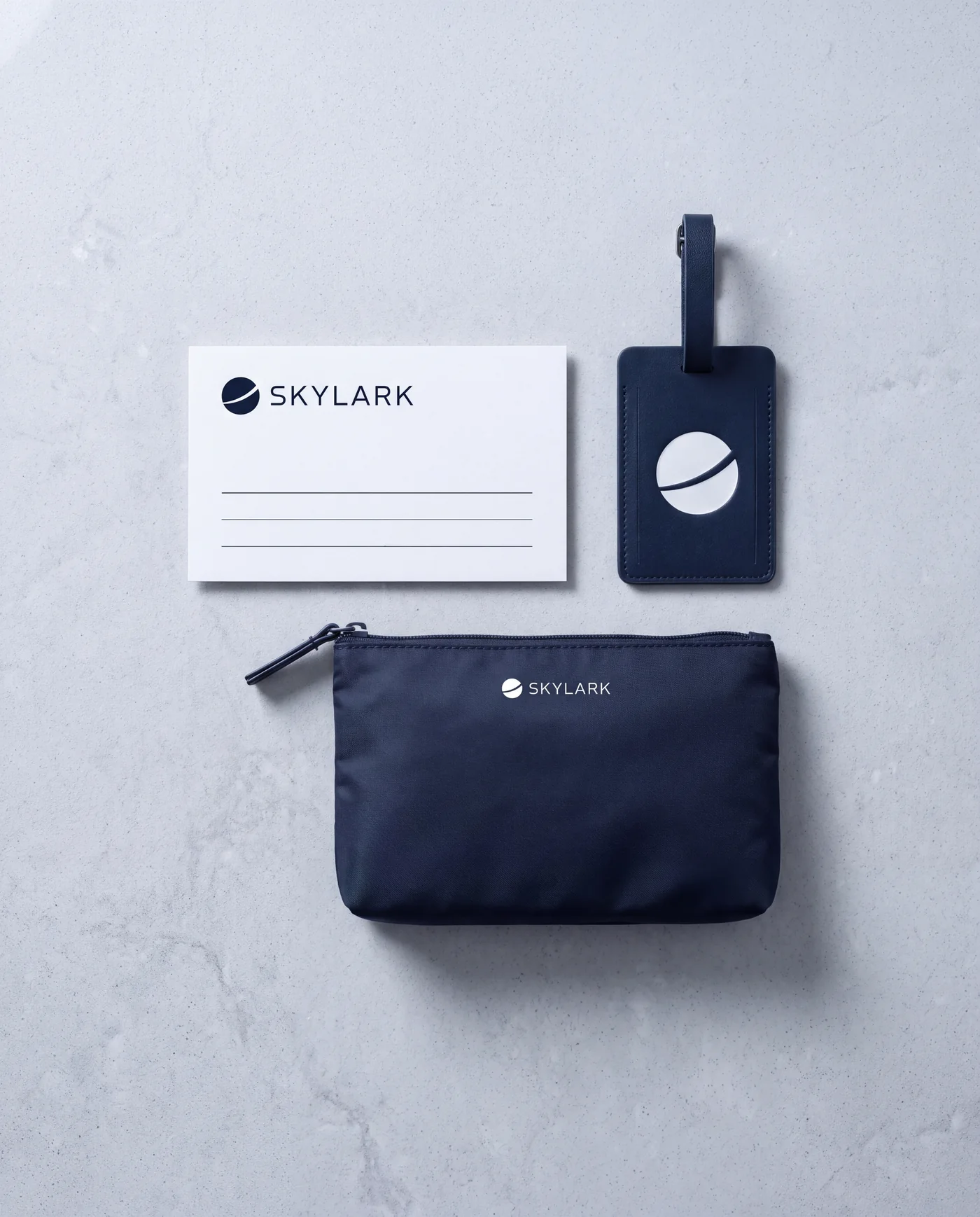
| Suggestive | SKYLARK for a private-aviation company | Evokes a feeling without describing | The word may already be taken in your field |
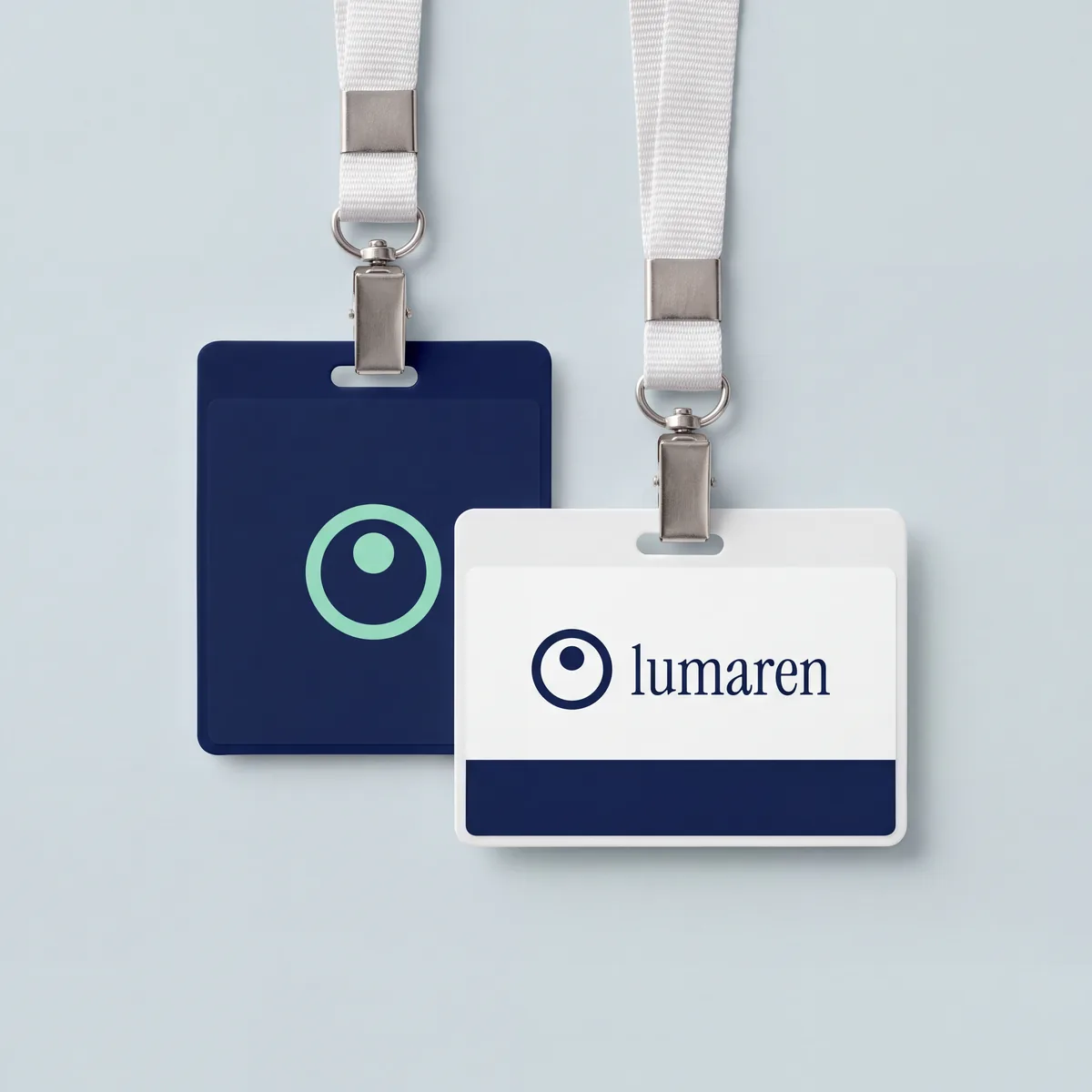
| Invented | Lumaren for a longevity clinic, velin for a skincare brand | Unique, easy to secure as a domain and mark | Means nothing until the brand gives it meaning |
| Founders’ names | Holt & Vardi for a law firm | Trust and continuity, suits professional services | Tied to people; harder to sell or extend |
| Initials | Three or four letters | Short | Says nothing and is hard to remember without a large budget |
You can follow SKYLARK from its name to the aircraft livery and the app, and see eight identities in our branding portfolio. These are concepts we built; the businesses are fictional.
Naming a business in more than one language
Most businesses in Israel, the market we work in, appear in at least two languages: the sign, invoice and website in Hebrew; Instagram, the domain and overseas clients in English. The same applies to any business that sells across borders. Test every candidate both ways:
- Spelling in the other script. If there are three reasonable ways to transliterate the name, customers will type three different addresses.
- Pronunciation. Ask five people to read the name aloud without explanation. If you hear two pronunciations, you will live with two.
- Meaning. Check the name in every language spoken in your market and in every market you plan to enter. Slang matters as much as the dictionary.
- Length and shape. See how it looks as a domain, as a handle and at the size of an app icon.
- The legal name. Company registers may examine the translated form too. Israel’s Registrar of Companies, for instance, reviews the Hebrew-to-English translation of a company name, so the English version belongs in the decision, not in a later form.
If the website will run in two languages, the name also has to work in the address, the title and the search result in each. We cover that in building a bilingual Hebrew–English website.
The naming process, step by step
- Write the job description. Three lines: who the name speaks to, what impression it should leave, and which languages and markets it must work in over the next five years.
- Build a long list. Dozens of candidates of every type. This is where a name generator or an AI tool can help, as a source of directions rather than a decision.
- Cut to a short list. Remove anything hard to spell, close to a competitor, too narrow or awkward in another language. Keep about ten.
- First availability pass. Domain, handles and a quick trademark search. Most names fall here.
- Say it and write it. Read it over the phone, put it on a mock sign, type it into a search engine, see it at icon size.
- Pick three. Company registers often ask for alternatives; Israel’s asks for three proposed names. A first choice and two back-ups is also good practice.
- Legal check and registration. For a name the business will be built on, involve a trademark attorney before you invest in a logo.
Design starts only once the name is settled. A logo drawn for a name that may still change is work done twice; what a logo costs and should include is covered in logo design cost.
How to check if a business name is available
| Check | Where | What to look for |
|---|---|---|
| Domain | Any domain registrar | The extensions that matter to you, and who holds similar addresses |
| Handles | Instagram, Facebook, TikTok, LinkedIn, YouTube | The exact name, without dots or underscores that confuse people |
| Company name | The company register in your country | Identical or similar names of existing companies |
| Trademarks | The national trademark database, plus WIPO’s Global Brand Database | Identical or similar marks in the same classes of goods and services |
| Each target market | That country’s trademark office | The same, in every market you plan to sell in |
| Open search | Search engines, maps, app stores | Businesses trading under the name without registering it |
Trademark searches
WIPO’s Global Brand Database is a free starting point: it covers international registrations under the Madrid System and trademarks from participating national and regional offices, searchable by words, names, goods and services, and image similarity. Then search the office of each market. In the US that is the USPTO, whose trademark search page also explains likelihood of confusion and clearance searches. In Israel it is the Israel Patent Office trademark database, searchable by words in the mark, owner and class.
Company registration is not brand protection
Registering a company name is a separate process from registering a trademark, in Israel and in most countries. In Israel, the Corporations Authority’s guide to company names (in Hebrew) explains that applicants propose three names, and that a name is refused if it is misleading or similar to an existing company or trademark; it also notes that a founding year, a generic line of business or a location does not make a name distinctive. A registered company name does not stop someone else from using the name as a brand. Only a trademark does that, and only in the classes and countries where it is registered. This is not legal advice.

Common naming mistakes
- Falling in love with a name before checking whether it is free.
- Naming the business after what it sells today rather than what it will sell in three years.
- Asking twenty friends what they think, instead of testing whether they can say and spell it.
- Choosing a clever spelling (a doubled letter, a number for a letter) that every customer gets wrong.
- Buying one domain extension and discovering someone else holds the other.
- Choosing a name that sounds right in one language and only then seeing how it reads in the other.
- Registering a company and assuming the name is protected.
Naming and branding at Libra
We develop names as part of full branding: the job description, a long list, filtering in Hebrew and English, domain, handle and trademark-database checks, and then the identity, the website and the content. The whole branding process is described in branding a business from zero, and our website and branding work on websites, landing pages and stores. If you need a name, send a brief with what the business does and for whom. We reply by email with a direction, a written price and a date.
No term matches.
Questions
How do I come up with a business name?
Write down what the name must do, generate a long list of every type, cut it down by pronunciation, spelling and meaning in every language you use, then check the domain, handles, company register and trademark databases. Design the logo only after that.
How do I check if a business name is already taken?
Check the domain with a registrar, the handles on each social network, your country’s company register, and the trademark database of each market, starting with WIPO’s free Global Brand Database. Also search the web and maps for businesses trading under the name without registering it.
Does registering my company protect the name?
No. Company registration and trademark registration are separate processes in most countries. Only a registered trademark protects the name as a brand, and only in the classes and countries where it is registered.
Should a business name describe what the business does?
A descriptive name is clear from day one but is harder to protect and to stand out with, and it can become too narrow as the business grows. Suggestive and invented names take more effort to build but are easier to own.
Can I use an AI business name generator?
Yes, as a source of ideas. A generator does not check availability, similarity to competitors or meaning in other languages, so every suggestion still goes through the same checks.
How long does it take to name a business?
A focused naming process with availability checks usually takes a few weeks. Full branding with a new name usually takes roughly 9 to 14 weeks, and legal checks and trademark filing add their own time.
Getting started
Want this for your business?
Send a short brief: three required questions, the rest only if you like. We reply by email with a direction, a written price and a date.