How to brief a studio so the proposal comes back right
What to put in a brief for a website, a brand, content or automation: the goal, the audience, references, budget and timing, and what to attach so the proposal is accurate.
Part of the guide: Business branding guide: what branding includes, from strategy to trademark
To write a creative brief for a studio, answer a short, fixed set of questions in writing: what the business is, what the project must achieve, who it is for, the one action you want visitors to take, what already exists, what you like and dislike, your budget range, your deadline and who decides. A good brief is one or two pages, not a deck. The proposal you get back can only be as precise as the brief you send.
Why the brief sets the proposal
A studio that receives a one-line brief, “we need a new website”, can reply in only two ways: a very wide price that covers every possibility, or a list of questions that sends you back to the start. Either way time passes, and comparing proposals from different studios becomes meaningless, because each one guessed something different.
A detailed brief does the opposite. It lets the studio understand the scope, spot the difficult parts early, and write a direction rather than just a number. It also makes you take a few decisions before the project starts, which saves rounds of revisions later. Most delays we see on projects do not come from design or code. They come from a decision that was not made in time.
The proposal can only be as precise as the brief.

The questions every website design brief should answer
These questions apply to almost any project: a website, branding, content or automation. The answers do not need to be long. One or two sentences each is enough, as long as they are specific.
- The business. What you sell, to whom, how long you have been operating, and what sets you apart. Facts, not a slogan.
- The goal. What should change after the project: more enquiries, online sales, a product launch, a rebrand before fundraising.
- The audience. Who the customer is, what they already know, what worries them, and where they come from (search, social, referral).
- The one action. The single thing a visitor should do: leave details, buy, book, download. If three actions are equally important, none of them is.
- What exists already. Current site, logo, brand guidelines, photography, copy, systems (CRM, payments, booking).
- References, and why. Two or three sites or brands you like, each with a sentence on exactly what: the type, the pace, the photography, the simplicity.
- What you don’t want. Styles, colours or approaches to avoid. This helps as much as the references.
- Budget range. A range, not an exact figure. Why it matters is explained below.
- Timing. A target date, and whether it is hard (a launch, a trade show, a season) or preferred.
- Who decides. Who approves the work at each stage, and who needs to see it before approval.
- Languages. One language or several. A bilingual site, for example Hebrew and English, is close to two sites in terms of content.
Why sharing a budget range helps
Many clients prefer not to state a budget, worried the studio will simply fill it. In practice, without a range the studio cannot tell whether to propose a five-page site or a full system, and both would be professionally sound answers. A budget range does not set the price; it sets the scope inside which the studio chooses the best solution.
If you have no idea what is reasonable, say so, and ask for two options in the proposal: a minimal one and a complete one. We wrote about what drives the cost of a site, from pages and content to integrations, in what a website costs. Also state whether your range includes sales tax or VAT, since studios usually quote before it.

What to attach
Files save questions. Even when they are imperfect, send what you have and note its state.
- Logo in source files: SVG, AI or vector PDF, not a screenshot.
- Brand guidelines if they exist: colours, fonts, tone. If not, say so; it changes the scope. What belongs in one is covered in our piece on the brand book.
- Product photography at original quality, with who shot it and what the usage rights are.
- Existing copy: about, service descriptions, FAQs, even if it needs rewriting.
- Access: domain, hosting, current site, analytics and Search Console. Send the passwords themselves separately through a secure channel, never inside the brief.
- Numbers: visitors, enquiries, where they come from. Even a rough estimate helps.
Briefs by type of project
Beyond the general questions, each type of project has a few of its own. The table collects what matters most for each:
| Project type | What to write | What to attach |
|---|---|---|
| Website or landing page | Approximate page count, the one action, traffic source, languages, who will update the site | Current site, copy, photography, access |
| Online store | Number of products, variants (size, colour), shipping, payments, stock system | Product list, photography, shipping and returns policy |
| Branding | What the brand should convey, competitors, where it will appear (packaging, signage, digital) | Existing logo if any, references with reasons |
| Content, photo and video | Where it will be published, formats, monthly volume, what must not be shown | Product photography, brand guidelines, examples you liked |
| Automation or AI agent | Which process, enquiries per day, which channels, when to hand over to a person | Current call or chat script, FAQs, systems to connect |
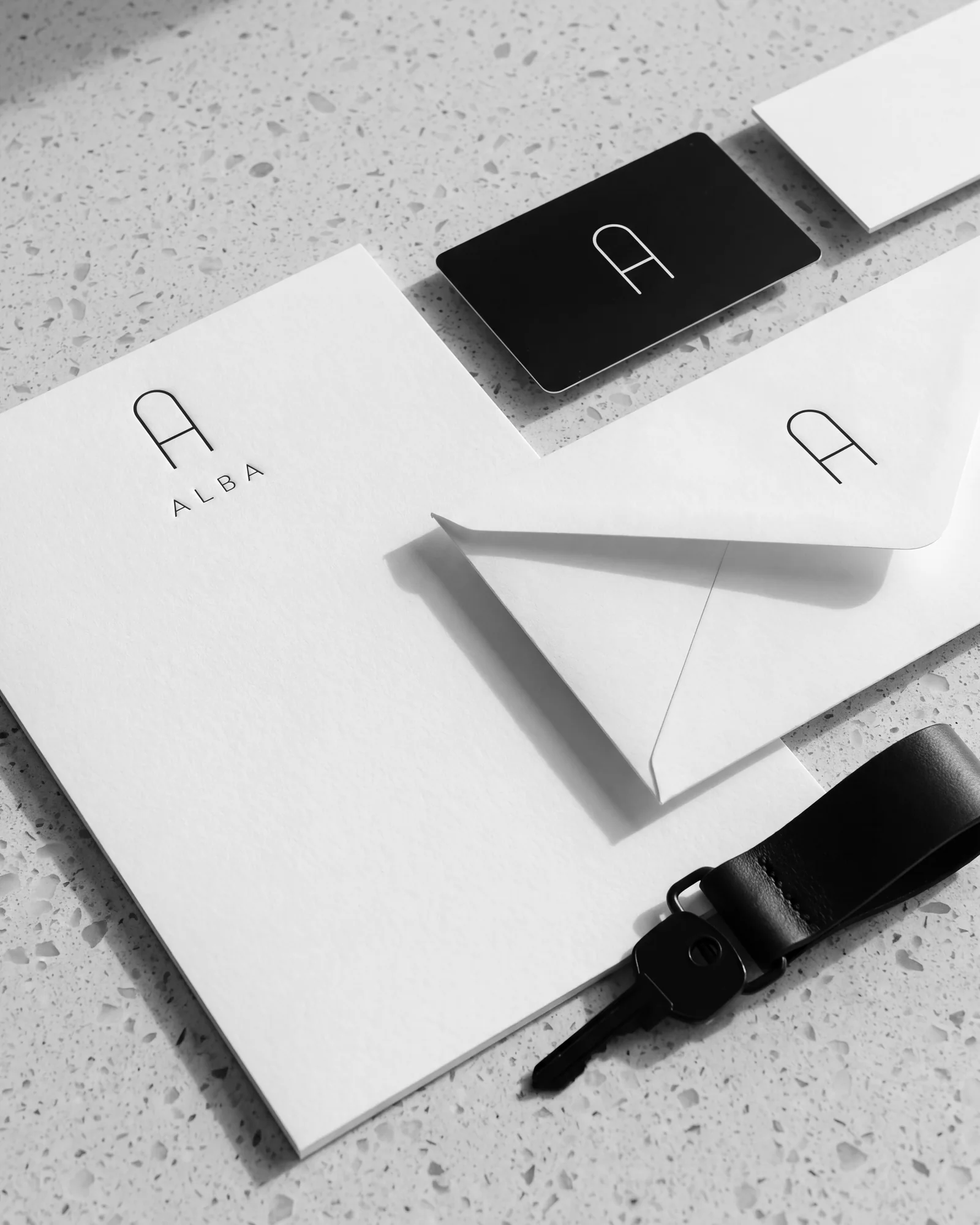
For example, a brief for the ALBA launch page, a residential tower concept we built (the business is fictional), should include the one action (leaving details to receive the price list), the date sales open, and the renders that already exist. A brief for the OVELLE store needs the number of pieces, the engraving options and the returns policy. A brief for the EMBER AI agent, which books restaurant tables, needs opening hours, booking rules and the point at which a conversation passes to a person. If the project is a brand from scratch, read branding from zero first.
Common mistakes in a creative brief
- Copying a competitor. “Make it like X’s site” gives the studio a structure but no reason. Write what works there for you, and what you want to do differently.
- Vague direction. “Modern”, “make it pop”, “something premium”. Everyone reads these differently. Send a reference instead and explain what is in it.
- No budget. As above, this produces proposals that cannot be compared.
- Too many decision makers. When five people approve every stage, each adds a comment and the project loses direction. One person should decide, after collecting input from the rest.
- Everything is a priority. A brief with ten items marked critical marks none. Rank them.
- A date with no reason. “We need it in two weeks” with no explanation. If there is a launch, say so; if not, say the date is flexible.
Creative brief template: a checklist to copy
Copy this list into a document, answer each line in a sentence or two, and send it:
- Business name, what you sell and to whom, and what sets you apart.
- The project: website, store, branding, content, automation, or a mix.
- The goal: what should change after the project.
- The audience: who the customer is, where they come from, what worries them.
- The one action a visitor should take.
- What exists: site, logo, brand guidelines, photography, copy, systems.
- Two or three references, and what exactly you like in each.
- What you don’t want.
- Budget range, and whether it includes tax.
- Target date, and whether it is fixed.
- Who decides and who else needs to see the work.
- Languages.
- Attached files, and the state of each.
What a good reply to a brief looks like
A good reply to a brief is a written document, not an invitation to a meeting. It shows the studio understood the business, proposes a direction (what will be built, in what order, and why), states a clear price with what is and isn’t included, and gives a date. If information is missing, it says what is missing and how that affects the price, rather than guessing.
This is how we work at Libra. The brief form on our site has three required fields, your name and contact details, and everything else is optional: what you need, what you are working on, a budget range and when you want to start. The more you write, the more precise the proposal. The reply comes by email, with a written direction, price and date. You can see what we build under websites and stores and automation and AI agents, and every example is collected on the examples page.
When your brief is ready, send it here. Even if it is still partial, the emailed reply will say what is missing and what can already be priced.
No term matches.
Questions
What is a creative brief?
A creative brief is a short document describing the business, the goal, the audience, what already exists, the budget range and the timeline. A studio uses it to write a direction, a price and a date.
How long should a website design brief be?
One or two pages is enough. One or two specific sentences per question are more useful than a long deck of general answers.
Do I have to include a budget in a brief?
It is not required, but a range is strongly recommended. Without one, the studio cannot tell what scope to propose, and the proposals you receive will be hard to compare.
What should I attach to a creative brief?
Logo source files, brand guidelines if they exist, full-quality product photography, existing copy and references with a note on why you chose them. Passwords go separately through a secure channel.
What if we have no references?
Write what you don’t want, and describe the audience and the goal in detail. A good studio can propose a direction without references as long as it is clear who the work is for and what it must achieve.
How does Libra reply to a brief?
By email, with a written direction, price and date. The form has three required fields and the rest is optional, but every extra detail makes the proposal more precise.
Getting started
Want this for your business?
Send a short brief: three required questions, the rest only if you like. We reply by email with a direction, a written price and a date.