How much a business website costs, and what actually sets the price
Honest price ranges for a company website, a landing page and an online store, what a quote should include, what you pay every year, and how to compare proposals.
Part of the guide: How to build a business website, step by step
A business website usually costs anywhere from the low thousands of dollars for a template site to roughly $2,000–$11,000 for a site designed and built for the business, roughly $800–$4,000 for a single landing page, and roughly $5,500–$22,000 or more for an online store. Where you land depends on scope, custom design versus template, who produces the content, languages, integrations and accessibility. On top of the build there are yearly costs: domain, hosting, maintenance, licences and new content.
These are rough USD conversions of the ranges we see in our own market, Israel, where Libra is based. Agencies in the US, UK or Western Europe often charge more for the same scope. Treat them as proportions, not a price list: two sites that look alike can differ threefold in price because of work you cannot see from the outside.
Typical price ranges by type of website
| Type of site | Rough range (USD) | What it depends on |
|---|---|---|
| Template or DIY builder | Low thousands or less in year one | Platform subscription, a paid theme, a few hours of setup. Design and content are on you. |
| Landing page | Roughly $800–$4,000 | Custom design or template, copywriting, a form wired to your CRM, tracking, a second language. |
| Business website | Roughly $2,000–$11,000 | Number of page templates, custom design, content and images, languages, accessibility, SEO basics. |
| Online store | Roughly $5,500–$22,000+ | Products and variants, payments, shipping, invoicing, inventory and accounting integrations, product photography. |
| Yearly running costs | From a few hundred to several thousand a year | Domain, hosting, maintenance and security updates, licences and plugins, new content. |
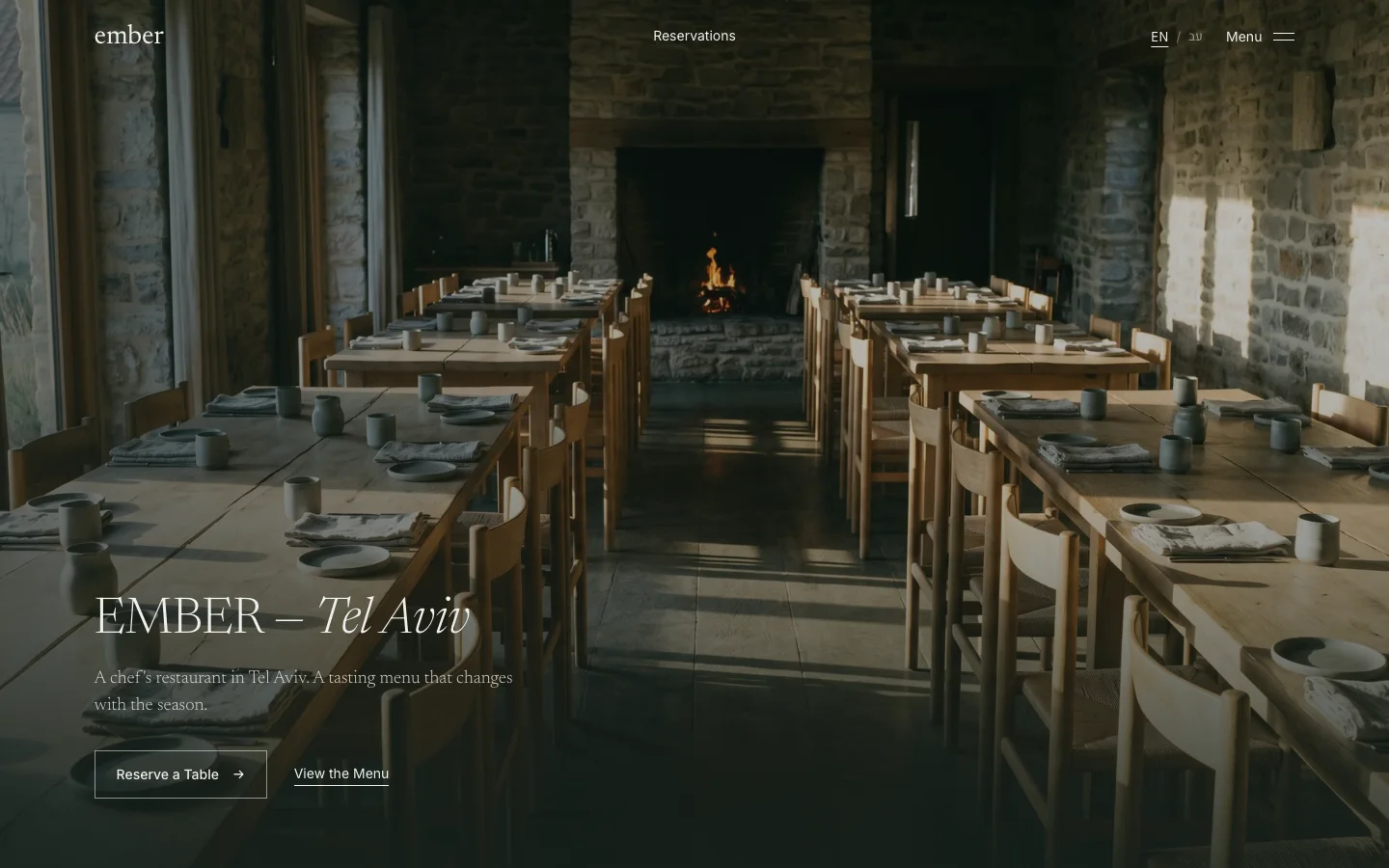
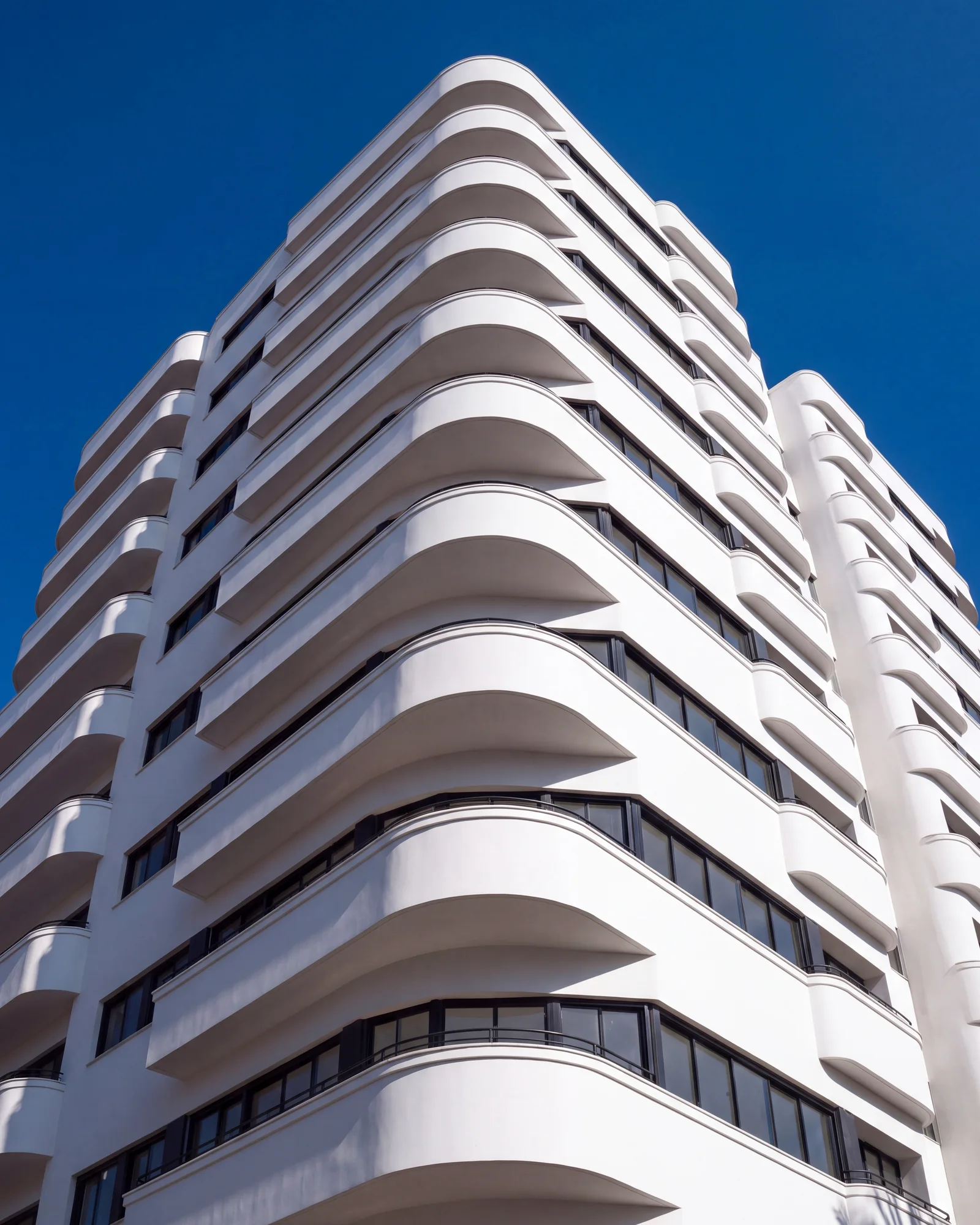
To make the ranges concrete: the Névé clinic website is a business site with treatment pages, a team page, FAQs and an enquiry form. The EMBER restaurant website is smaller: a menu, table booking and atmosphere. The ALBA launch page is a single landing page with a 3D model of a residential tower and a registration form. These are concepts we built; the businesses in them are fictional.
What sets the price of a business website
Scope and page templates
Price follows the number of distinct page templates, not the number of pages. Ten service pages on one template cost less than five pages each built differently. Count them before asking for quotes: home, service, about, article, contact, and anything special such as a calculator or booking flow. Every extra template means more design, development and testing.
Custom design versus a template
A ready-made template saves time and money, and it is a reasonable choice for a business that needs a basic presence now. The cost is that the site looks like many others, and structural changes run into the template’s limits. Custom design starts from the brand, the audience and the one thing you want a visitor to do, and builds the pages around those. It takes more designer and developer hours, and that is most of the gap between a site at the bottom of the range and one near the top.
Content, copy and images
Many quotes assume the content comes from you. In practice, copy for every page, photography and deciding what goes in are a large share of the work and the most common reason sites launch late. If the studio writes the copy or produces the images, the price goes up, and so do the odds that the site ships on time. Product images and backgrounds can now be produced with AI, as long as the product itself stays faithful to the original.
Languages and right-to-left scripts
A bilingual site is more than a translation. Right-to-left languages such as Hebrew or Arabic need a mirrored version of every layout, icon and table. Any second language needs copy written for its audience rather than translated word for word, correct language tags, and forms and automated emails in both languages. It usually adds a meaningful share of the work, not a small percentage.
Integrations
A form that sends an email is simple. A form that writes into your CRM, sends a WhatsApp message, books a calendar slot or updates inventory needs development, testing and sometimes another subscription. Each integration is one more thing that can break, so it belongs in the quote by name.
Accessibility
Many countries now have accessibility requirements for websites that serve the public, usually built on the WCAG guidelines. In Israel, for example, regulation 35 of the 2013 accessibility regulations requires Israeli Standard 5568 at level AA (summary from the Israel Internet Association). Real accessibility is built into the code and content: colour contrast, keyboard navigation, alt text, labelled form fields and an accessibility statement. A plugin that adds an accessibility button does not replace it. Ask the quote to state what is tested and how.
SEO basics and speed
Every site needs a foundation: titles and descriptions for each page, a sound heading structure, readable URLs, a sitemap, structured data and fast loading. Google’s Core Web Vitals define “good” as LCP within 2.5 seconds, INP within 200 milliseconds and CLS of 0.1 or less (web.dev). Meeting them depends on image weight, the amount of script and the hosting, not on a setting in a theme. Ongoing SEO, articles and visibility in AI answers are a separate service; we cover them in our guide to SEO and GEO.

Costs that come back every year
The build is only part of what a website costs. Plan for these:
- Domain: usually tens of dollars a year, depending on the extension.
- Hosting: from a small yearly fee for a static site to considerably more for a busy store with backups and staging.
- Maintenance and security updates: sites on a content management system need regular core and plugin updates, either on a monthly retainer or billed by the hour.
- Licences: paid plugins, commercial fonts, a store platform subscription, a payment provider and an email platform. Some also take a percentage of each transaction.
- Content: new pages, products, images and articles. A site that never changes loses relevance.
- Accessibility: every new piece of content has to meet the same standard as the launch.
Ask every supplier what the site will cost in year two with no major changes, and get the answer in writing.
Who owns the code, the domain and the content
This is the part most businesses discover too late. Before signing, get these in writing:
- The domain is registered to your business, in your own account, not the supplier’s.
- You have admin access to hosting, the CMS, Google Analytics and Search Console.
- The code, design files and produced images belong to you once paid, or you hold a clear licence to use them.
- If you leave, you can take the site to another host without a release fee.
- Plugin and font licences are registered in a way that can be transferred.
How to compare website quotes
Two quotes at the same price can describe two very different websites. To compare them properly, ask every supplier to spell out the same items:
- How many page templates are included, and the price of one more.
- Who writes the copy and who supplies the images.
- How many rounds of design and development revisions.
- Which languages, and whether the second one is written or translated.
- Which integrations are included, by name.
- What is tested for accessibility, and who writes the accessibility statement.
- What the SEO basics include, and how speed is measured.
- A schedule with dates, and what happens if content arrives late.
- What year two costs, and whether there is a warranty period for bugs.
Open a few live sites the supplier built on your phone and try submitting a form; that tells you more than a portfolio. If you are not yet sure what to ask for, our guide to briefing a studio helps you put it in order before you approach anyone.
A good quote is one you can compare: every item named, every price in writing, every date on a schedule.
Red flags in a website quote
- A very low price with no breakdown and a note that “extras are billed separately”.
- The domain or hosting registered in the supplier’s name “for convenience”.
- No explanation of how the site will meet accessibility requirements, or a plugin as the only answer.
- A promise of first place on Google or a set number of leads. Nobody controls that.
- No written schedule, or one measured only in “weeks” with no milestones.
- No live sites to look at, only screenshots.
Website, landing page or store: what fits your business
For a small business that first needs to show up, explain what it does and receive enquiries, a focused site of five to eight pages is usually the right start. If you run paid campaigns around one offer, a dedicated landing page measures far better than sending traffic to the home page; we explain how to build one in how to build a landing page that converts. If you sell online, a store is a whole system with payments, shipping and service, and its cost reflects that. We wrote separately about online stores for luxury brands.
At Libra we build all three, including brand identity and content, and describe them on our websites, landing pages and stores page. We quote each project on its own, because the variables above differ for every business.
For an exact price rather than a range, send a brief with what you already know. We reply by email with a direction, a written price and a delivery date. You can also look through the examples we built first and mention in the brief which one is closest to what you need.
No term matches.
Questions
How much does a small business website cost?
A site designed and built for the business typically costs roughly $2,000–$11,000 in the market we work in, and more with agencies in the US or Western Europe; a template site costs the low thousands or less. The price depends on page templates, design, content, languages and integrations.
How much does an online store cost?
An online store usually starts around $5,500 and can pass $22,000, as a rough conversion of the ranges we see. The difference comes from product count and variants, payments, shipping, invoicing and inventory or accounting integrations.
What does a website cost every year after launch?
Domain, hosting, maintenance and security updates, licences for plugins and platforms, and new content. Ask the supplier for a written estimate of year-two costs.
Does a business website need to be accessible?
In many countries, yes, for sites that serve the public; most local rules are based on WCAG. Accessibility is built into the code and content, and an accessibility plugin on its own is not enough.
Who should own the domain and the code?
Your business, in your own accounts. Make sure the contract also transfers the code, design files and admin access to hosting and the CMS to you.
How do I compare two website quotes?
Ask each supplier to itemise the same things: page templates, who writes content, revision rounds, languages, integrations, accessibility, SEO basics, schedule and year-two cost. Only then are you comparing like with like.
Getting started
Want this for your business?
Send a short brief: three required questions, the rest only if you like. We reply by email with a direction, a written price and a date.