Real estate development website: pages, units, the form and speed
What a website for a new residential development needs: location, architecture, units and floor plans, 3D, a form wired to the CRM, languages, speed and cost.
Part of the guide: How to market a new residential development, from pre-launch to handover
A real estate development website is a dedicated site for one project, separate from the developer’s corporate site and from the campaign landing page. It answers what a serious buyer checks before visiting the sales gallery: location and neighbourhood, architecture, unit types with floor plans, the specification, renders and 3D, the developer and the team, construction progress and FAQs, with a registration form that goes straight into the CRM. In the market we work in, Israel, such a site typically costs roughly $2,000–$11,000, depending on design, languages, 3D and integrations.
Most projects start with one landing page before launch and move to a full site once plans, a specification and a sales gallery exist. How the website fits into the marketing of the whole project is in our guide to marketing a new residential development.
Project site, developer site or landing page?
Three kinds of site serve three different goals, and most developers need more than one. The table helps decide what to build now and what later.
| Launch landing page | Project website | Developer website | |
|---|---|---|---|
| Goal | Sign-ups to the register of interest | Everything a buyer needs before visiting | Trust in the company and its track record |
| When | Before launch and during campaigns | From sales opening to handover | For the life of the company |
| Content | Hero render, location, one message, a form | Units and plans, specification, gallery, 3D, progress | Projects, history, team, delivered projects |
| Traffic | Mostly ads | Ads, search, the site hoarding, referrals | Searches for the company, investors, partners |
| Rough range (USD) | Roughly $800–$4,000 | Roughly $2,000–$11,000 | Depends on scope |
| Connected to | CRM, tracking | CRM, inventory, tracking, WhatsApp | The project sites |
The ranges are rough conversions of what we see in the Israeli market, not a price list; what goes into each dollar is in our article on website cost. ALBA’s launch page is an example of a launch landing page: a 3D model of the tower, with every section leading to the registration form. It is a concept we built for a fictional project. How to build such a page so it converts is in our landing page guide.
What pages a residential development website needs
Location and neighbourhood
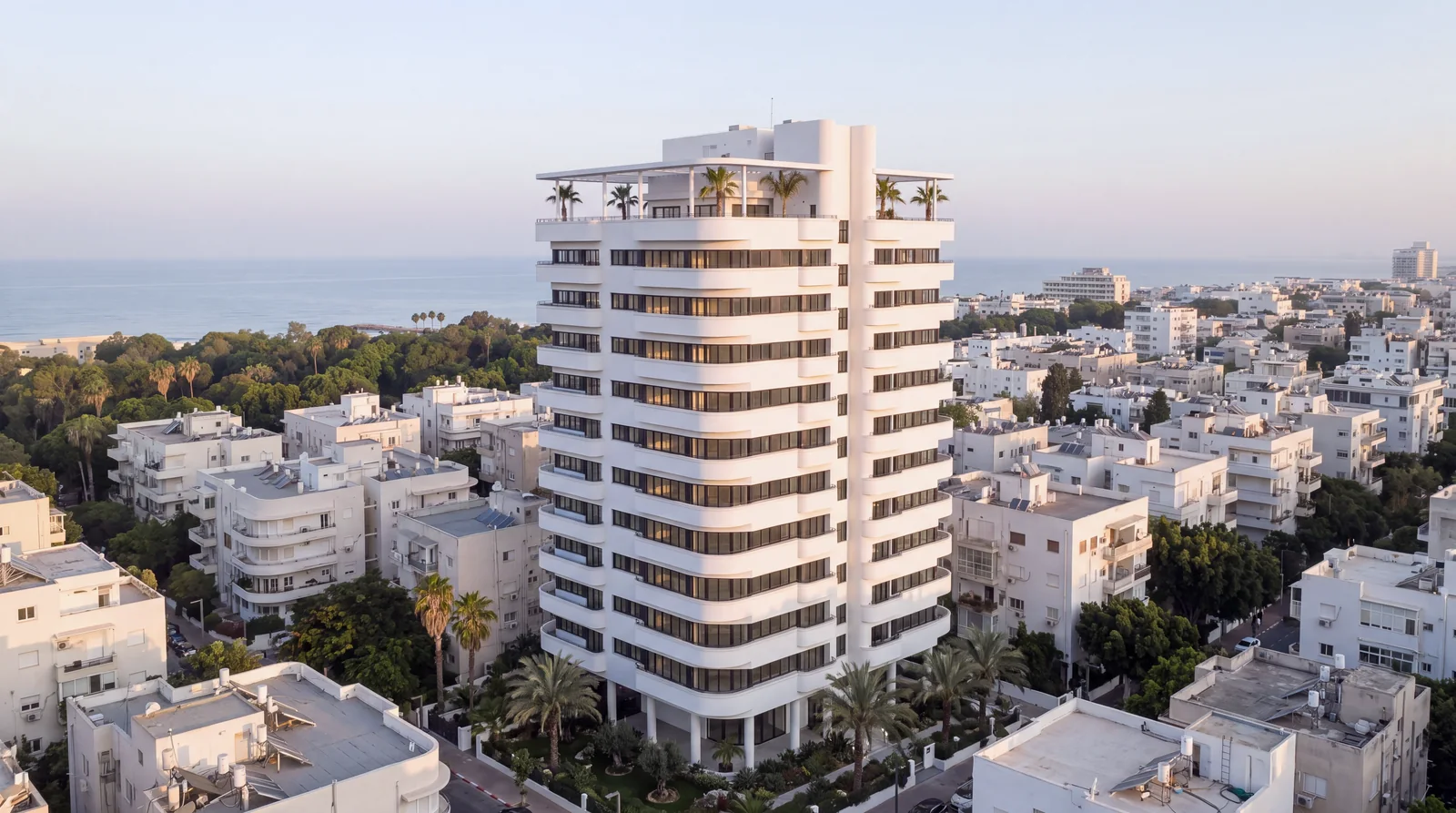
A map, travel times to main roads, public transport and the sea or a park, schools, shops, and approved future plans nearby. An aerial render of the project in its neighbourhood does more here than any paragraph. Only what is true today or formally approved; a “coming soon” that is not approved is a promise.
The architecture and the project
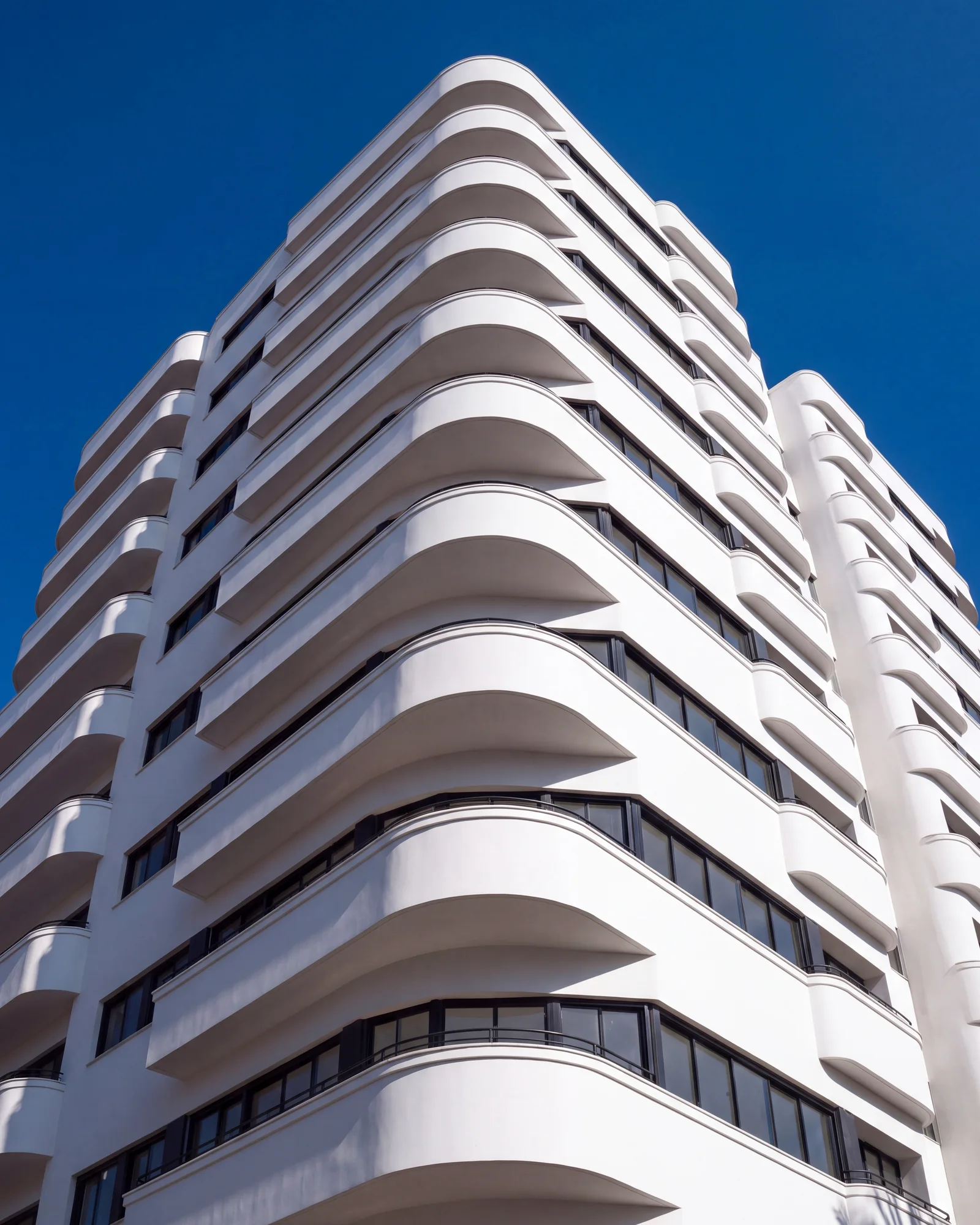
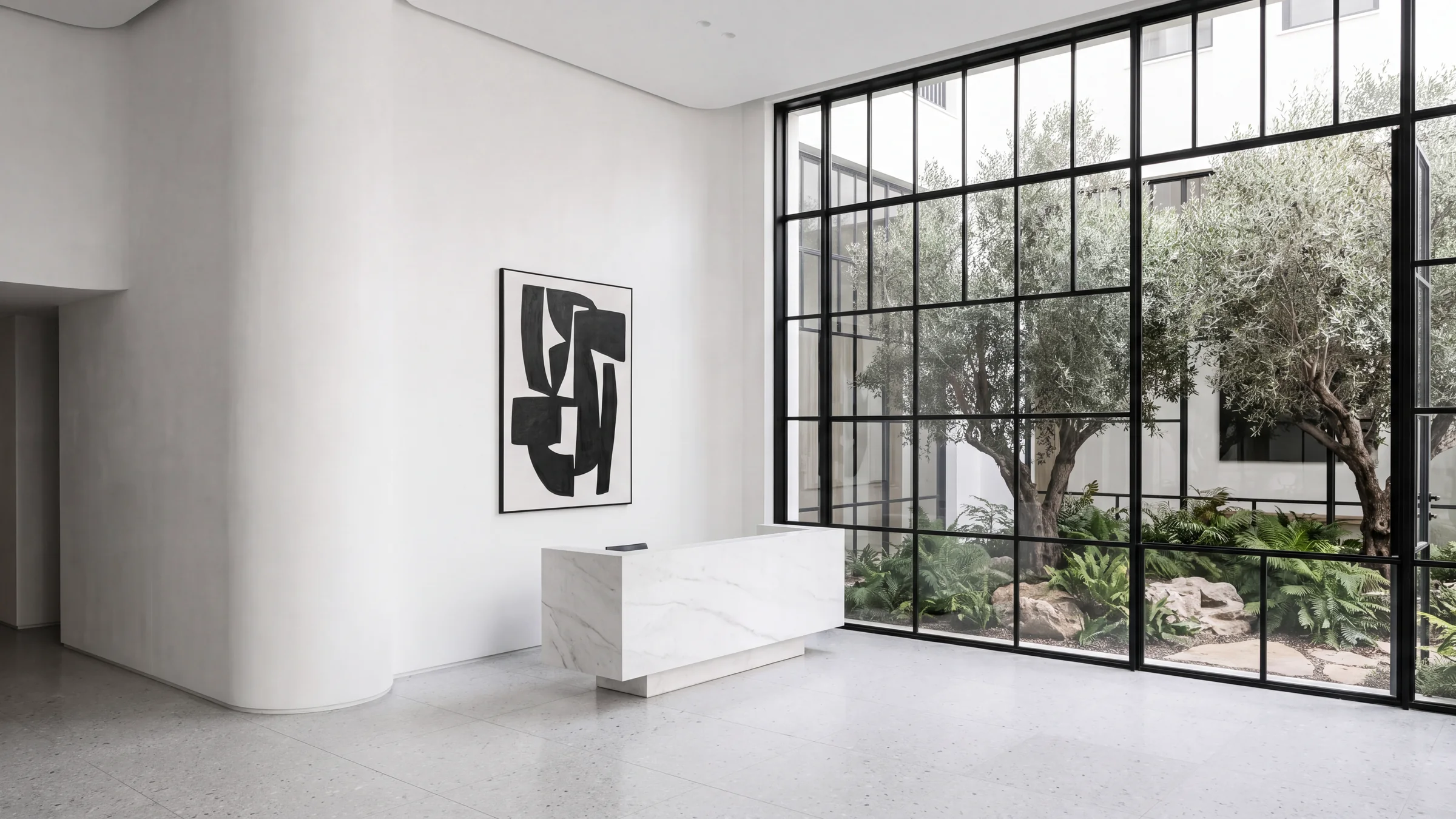
The idea behind the building, the architect, the number of floors and units, the lobby and shared amenities, exteriors by day and night, and a short film. This page decides whether the buyer feels the project differs from the one next door.
Residences and floor plans
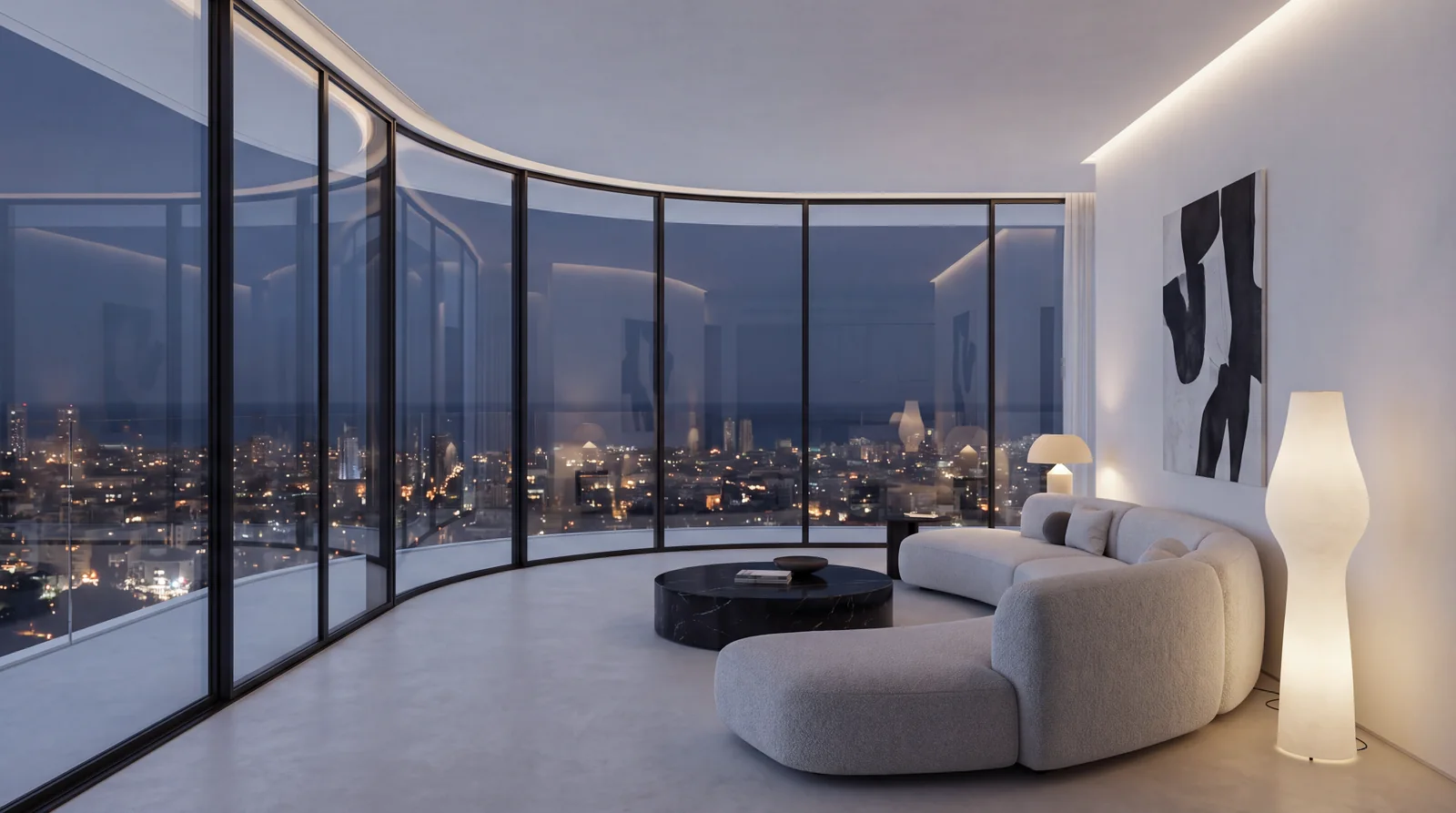
The most important page on the site. Every unit type with its area, bedrooms, balcony, orientation, a downloadable plan and an interior image. With many types, filters by bedrooms, floor and orientation save scrolling. A furnished 3D residence per type shows size better than any plan; ALBA’s 3D residences are an example.
Specification
A short, clear specification: flooring, kitchen, bathrooms, windows, air conditioning, parking and storage, with a link to the full document when it is ready. What is written here should match the contract.
Gallery and 3D
Exterior and interior renders, the film, 360° tours and the views from the floors. A short gallery of strong renders beats forty similar images. What each asset costs is in our article on 3D rendering cost.
Developer, team and construction progress
Who the developer, architect, contractor and financing bank are, and projects already delivered. Once building starts, a progress page with site photos and dates. Buyers who bought off-plan come back to it, and those still deciding check it.
FAQs and registration
Short answers to the questions the sales gallery hears every day: estimated handover, parking, storage, buyer changes, payment terms in wording the lawyer has approved. And a registration form on every page, not only on the contact page.
Should the site show prices and available units?
There is no single answer. A “from” price filters out enquiries that do not fit and lowers suspicion, but it means updating the site with every price change. Showing available stock gives a real sense of availability, but only if it is accurate: a unit shown as available that sold yesterday damages trust more than showing nothing.
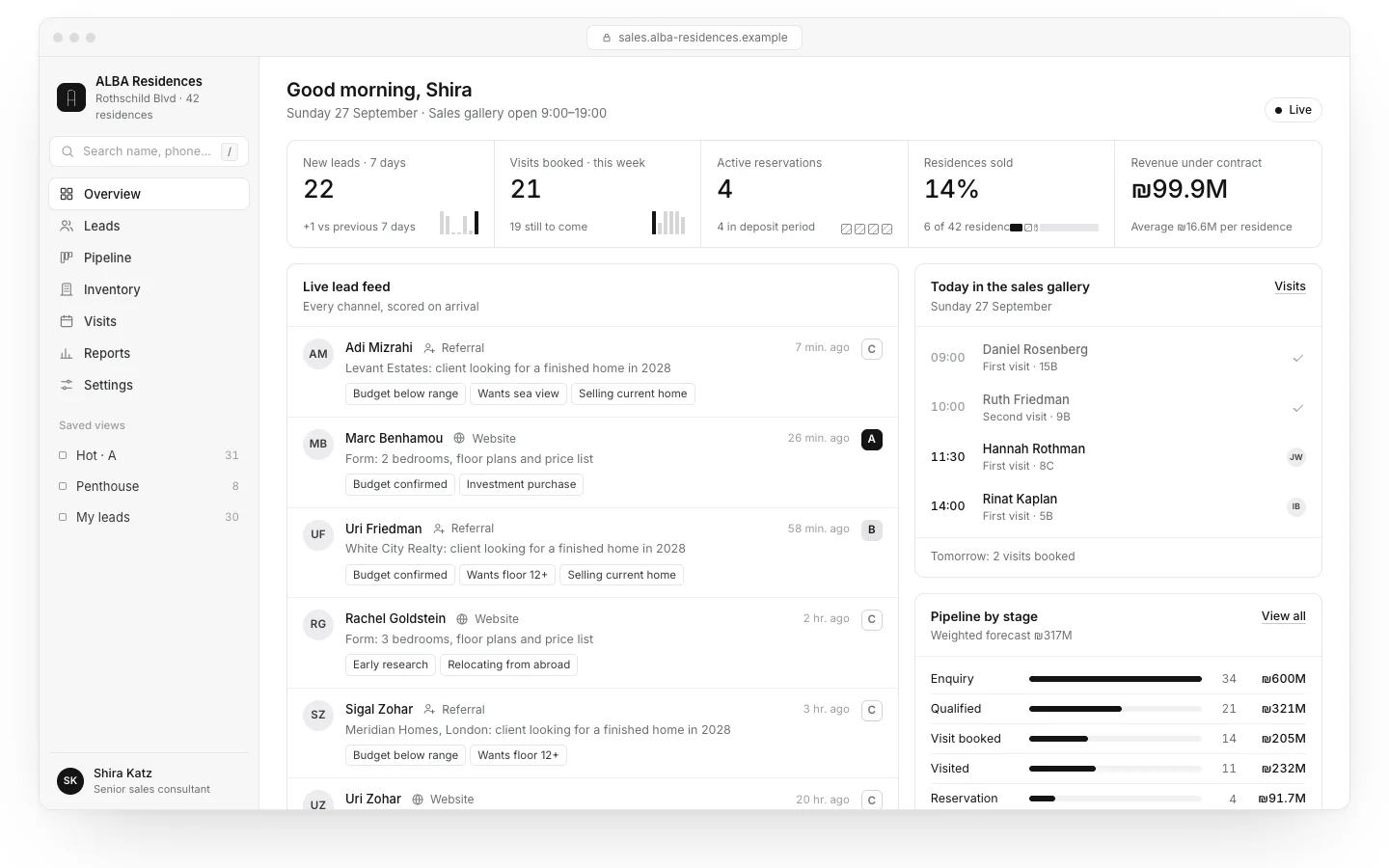
If you show stock, it should come straight from the CRM, not from a file someone updates. ALBA’s CRM holds the unit inventory and the sales pipeline in one place, and that is the source both the website and the sales gallery screen should read from. How to build that inventory is in our guide to a real estate CRM. If you show a price, check with the lawyer that it matches what is actually on offer and its terms.
The registration form and the CRM
The form is where the website pays for itself, so it should be short and connected. What works on development sites:
- Name, phone and email, and one preference field: bedrooms or unit type. Every extra field costs enquiries.
- The enquiry goes straight into the CRM with its campaign source, not into someone’s inbox.
- Source and campaign parameters (UTM) are stored with the lead, so you can see which channel brings visits and not only enquiries.
- An immediate confirmation to the buyer by email or WhatsApp, saying what happens next.
- A separate consent box for marketing updates, recorded in the CRM.
- A fast answer in the evening and at weekends too, from a person or from an AI agent working from the project’s approved information.
Consent is not a technical detail. Rules differ by country; in Israel, section 30A of the Communications Law, in Hebrew prohibits sending advertising by email or SMS without the recipient’s explicit prior consent, and requires the message to say it is an advertisement and to offer a simple way to refuse further messages. This is a general summary, not legal advice.
Hebrew, English and overseas buyers
Projects with overseas demand often need an English version, and sometimes French or Russian. That version should be written for its audience, not translated: an overseas buyer asks about tax, managing the property from abroad and the purchase process, not about the local primary school. Areas, currency and handover dates should be presented in a way that reader understands.
For Google, each language version needs its own URL and hreflang annotations linking them. According to Google Search Central, each version must list itself as well as all other versions, and if two pages do not both point to each other, the tags are ignored. Direction, fonts and URL structure on a bilingual site are covered in our article on bilingual Hebrew–English websites.
Disclaimers on the renders
Nearly every development site carries a line such as “images are for illustration only”. It is needed, but it does not excuse a render showing something that will not be built. In Israel the Consumer Protection Law, in Hebrew prohibits a business from doing anything that could mislead a consumer on a material aspect of a transaction, including the measure, form and components of an asset. So the renders on the site should match the drawings and the specification, and furniture, mature planting and accessories should be labelled as illustrative. Take the exact wording, and where it appears on each page and in the gallery, from the project’s lawyer.
Speed with heavy renders, film and 3D
A development website is about as heavy as sites get: high-resolution renders, a film, a 3D model and 360° tours. And most traffic comes from ads, on phones, sometimes on a weak connection. Google defines a good experience as LCP within 2.5 seconds, INP of 200 milliseconds or less and CLS of 0.1 or less, measured at the 75th percentile of page loads (web.dev). What makes that possible with a lot of media:
- Images in a modern format and in several sizes, so a phone receives an image sized for a phone.
- Lazy loading for images below the fold, but not for the hero. web.dev advises not lazy-loading images likely to be in the viewport on load, especially the LCP image.
- A short, compressed background film with a poster image, and the full film only on click.
- The 3D model and the tours load when the visitor reaches them, not when the page opens.
- Few fonts, and third-party scripts only when they are really needed.
What to measure on a development website
Sign-ups are only the start. On a project site, also measure what signals intent: a floor plan download, a 3D residence view, a WhatsApp click, the specification page. Each is tracked as an event, and together with the source parameters stored in the lead, they show which campaign brings people who visit the sales gallery and which brings only enquiries. It only works if the sales team updates the status in the CRM after every visit.
Two more things to plan from the start: accessibility, because a site that serves the public usually has to meet local accessibility rules (we covered Israel’s in our article on website accessibility law in Israel); and what happens to the site once the project sells out. It can become a project page on the developer’s site and stay useful as a reference for the next project.
A checklist before the site goes live
- Every unit type has a plan, areas and orientation, matching the latest revision of the drawings.
- The specification on the site matches the one in the contract.
- A render disclaimer, in wording the lawyer approved, on every relevant page.
- The form has been tested on a phone, the enquiry reaches the CRM with its campaign source, and the buyer gets a confirmation.
- A separate, recorded consent box for marketing messages.
- The home page loads fast on a phone over mobile data, and the hero image is not lazy-loaded.
- The English version is written for its audience, with hreflang between the languages.
- Tracking events: sign-up, plan download, WhatsApp, 3D view.
- Titles and descriptions for every page, and a sitemap.
- The domain is registered to the developer, and access to the site and analytics is in your hands.
What Libra builds for residential developments
We build the project’s website end to end: the identity, like ALBA’s brand guidelines, the launch page, the full site with 3D residences, the form wired to the CRM, and the English version. It is described on our websites, landing pages and stores page. Each project is quoted on its own, by stage, number of unit types and languages.
If you have a project approaching launch or sales opening, send a brief with the stage, what already exists (renders, branding, CRM) and your target date. We reply by email with a direction, a written price and a date.
No term matches.
Questions
What should a real estate development website include?
Location and neighbourhood, architecture, unit types with floor plans, the specification, renders and 3D, the developer and team, construction progress, FAQs, and a registration form connected to the CRM.
Does each development need its own website?
Usually yes, or at least its own section of the developer’s site. A project has its own audience, identity and content, and campaigns need a destination that is only about it.
Should a development website show prices and available units?
It can, if they are accurate. Stock should come straight from the CRM, and prices must be updated with every change and match the actual offer.
How much does a real estate development website cost?
In the market we work in, roughly $800–$4,000 for a launch landing page and roughly $2,000–$11,000 for a full project website, as rough conversions of Israeli ranges. Design, languages, 3D and CRM integration drive the price.
How do you keep a site with renders and 3D fast?
Serve images in several sizes and a modern format, lazy-load only below the fold, keep background video short, and load the 3D model when the visitor reaches it.
Do renders on the website need a disclaimer?
Yes, in wording the project’s lawyer approves. But a disclaimer does not replace renders that match the drawings and the specification.
Should a development website also be in English?
When there is overseas demand, yes. Write it for its audience, give it its own URLs and link the language versions with hreflang.
Getting started
Want this for your business?
Send a short brief: three required questions, the rest only if you like. We reply by email with a direction, a written price and a date.