A fashion brand website: lookbook or shop, product pages that answer the size question, returns and stock
What a fashion brand website needs: lookbook or shop, collections, product pages with fit, fabric and model details, a returns policy, stock and imagery.
Part of the guide: How to start an online store: the complete guide, with notes for Israel
A fashion brand website has to do two jobs in one place: show the collection the way the brand sees it, and answer the questions that stop people buying clothes online, first of all which size and what happens if it does not fit. The foundation is a structure built around collections, product pages with several angles, measurements in centimetres or inches, fabric composition and the size the model is wearing, accurate stock for every size and colour, and a returns policy that is clear and meets consumer law. Everything else, from the campaign film to Instagram, is built on top of that.
What every online store needs, from payments to shipping, is covered in our online store guide. This article is about what is particular to fashion: sizing, fabric, seasonal collections and returns, which are a larger share of the business than in most categories.
Lookbook, shop or both
The first decision is what the site is for. Some brands sell through stores, a studio or stockists, and the site is mainly a showcase. For others the site is the main till. Most small brands sit in between.
| Lookbook site | Online shop | Lookbook and shop together | |
|---|---|---|---|
| What it holds | Collections, the story, films, stockists, a wholesale contact | Catalogue, product pages, bag, checkout, shipping, returns | A campaign page per collection, with every piece linked to its product page |
| Suits | A brand that sells through stores or made to order | A brand that sells mainly direct to customers | A brand where image and sales carry equal weight |
| What it takes to run | A seasonal update of images and text | Stock, orders, shipping, returns and customer service | Both, plus a calendar that ties campaigns to product uploads |
| Risk | People who want to buy cannot find how | A catalogue without context looks like every other shop | Heavy campaign pages that slow the site on phones |
A brand that starts as a lookbook should still build on a system that can become a shop without a rebuild: products with names, prices and sizes from day one, even if the buy button comes later.

Structure: collections and drops
Fashion customers browse two ways: by type of garment (dresses, trousers, jackets) and by collection or season. A good site supports both from the same products, without duplicating them.
- Collection page. Campaign images, a few lines about the collection, and every piece in it below. This is the page Instagram and the newsletter link to.
- Categories. Filters for size, colour, fabric and price. Size matters most: someone who wears a 12 does not need to see pieces sold out in her size.
- Drops. A release at a set time: a holding page with the date, email sign-up, and opening at the announced hour. The site has to hold up under that moment’s traffic.
- Pre-order. A piece still in production, with an estimated ship date written next to the price, not only in the terms.
- Archive. Past collections stay online as showcase pages, pointing to pieces still in stock. That helps search and anyone arriving from an old image.
The fashion product page: what it must include
Customers cannot try a garment on through a screen, so the product page has to do the fitting room’s job. These are the items that remove the most questions and returns:
- Several angles. Front, back, side, a detail of fabric and seams, and the garment on a body in motion. A piece shown only from the front raises questions about the back.
- A short video. A few seconds of walking or turning show how the fabric falls and moves, which a still cannot.
- The model. Her height and the size she wears, for example “the model is 176 cm and wears a size S”. Shots on two models with different builds are better still.
- Fit. One sentence: close, regular or relaxed, and whether it runs small or large. Written by someone who measured the garment.
- Measurements. A table for this piece, not only the brand’s general chart: chest, waist, hip and length for every size.
- Fabric and care. Composition in percentages, weight where it matters, country of manufacture, and washing instructions.
- Stock by size. A sold-out size shows as unavailable with a notify-me option, rather than disappearing.
- Shipping and returns by the button. One line on delivery time and return terms, linking to the full page.
The size guide
A good size guide explains how to measure the body with a simple drawing, and converts between the size systems of the markets you sell to. The most direct way to improve it is to read return reasons: if one piece keeps coming back as “too small”, the fix belongs on the product page, not only with the supplier. Product pages in general, from headline to button, are covered in a product page that sells.
Sizes, returns and the law
In fashion, returns are part of the business, so the policy has to be stated clearly before purchase rather than discovered after. The rules depend on where your customers are. In Israel, where we work, an online purchase is a “remote sale”, and under section 14C of the Consumer Protection Law (in Hebrew) customers may cancel within 14 days of receiving the goods or the document with the transaction details, whichever is later. When the cancellation is not because of a defect or a mismatch, the business may charge a cancellation fee of 5% of the price or 100 shekels, whichever is lower.
There are exceptions. The Consumer Protection (Cancellation of Transaction) Regulations (in Hebrew) exclude, among other things, underwear including swimwear and goods made specially to the customer’s order. The EU, the UK and US states each have their own rules for distance selling. Write the policy with a lawyer for every market you ship to; the details vary by product and the law changes.
- One clear page. How many days, counted from when, how to notify, who pays return postage, and how quickly the refund arrives.
- Exchanges separate from refunds. Many brands offer free size exchanges even where they charge a fee on refunds. That is more generous than the law, and allowed.
- A returns form on the site. Customers pick the order, the item and a reason. The reasons are data: they tell you which size chart needs fixing.
- The same terms everywhere. The terms page, the product page, the confirmation email and the note in the parcel say the same thing.
Stock, sizes and colours
Every fashion item has variants: one shirt in three colours and five sizes is 15 separate stock units, each with its own SKU. Build them in the system like this:
- One product, variants inside it. Colour and size are chosen on the same page, and the images switch to the chosen colour. A separate page per colour only makes sense when the colours differ a lot or each is promoted on its own.
- Synced stock. If the brand also sells in a shop or at pop-ups, online stock must update from the same source, or the site sells a size that is gone.
- Back-in-stock alerts. Email sign-ups for a sold-out size are a list of customers who have already decided to buy.
- Honest low-stock notes. “2 left in M” only when it is true. A fake counter is misleading.
The automated emails a store needs, from abandoned bag to back in stock, are covered in ecommerce email automation.
Instagram and the website
For many fashion brands Instagram is where people discover and the site is where they buy. The path between them should be short:
- Link to the collection, not the home page. Someone who saw a jacket in a post should land on that jacket or its collection.
- Product tagging. A product catalogue connected to the account lets you tag a piece in a post or story and send people straight to its page.
- Customer photos. Pictures of customers wearing a piece help others judge fit, provided you have explicit permission to use them.
- No heavy embedded feed. An Instagram feed embedded on the home page adds third-party scripts and slows the site. A few chosen images with a link to the account do the same job.
How to build a monthly content calendar that keeps every post reading as one brand is covered in our social media content guide.

Which platform to build on
| Platform | Suits | Watch out for |
|---|---|---|
| Shopify | Most small and mid-size fashion brands: variants, stock and checkout built in | Local languages, invoicing and local payment providers need apps and setup |
| WooCommerce | A brand already on WordPress, or one that needs full control in code | Hosting, updates and security are on you or whoever maintains it |
| Custom front end on a commerce back end | A brand whose design and motion are part of its identity | More to build, and it needs a team to maintain it over time |
A full comparison is in WordPress vs Webflow vs Shopify, and what to settle for a Shopify store selling in Israel, from invoices to shipping, is in Shopify in Israel.
Photography, models and AI
On a fashion site, imagery is most of the design. You need two kinds: campaign images that tell the collection’s story, and product images shot consistently, on the same background, light and distance, so pieces can be compared. A fixed AI model for the brand can produce both without a shoot day per collection; how that is built is covered in AI models for brands.
The rule on the product page: the garment must be true. Colour, cut, length and texture have to look like the piece that arrives in the parcel. Consumer protection law in most markets, including section 2 of Israel’s Consumer Protection Law (in Hebrew), prohibits misleading customers about a product’s quality, size and form, and that applies to images too. Some countries add rules on retouched bodies: in Israel, the model weight law (in Hebrew) requires a prominent notice in an advertisement when a model’s body has been made to look slimmer by editing.
Hebrew, English and selling abroad
A brand that sells across borders needs more than a translation: a size chart in the system customers know, prices in their currency, delivery times and duties for each destination, and a returns policy that works for international shipping. A right-to-left Hebrew version and a left-to-right English version are two designs of the same page, not a mirror copy. We cover this in building a bilingual website.
Examples from the studio
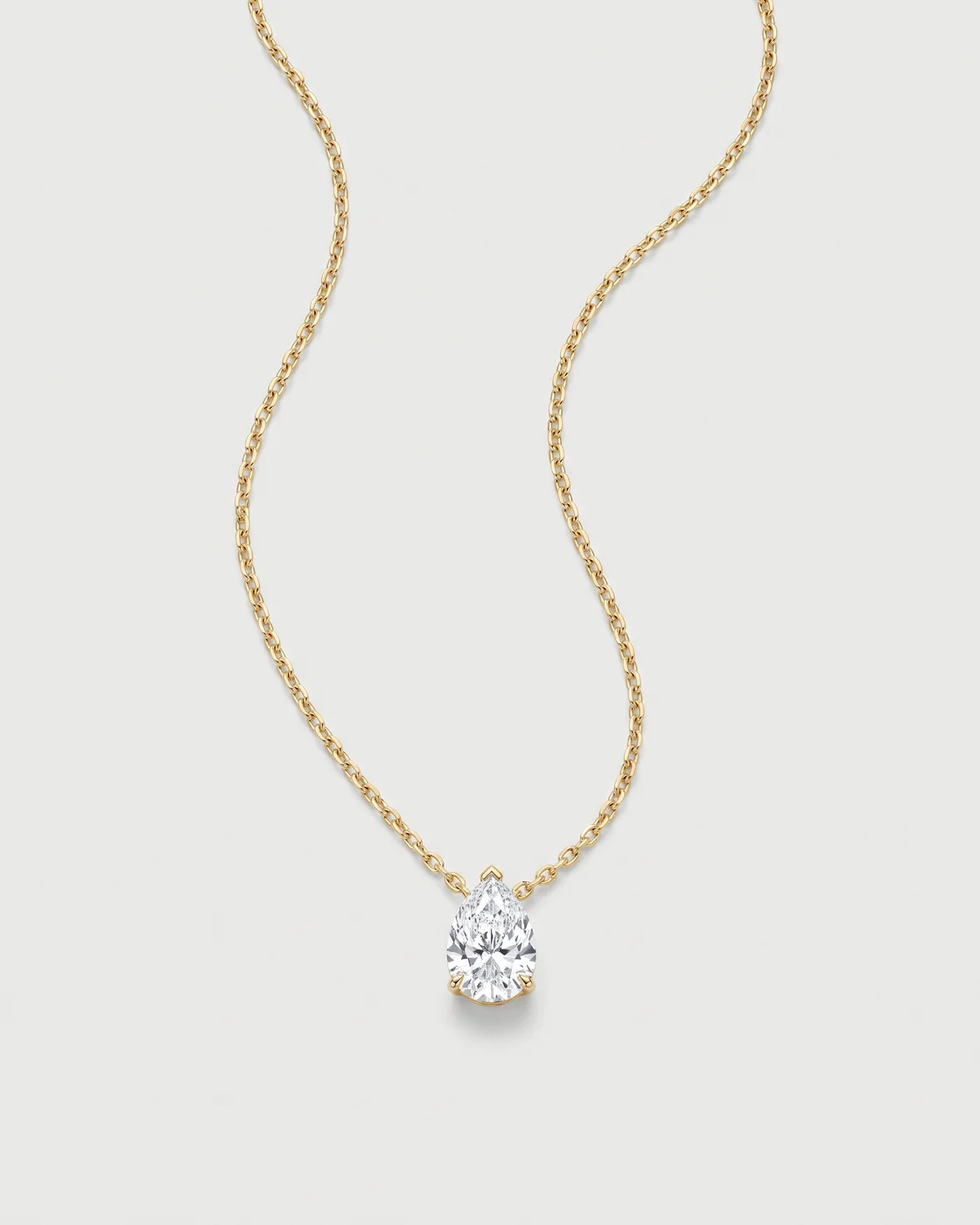
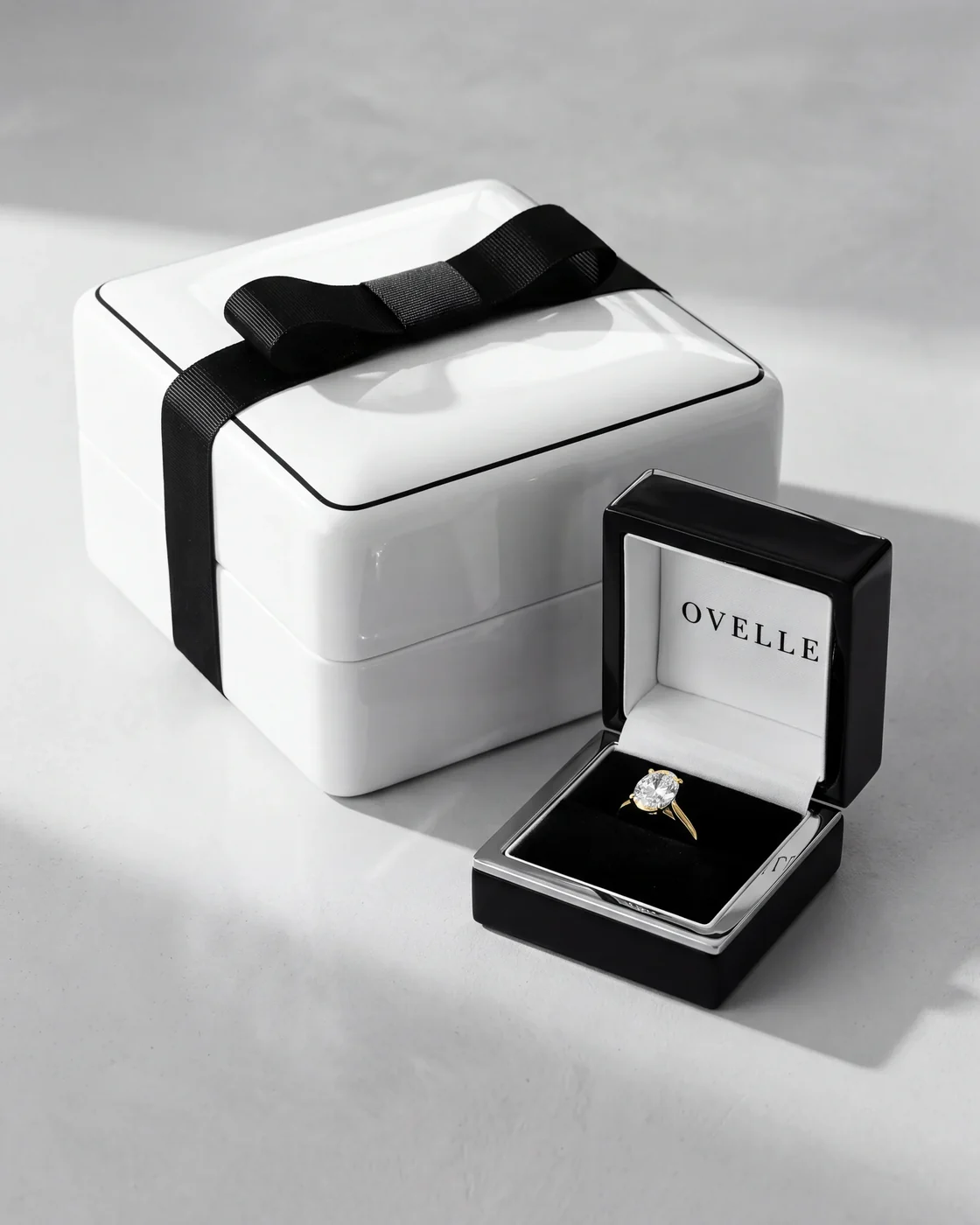
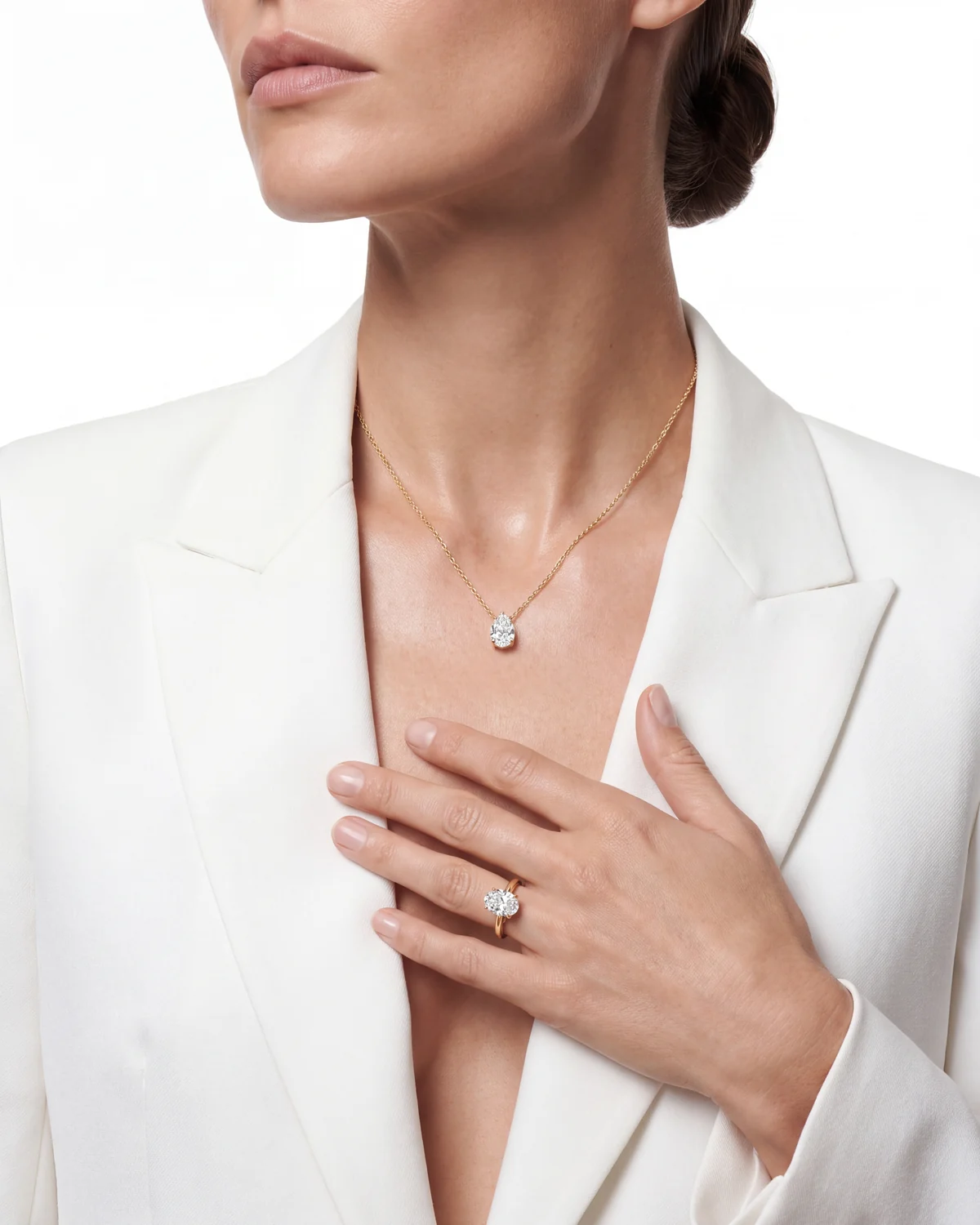
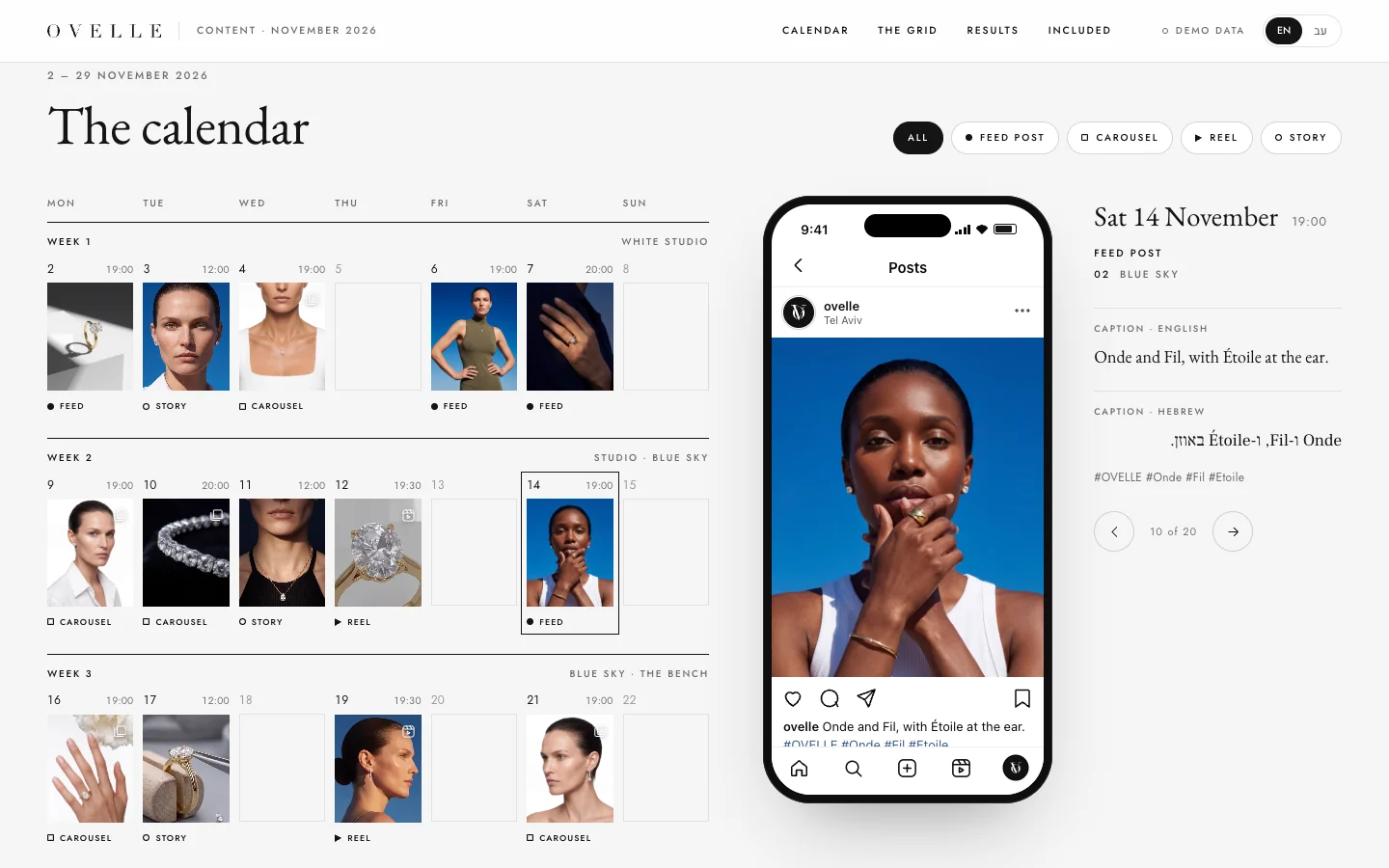
The OVELLE store is a concept we built for a fictional jewellery house: collection pages, product pages with several angles, a shopping bag and a campaign film. One character wears the whole collection, and she is the model in the image at the top of this page. The same brand’s month of social content was built from the same image library, and the commercials show the same product and faces returning in every shot. These are concepts with fictional businesses, not client work.
Fashion websites at Libra
We build websites and stores for brands, in Hebrew and English, together with the imagery: product and campaign images, a fixed AI model for the brand, and films. Our website and store work is described on websites, landing pages and stores. If you are planning a site for your brand, send a brief with the number of pieces, where you sell today and when the next collection comes out. We reply by email with a direction, a written price and a date.
No term matches.
Questions
What should a clothing product page include?
Several angles and a short video, the model’s height and the size she wears, a sentence on fit, a measurement table for the piece, fabric composition and care, stock by size, and a line on shipping and returns next to the buy button.
How long do customers have to return clothes bought online?
It depends on the market. In Israel, customers may cancel a remote sale within 14 days of receiving the goods or the transaction document, whichever is later, and the business may charge 5% or 100 shekels, whichever is lower, when there is no defect. Check each market’s rules with a lawyer.
Can customers return swimwear and underwear?
In Israel, the cancellation regulations exclude underwear, including swimwear, from the right to cancel. Many other markets have hygiene exceptions of their own. A brand may offer a more generous policy, and should state any exception clearly before purchase.
Does a fashion brand need a lookbook or an online shop?
A lookbook suits a brand selling through stores or made to order, and a shop suits a brand selling direct. Most small brands need both: collection pages with campaign images, where every piece links to its product page.
What is the best platform for a fashion website?
For most small and mid-size brands, Shopify covers variants, stock and checkout out of the box. WooCommerce suits a brand already on WordPress, and a custom front end suits a brand whose design and motion are part of its identity.
Can you use an AI model for clothing photos?
Yes, as long as the garment stays true: colour, cut, length and texture as in the piece customers receive. Consumer protection law prohibits misleading customers about a product’s quality, size and form, and that covers images.
Getting started
Want this for your business?
Send a short brief: three required questions, the rest only if you like. We reply by email with a direction, a written price and a date.