Branding for a small business: what you need from day one, what can wait, and the order to do it in
Branding a small business without waste: name, logo versions, colours, type and voice, and where the brand actually shows: Google, WhatsApp, Instagram, signage and invoices. Order, brief and mistakes.
Part of the guide: Business branding guide: what branding includes, from strategy to trademark
Branding a small business means deciding how it looks and sounds wherever a customer meets it, plus the tools that let you repeat that decision without rethinking it every time. A small business does not need a huge system. It needs a name, a logo in a few versions, two or three colours, one or two typefaces, a voice, and one page that explains how to use them. Everything else, such as packaging, full signage or a thick brand book, can come when the business needs it. Order matters: first decide who the business is for and how it differs, and only then design.
The full picture of business branding, from strategy to the brand book, is in our business branding guide. Here we focus on what a small business really needs, and in what order.
What you need from day one
| Element | What it is | Why it matters for a small business |
|---|---|---|
| Name | Easy to say, spell and find | It is what people type into Google and save in their phone |
| Logo in versions | A full version, a small version (symbol or initials), black and white | The logo appears in a small circle on WhatsApp and Instagram, not just on a sign |
| Colours | Two or three colours with exact codes | So the business looks the same everywhere |
| Typography | One or two typefaces, with Hebrew and English if needed | A typeface without good Hebrew breaks the look in every document |
| Voice | How the business writes: form of address, sentence length, words to use and avoid | Most contact with customers is text: messages, posts, quotes |
| Guidelines page | One page with every file and rule | Whoever designs a post or prints a card gets it right without asking |
Choosing a name is covered in naming a business, and what goes into a logo’s price in logo design cost.
What can wait
- A full brand book. One guidelines page is enough at first. A full book pays off when a team or suppliers work with the brand.
- Packaging. Only if you sell a physical product, and even then you can start with a sticker and a simple box. See packaging design.
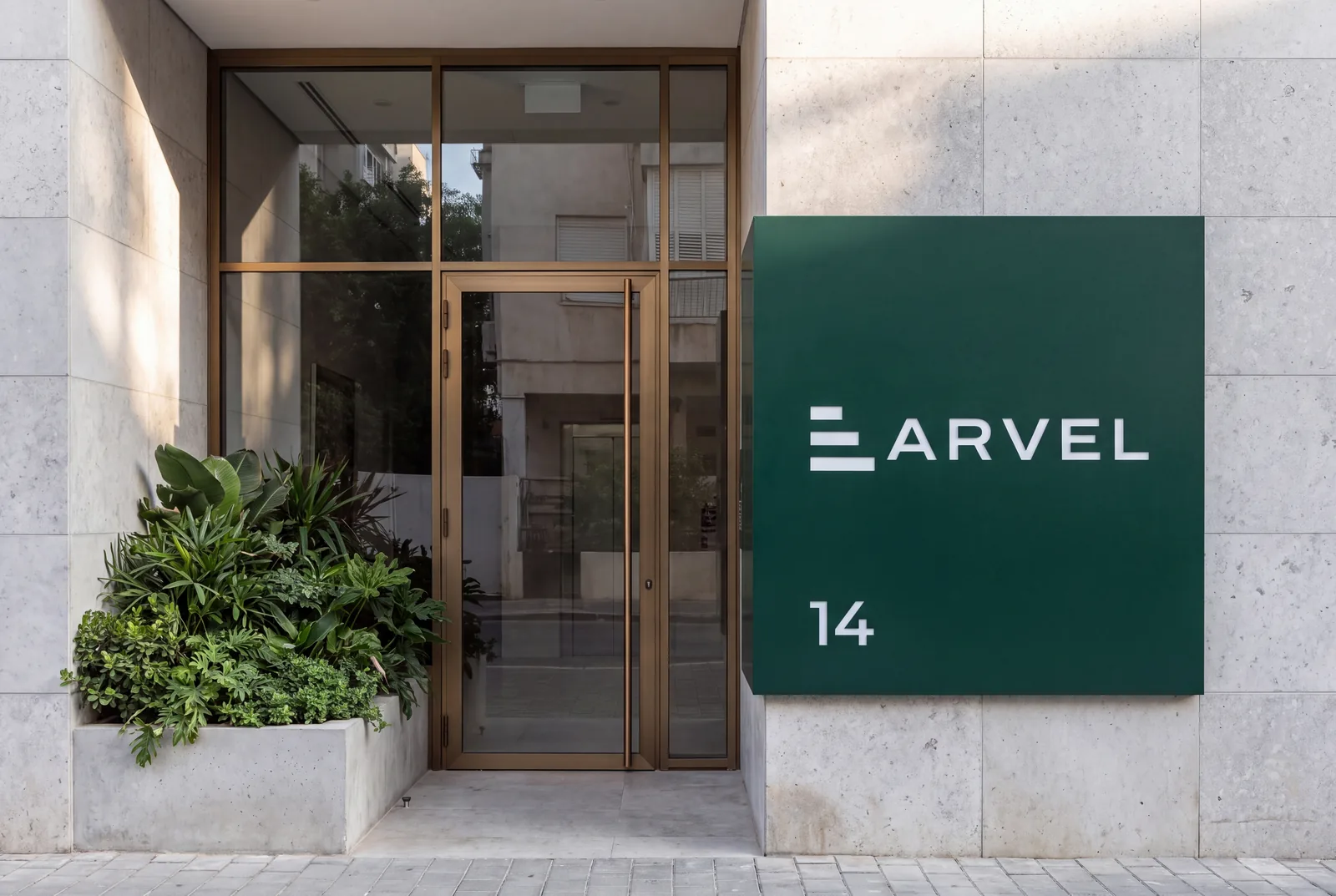
- Signage and space. If you have no shop or office that receives customers, it is not urgent.
- Merchandise, a deck and templates for everything. Design a template when it has a real use.
The order to do it in
6 steps
Who and how
Three questions: who the customer is, what they actually buy from you, and how you differ from your closest competitor. The answers set everything else.
Name
Check it is free as a domain and on social networks, and that no similar business in your field has a similar name.
Logo, colours and type
Design them together, and test at real sizes: a profile circle, a stamp on an invoice, a sign.
Voice
Rewrite three texts you already have: a first WhatsApp message to a customer, your Google description, and a post.
Guidelines page
Put the files and rules in one place.
Roll-out
Change every place at once, using the list in the next section.
Where a small business’s brand actually shows
A small business’s customers meet the brand on their phone first. This is the list to go through when the branding changes:
- Your Google Business Profile: logo, cover photo, description and hours.
- WhatsApp Business: profile picture, description, greeting message.
- Instagram and Facebook: profile picture, bio, highlights and a post template.
- The website: logo, colours, typefaces and the browser-tab icon.
- Quotes, invoices and your email signature.
- Business cards, signs and stickers, if you have them.
Change them all in the same week. A new logo on Instagram and an old one on Google confuses customers looking for you.
Three ways to get it done
| Yourself, with tools | A freelance designer | A branding studio | |
|---|---|---|---|
| Fits when | You are just starting and testing demand | You know your customer and difference, and need a professional identity | You also need strategy, a name, and a system that holds across channels |
| What you get | A logo and basic templates | Logo, colours, typefaces and usually a guidelines page | Strategy, name, identity, voice, guidelines and roll-out |
| The risk | A look like many other businesses, and files unfit for print | Depends on the brief and experience | Higher cost and a longer process |
| What to check | Rights to the logo and templates | Portfolio, what is included, and who owns the files | Process, phases, and what you receive at the end |
Even when you start yourself, keep the decisions on one page. When the business grows and professional branding comes, there is something to start from. When it is right to replace an existing brand is covered in rebranding.
What to put in the brief
- What the business does, in one sentence.
- Who the customer is, and what matters to them when choosing.
- Three competitors, and what you do differently.
- Where the brand will appear: social, website, shop, packaging, vehicle.
- Brands you like, and why. Also ones you do not.
- What already exists and what must stay.
- Budget and date.

Common mistakes
- Designing before deciding who you are for. You get a nice logo that says nothing about the business.
- A logo that only works large. In a WhatsApp circle it disappears.
- Too many colours and typefaces. Every post looks like a different business.
- Changing only some places. Customers do not recognise it is the same business.
- Not getting the original files. Without a vector file you cannot print a sign.
- Copying a competitor. A customer comparing the two cannot tell whom to choose.
Examples from the studio
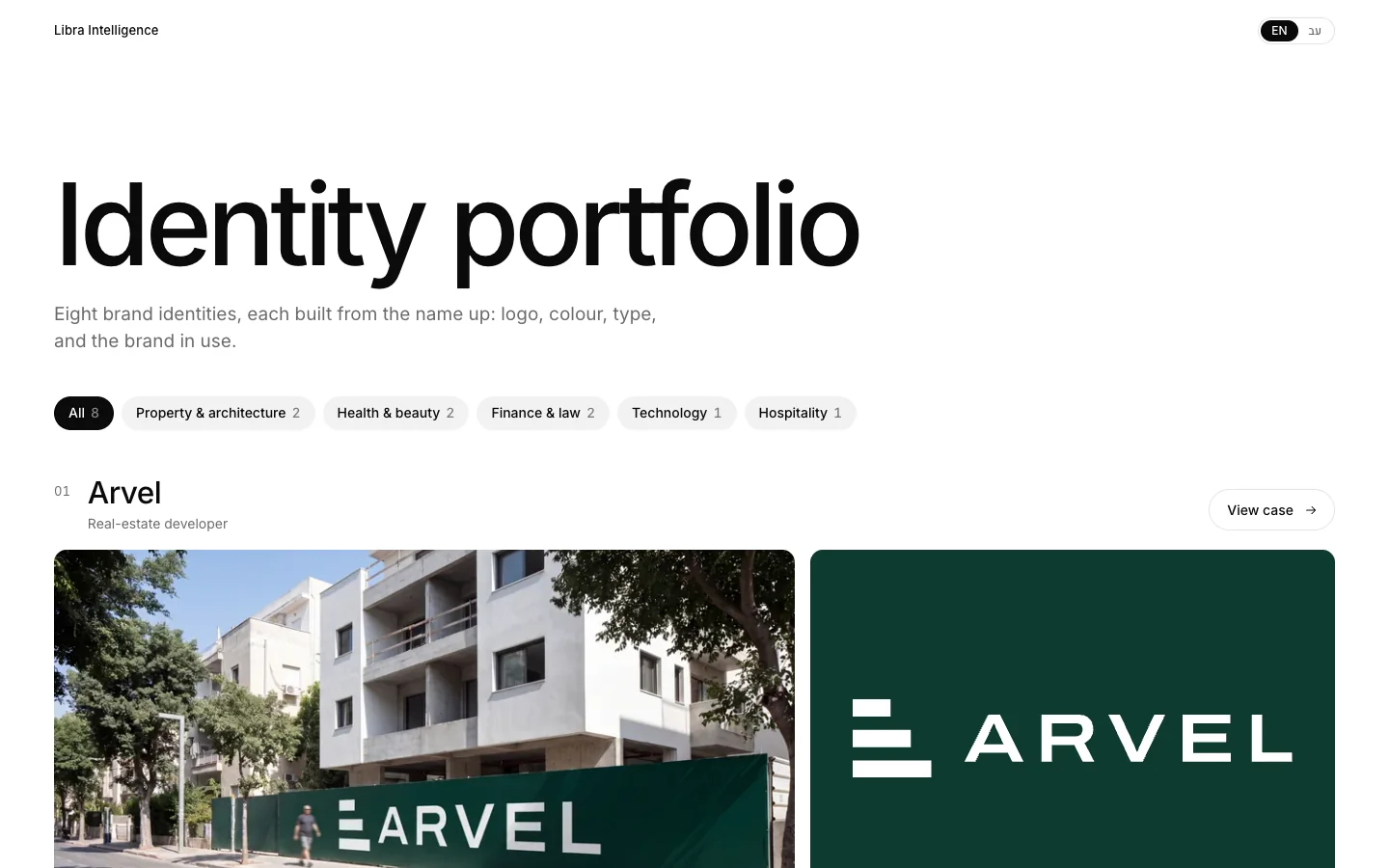
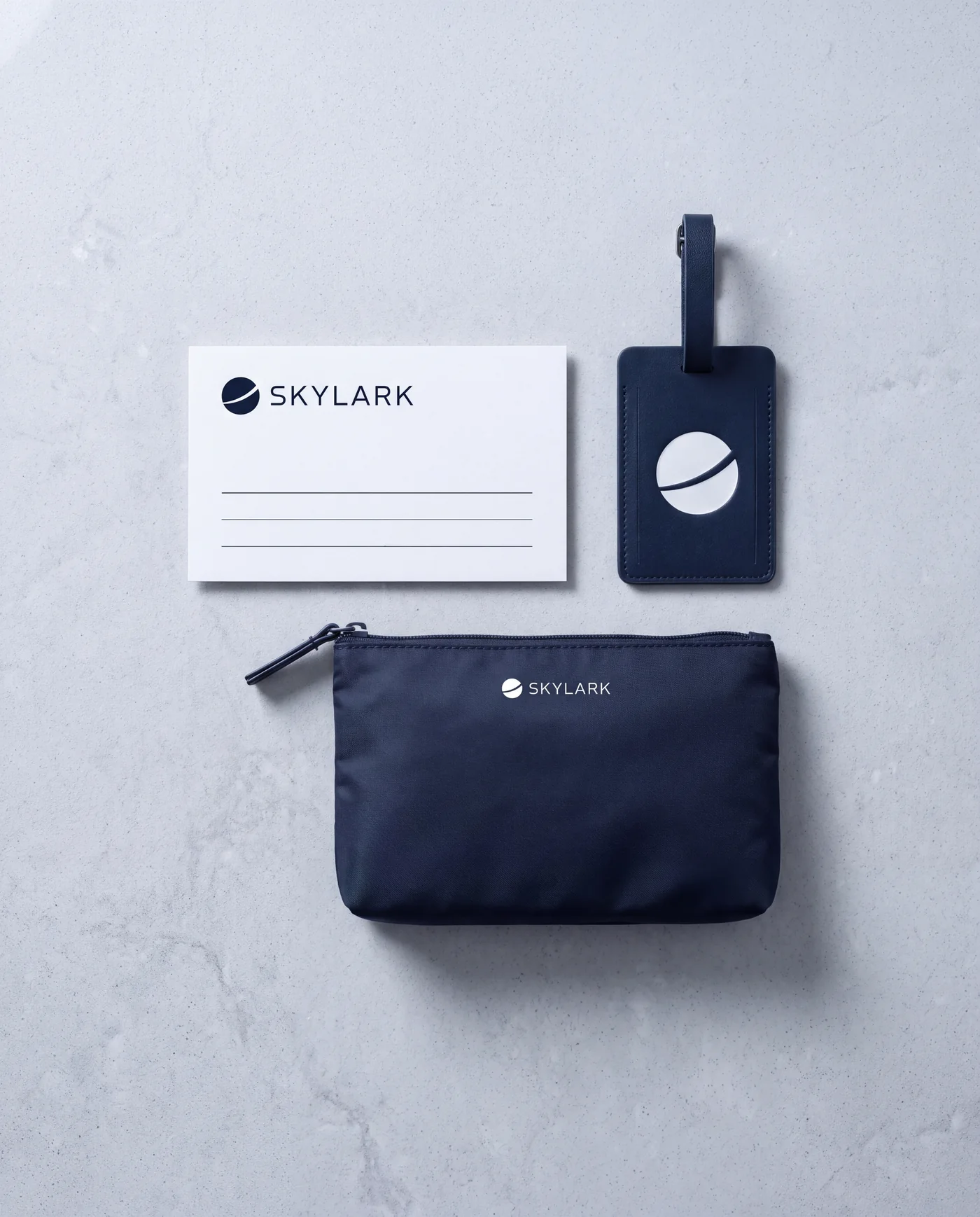
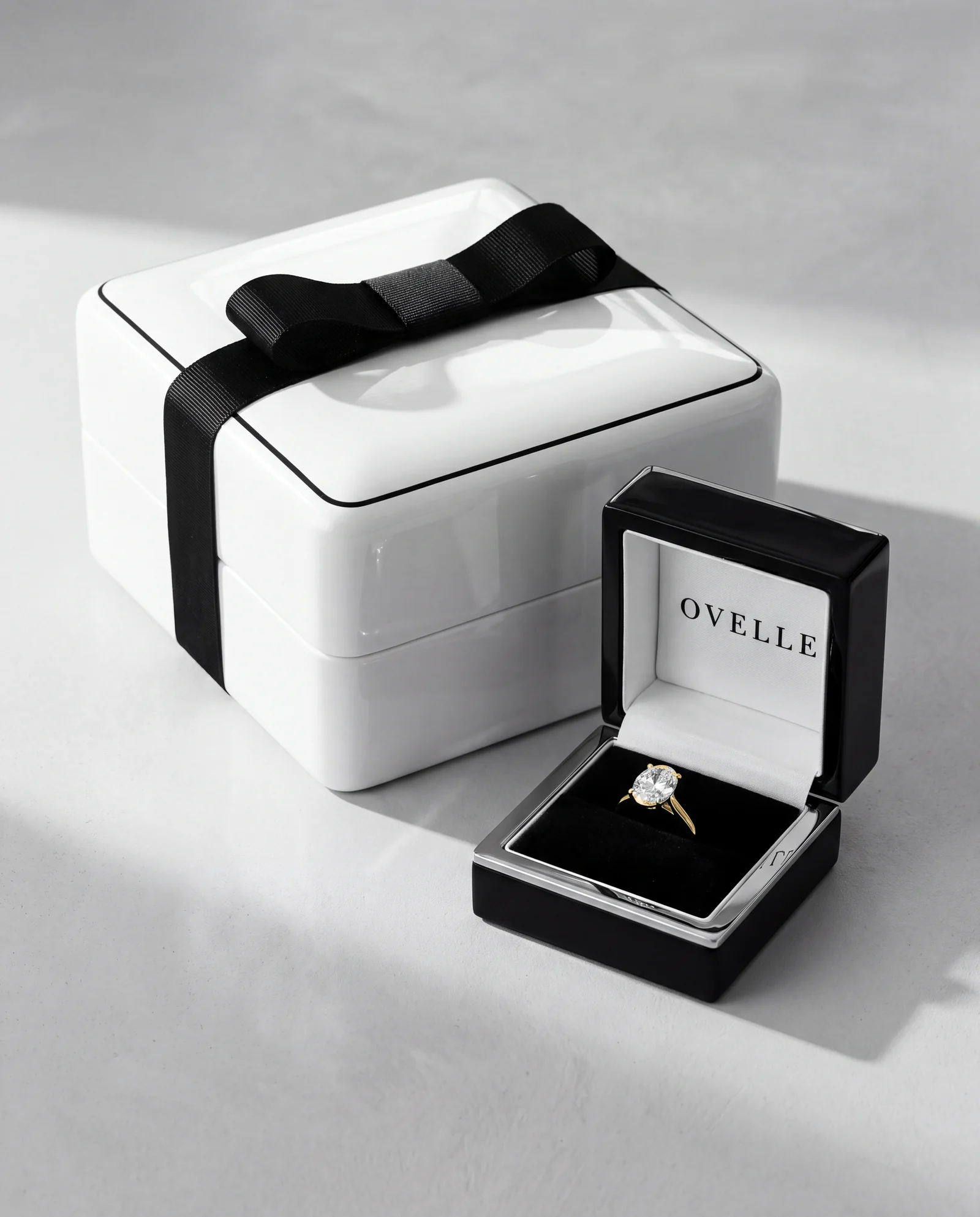
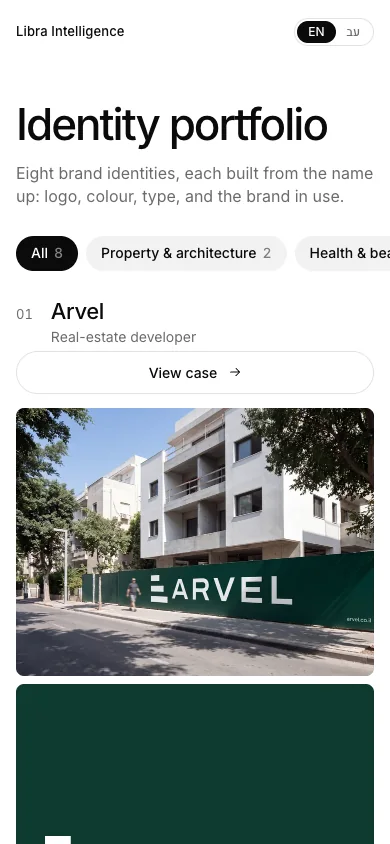
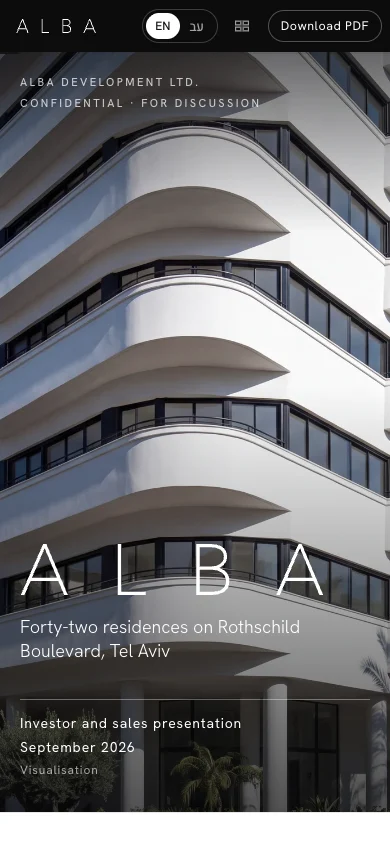
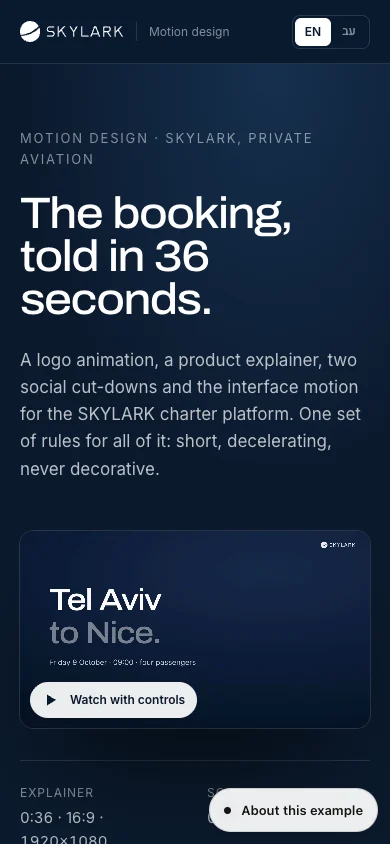
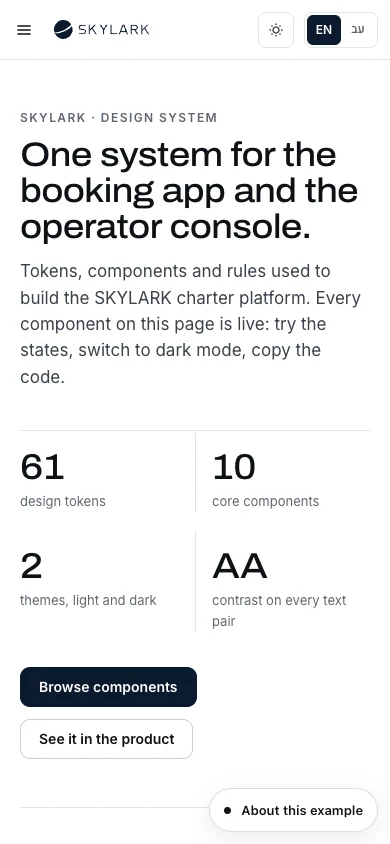
The branding portfolio holds eight identities we built from zero for fictional businesses in eight sectors, each on one board: logo, colours, an app screen, signage and merchandise. That is roughly what a small business needs to start. SKYLARK, a fictional airline, shows full branding from zero, from the name to the app.
Branding at Libra
We build branding for businesses: from who and how, through the name, logo, colours, typefaces and voice, to the guidelines page and the roll-out across social, the website and documents. The work is described on branding. Send a brief following the list above, and we reply by email with a direction, a written price and a date.
No term matches.
Questions
What does a small business need for its branding?
A name, a logo in several versions (full, small, black and white), two or three colours, one or two typefaces, a voice, and one page with every file and rule. A full brand book, packaging and signage can wait until they are needed.
In what order should a small business do its branding?
First decide who the customer is and how the business differs, then the name, then logo, colours and type together. After that the voice and a guidelines page, and finally change the branding everywhere in the same week.
Can I do my own branding?
Yes, when you are just starting and testing demand. The risk is a look like other businesses and files unfit for print. Keep your decisions on one page, so there is something to start from when professional branding comes.
Where should a small business’s brand appear?
On your Google Business Profile, WhatsApp Business, Instagram and Facebook, the website, quotes and invoices, your email signature, and business cards and signs if you have them.
How is small-business branding different from branding a large company?
The principles are the same; the scale differs. A small business needs a small system that works on a phone and a few channels, and one guidelines page. A large company needs a full brand book, because many people and suppliers work with the brand.
Getting started
Want this for your business?
Send a short brief: three required questions, the rest only if you like. We reply by email with a direction, a written price and a date.