A cosmetics brand website: product pages with ingredients and use, claims you can make, shades, subscriptions and reviews
What a cosmetics brand website needs: product pages with INCI ingredients and directions, substantiated claims, shades, subscriptions and real reviews.
Part of the guide: How to start an online store: the complete guide, with notes for Israel
A cosmetics brand website has to answer three questions before anyone buys: what the product does and who it is for, what it is made of, and how it looks and feels on skin. So the product page carries skin type, directions, the full ingredient list, a picture of the texture or the shade on several skin tones, and the price by volume. There is a regulatory side too. Cosmetics rules in most markets, including the EU and Israel, where we work, set what goes on the label and require every marketing claim to be substantiated, and the copy on the site has to match them.
What every online store needs, from payments to shipping, is covered in our online store guide, and the product page in general in a product page that sells. This article is about what is particular to cosmetics.
The cosmetics product page: what it must include
- What it does, in one sentence. “A light moisturiser for normal to oily skin” is clearer than any description of a feeling.
- Who it suits. Skin or hair type, and who it suits less. That saves returns and builds trust.
- Directions. How much, when, at which step of a routine, and how often. If it should not be combined with something, say so.
- The full ingredient list. Exactly as on the pack, in INCI names, not only “key actives”. People with sensitivities search for one ingredient, and if the list is missing they do not buy.
- Key ingredients in plain words. Two or three ingredients and what they do in this product. State a concentration only if it is accurate and substantiated.
- Texture, scent and finish. Gel, cream or oil; scented or not; matte or dewy. In pictures and in words.
- Size and price. Volume in ml or weight in grams, and how long a pack lasts in normal use if you have the figure.
- Warnings and shelf life. What is on the pack is on the page too, including the period after opening.
Ingredients, claims and regulation
Rules differ by market, but the main ones share a shape: a responsible person, a notification before the product is sold, labelling rules, and claims that must be backed by evidence. In Israel, since 1 April 2023, the Pharmacists (Cosmetics) Regulations, 2023) (in Hebrew) apply, modelled largely on EU cosmetics regulation. On the standard route, the business is entered in the Ministry of Health’s register of cosmetics businesses and files a notification of marketing before launch. The Ministry does not review the product in advance or issue a licence on that route, so the product should not be described as “approved by the Ministry of Health”.
What matters for the website:
- Labelling. In Israel the label must be in Hebrew, and the ingredient list appears in INCI names in English, in descending order of concentration. The product page should show the same list, word for word.
- Every claim needs substantiation. The Israeli regulations, like the EU rules they follow, require adequate and verifiable evidence for any marketing claim, and define a claim broadly: text, a mark, an image or a symbol. “Reduces wrinkles by 30%” needs a study behind it.
- An ingredient is named only at an effective level. You cannot attribute an ingredient’s property to a product unless the ingredient is present at a concentration that achieves it.
- No medical claims. A cosmetic cleans, perfumes, changes appearance, protects and keeps skin in good condition; it does not treat disease. “Treats acne” or “heals eczema” are claims for a medicinal product, not a cosmetic.
- Sun protection. Sunscreens have their own rules, including a ban on claiming total protection or complete blocking of radiation.

Before and after: when and how
A before-and-after image is a claim. It says “this is the result you will get”, so it needs the same substantiation as a sentence of copy, and consumer protection law in most markets, including section 2 of Israel’s Consumer Protection Law (in Hebrew), prohibits misleading customers about the benefit a product delivers. If you use one:
- A real person who used the product, with written consent to publish.
- The same light, angle and distance, and no retouching of the skin.
- State for how long and how often the product was used, and what else changed in that period.
- Never an image generated or edited with AI to show a result.
Most brands are better off without before-and-after and showing what can be shown honestly: the texture, the shade, how the product absorbs, and how it looks on real skin.
Shades, textures and shade finders
In make-up, shade is the first reason for returns. What helps people choose right:
- Swatches on several skin tones. At least light, medium and deep, photographed for real in daylight.
- Colour checked on screen. Calibrated photography, so the shade on the site matches the product. A flattering shade is a return on its way.
- A shade finder. A few simple questions, such as undertone, how skin reacts to sun, and the shade someone wears today from another brand, ending in one or two shades, not a list.
- A trial size. A mini or a paid sample lowers the risk before a full-size purchase.
Whether an opened product can be returned is a question to settle with a lawyer for each market and state clearly before purchase, on the returns page and the product page.

Subscriptions and refills
Products that run out at a steady rate, such as a daily cream, a serum or shampoo, suit a subscription or a reminder. A few rules:
- Frequency by use. A 50 ml bottle that lasts about two months is not shipped monthly. The default follows from the volume and normal use.
- Full control on the site. Skip, reschedule, swap and cancel from the same account page, without emailing and waiting.
- Refills as products in their own right. The refill pouch or pod has its own page, linked to the original pack, with instructions for refilling.
- No subscription by default. Customers choose it explicitly. A pre-selected subscription is the short road to complaints, and in many markets it breaks consumer rules.
Without a subscription, a reminder email sent around when the product should run out does similar work; see ecommerce email automation.
Reviews: real ones only
In cosmetics, reviews are part of the decision: people want to know how a product worked on skin like theirs. So they have to be real:
- Reviews only from buyers, marked as verified purchases.
- Negative reviews are published too. Filter abuse, not opinion.
- Ask for a review by email after a few weeks of use, and never reward only positive reviews.
- Filters by skin type or shade, so everyone finds reviews from people like them.
Fake reviews are misleading. In the US, the Federal Trade Commission banned them explicitly in 2024, including AI-generated reviews and incentives conditioned on a positive review.

Content: routines and an ingredient glossary
Cosmetics customers research a lot before buying, and good content answers them on the brand’s own site rather than someone else’s:
- Routines. Morning and evening, by skin type, with products in order and each one linked to its page.
- An ingredient glossary. A page for each key ingredient: what it is, what it does in a cosmetic, and which of the brand’s products contain it. No claims the product cannot back.
- Short how-to videos. A few seconds of application in the right amount beats a long explanation.
- FAQs. Sensitivity, pregnancy, combining with other products, shelf life. Careful answers, and a referral to a doctor where needed.
Content like this also brings traffic from Google and from AI tools looking for a well-organised answer; see our SEO guide for businesses.
Photographing textures and product
Cosmetics sell through texture: a cream being spread, a drop of serum, a powder breaking. You need three kinds of image: the product on a plain background, the texture in close-up, and the product in hand or on skin. Setting and campaign images can be produced with AI from a real photograph of the pack; the method is in AI product photography. The rule is that the pack, the label, the colour and the texture stay true. The setting can be made; the product cannot.
Which platform to build on
For most small and mid-size cosmetics brands Shopify fits, because subscriptions, reviews and shade quizzes are available as apps. WooCommerce suits a brand already on WordPress. A custom build makes sense when the site itself is part of the brand experience, for example a product launch with a film and scroll-driven motion. A full comparison is in WordPress vs Webflow vs Shopify, and what to settle for a Shopify store selling in Israel is in Shopify in Israel.
Examples from the studio
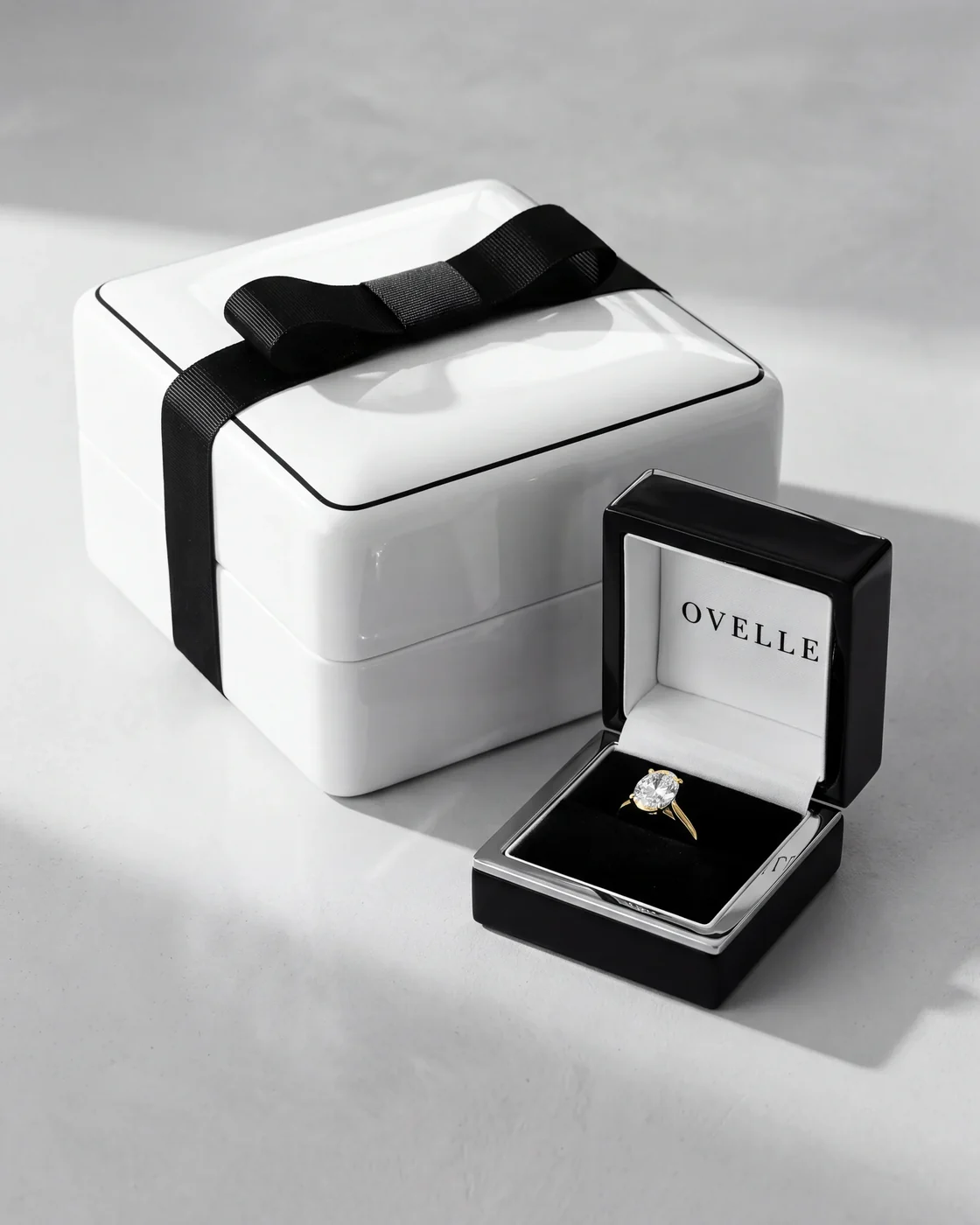
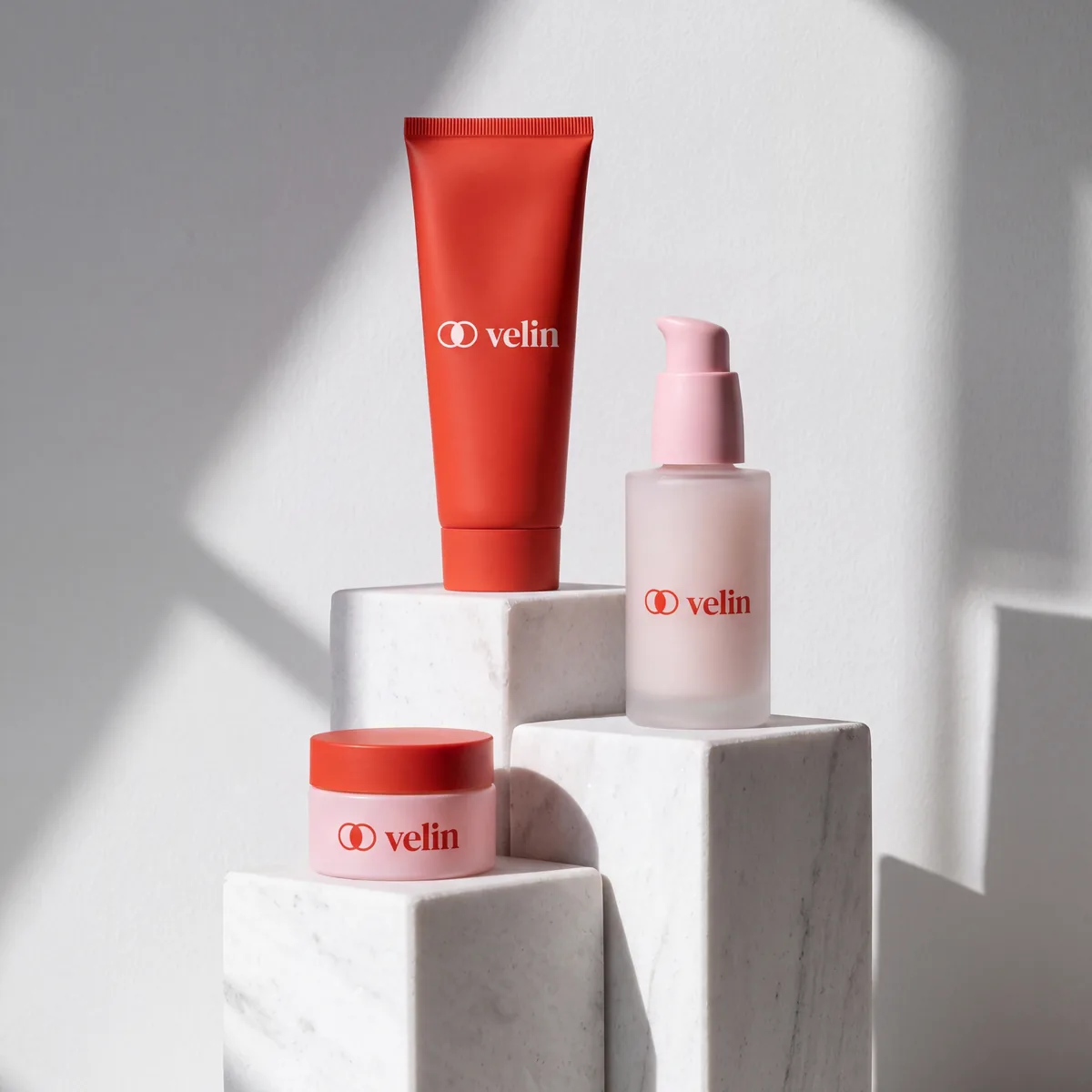
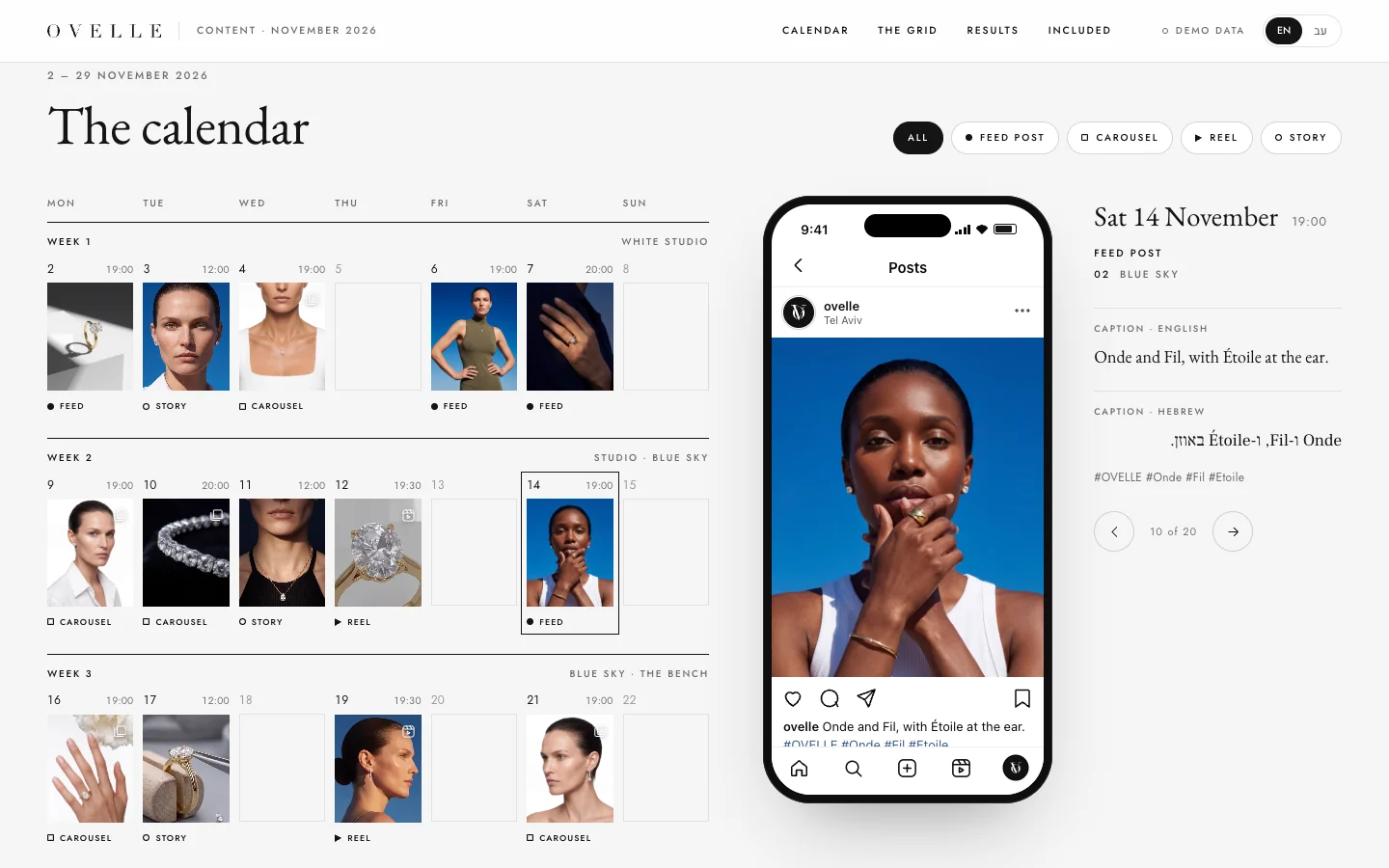
The OVELLE store, for a fictional jewellery house, shows the structure of a brand store: collections, product pages, bag and checkout. The image at the top of this page, a tube, bottle and jar for the fictional skincare brand velin, comes from our branding portfolio. The HALDE One launch page shows how to launch a single product: a film, scrolling that shows it from every side, and a buy module inside the page, a structure that works just as well for a new serum or line. And the month of social content was built from the same image library as the store. These are concepts with fictional businesses, not client work.
Cosmetics websites at Libra
We build websites and stores for brands, in Hebrew and English, with product pages, content, and product and texture imagery. Our website and store work is described on websites, landing pages and stores. We write product claims from what you can substantiate, and leave regulatory sign-off to your consultant. Send a brief with the number of products, where you sell today and what is planned for launch. We reply by email with a direction, a written price and a date.
No term matches.
Questions
What should a cosmetics product page include?
What the product does and who it suits, directions, the full INCI ingredient list as on the pack, texture, scent and finish, size and price, warnings and period after opening, and images of the texture or the shade on real skin.
Do cosmetics need approval before they are sold online?
In the EU and in Israel the standard route is a notification before sale, not prior approval. In Israel, since April 2023, the business registers with the Ministry of Health and files a notification; the Ministry does not review or license the product on that route. Check your market with a regulatory consultant.
What claims can a cosmetics brand make?
Any marketing claim needs adequate, verifiable evidence, and an ingredient can be named for a benefit only at an effective concentration. Claims to treat disease, such as “heals eczema”, belong to medicinal products, not cosmetics.
Can a skincare website use before-and-after photos?
Only if they are real and substantiated: a person who used the product and consented in writing, the same light and angle, no retouching, and the period of use stated. A before-and-after image is a claim, and consumer law prohibits misleading people about a product’s benefit.
Should a cosmetics brand offer subscriptions?
For products used up at a steady rate, yes: frequency set by volume and use, and full control on the site to skip, change and cancel. The subscription should be chosen explicitly, never pre-selected.
How should a beauty brand handle reviews?
Publish only reviews from buyers, including negative ones, let people filter by skin type or shade, and never reward only positive reviews. Fake reviews are misleading, and in the US the FTC has banned them explicitly.
Getting started
Want this for your business?
Send a short brief: three required questions, the rest only if you like. We reply by email with a direction, a written price and a date.