Product photography cost: how it is priced, what moves the price, and how to compare quotes
How product photography is priced: per image or per day, packshot, lifestyle or on-model, retouching, angles, usage rights, when AI fits, and what to prepare.
Part of the guide: AI content creation for brands: what you can make, how it works, and what to check before you publish
Product photography cost comes down to three things: how many final images you need, what kind of photography (packshots on white, lifestyle scenes, or product on a model), and how much retouching each image needs. Photographers price per image, per day or per project, so two quotes with very different totals can cover the same work. To get a firm price, send a shot list, product samples and the sizes your website needs. For part of a catalogue, especially lifestyle scenes and variations, AI product imagery is an alternative worth pricing alongside.
We are not publishing a price list here. Rates vary by product, photographer, city and scope, and there is no single public source that sums them up. What we can set out is what goes into the price, what pushes it up and what brings it down, so you can read a quote and see what you are paying for. The broader comparison between a shoot and AI production is in AI vs a studio photoshoot.
Per image, per day or per project
The three common pricing models suit different jobs. Know which one a quote uses before comparing numbers:
| Model | How it works | Suits | Check |
|---|---|---|---|
| Per image | A fixed price for each final, retouched image | A large catalogue of similar products on one background | What counts as an “image”: one angle of one product, or every colour separately |
| Per day or half day | A price for shooting time, with retouching sometimes billed separately | Lifestyle, styling, models, locations | How many final images to expect from a day, and whether retouching is included |
| Per project | One price for a defined scope: products, angles, shot types and delivery | A launch, a new collection, a store going live | A written list of what is included and what costs extra |
A day rate looks cheap when it does not say how many images come out of the day. A per-image rate looks expensive when it includes full retouching, clipping and shadows. Ask every supplier to convert their quote into a price per final retouched image, so you have one basis for comparison.
Types of product photography and what each involves
| Type | What it is | What drives the cost | Where it is used |
|---|---|---|---|
| White-background packshot | The product alone, on a plain background, with the same light and angle across the catalogue | Number of products and angles, reflective materials, clipping and shadows | Product pages, category pages, marketplaces, the Google product feed |
| Lifestyle | The product in a setting: a table, a room, outdoors, with props | Styling, props, location, time to build each set | Home page, banners, social media, ads |
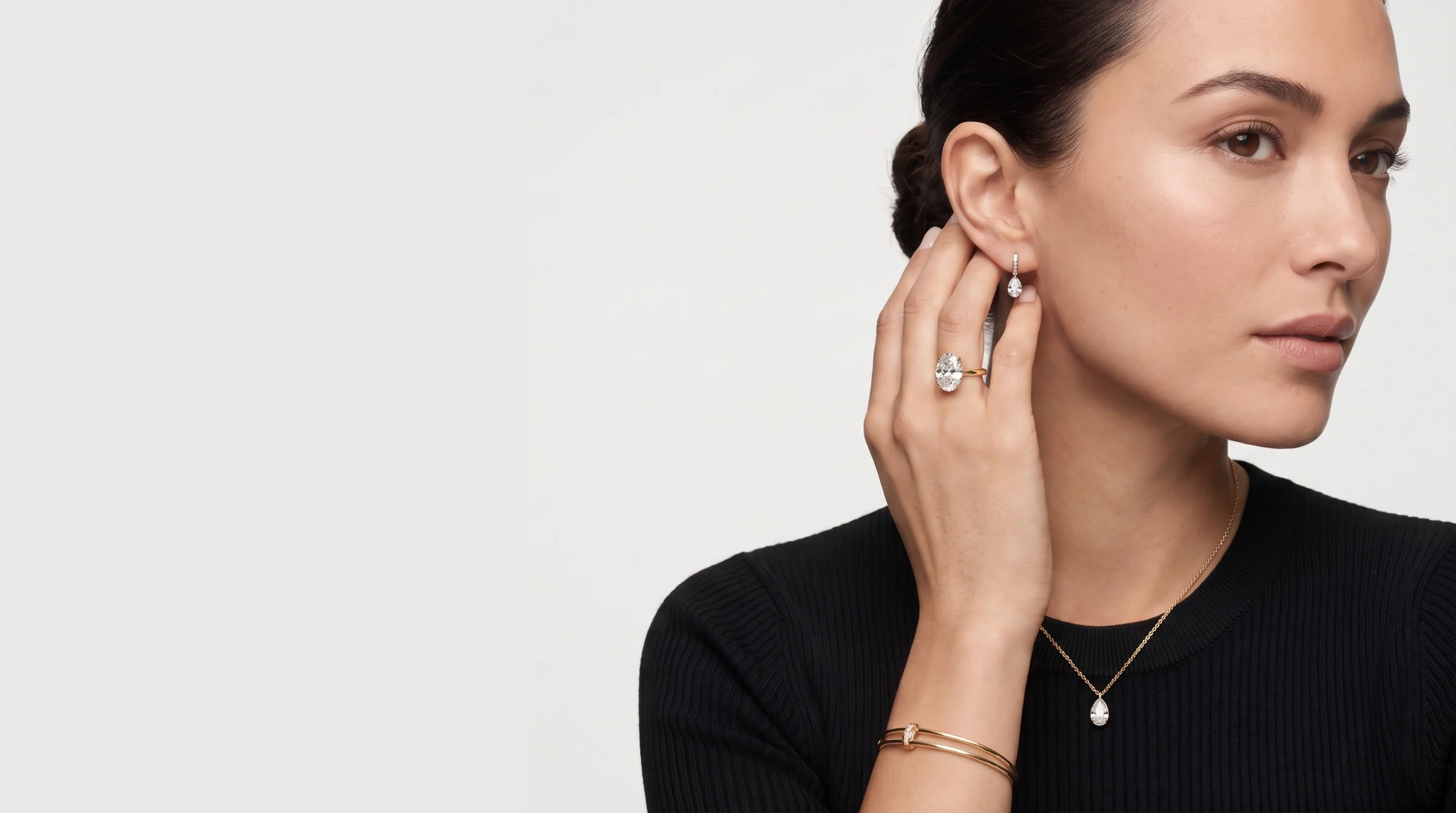
| On-model | The product worn or used: clothing, jewellery, bags, cosmetics | Models, hair and make-up, a stylist, more retouching, a model release | Fashion and accessories, product pages that show fit and drape |
| Macro and detail | Close-ups of a material, stitching, a setting or a texture | Specialist equipment, focus stacking, careful retouching | Jewellery, watches, cosmetics, anything whose quality is in the detail |
| 360° and short video | A full turn of the product or a clip of a few seconds | Number of frames, a turntable, editing | Product pages, social media, ads |
Consistency across a catalogue
On a website, product images sit side by side on the category page. If every product was shot in different light, at a different size or angle, the page looks messy even when each image is good on its own. Consistency needs one documented setup: distance, angle, lighting, aspect ratio, margin around the product and shadow. A photographer who records that setup can shoot new products six months later so they read as the same series. Ask for the setup as part of the delivery. How images work within a page that sells is covered in the product page that sells.
What pushes the price up, and what brings it down
- Products and angles. One product in five angles is five images. Decide in advance how many angles each product type needs: front, side, back, detail, and for some products a top view.
- Variants. The same product in six colours can mean six sets. Sometimes one colour is shot in every angle and the rest in the main angle only.
- Material. Glass, polished metal, jewellery and bottles reflect light and need more precise lighting and retouching than fabric or wood.
- Size. A small product is shot on a studio table. Furniture or a large item needs space, different lighting and sometimes a shoot on your premises.
- Styling and props. Buying or renting props and building each set are part of a lifestyle price.
- Models, hair and make-up. Each is a separate cost, and the terms for using a model’s likeness also affect the price.
- Location. Hire, permits and travel. A studio is usually cheaper and more predictable.
- Retouching. Cleaning, clipping, shadows and colour matching for every image. It is the easiest thing to cut from a quote and the easiest thing to see when it is missing.
- Timing. Rush delivery, evening or weekend shoots cost more.
- What brings it down. A fixed shot list, products ready and pressed on time, many similar products shot in sequence, and quick decisions on selects.
Retouching levels
A quote should say which level of retouching is included, because the time difference between levels is large:
- Basic. Crop, straighten, exposure and colour correction, a clean background.
- Standard. Also dust and scratch removal, full clipping, a natural or built shadow, colour matched to the real product.
- Advanced. Also reflection clean-up, compositing several exposures into one image, building surfaces, and removing the supports and wires that held the product.
Ask for a set number of revision rounds, and a before-and-after example from the photographer’s previous work.
Usage rights for product photos
Who owns commissioned photos depends on the country. In Israel, under the Copyright Law (in Hebrew), the first owner of a commissioned work is its creator unless agreed otherwise (section 35), and a contract transferring copyright or granting an exclusive licence must be in writing (section 37). Wherever you are, payment alone should not be assumed to settle what you may do with the images. The agreement should state:
- Where the images may be used: website, marketplaces, social media, paid ads, print, packaging, billboards.
- For how long: unlimited, or a term that needs renewing.
- Whether the licence is exclusive, and whether the photographer may show the images in a portfolio.
- Who may edit and crop the images into new formats.
- For shoots with models: the model’s written release for use of their likeness, in which channels and for how long. This is usually a separate clause with the model or agency, and it affects the price.
This is not legal advice. For a broad campaign or use on packaging and signage, involve a lawyer.
AI product photography: when it fits
AI product imagery does not replace all photography, but it does replace part of it. The sound process starts from real photos of the product itself and builds scenes, lighting and variations from there. What is still unreliable is the small detail: label text, logos, the number of stones in a piece of jewellery, and relative size, so every image is checked against the real product. The full process is in our guide to AI product photography.
| Situation | Photography | AI | Combined |
|---|---|---|---|
| Packshot for a product page that must be faithful | Fits | Less so: any deviation from the product is a problem | Shoot the packshot; use AI for clean-up and backgrounds |
| Lifestyle scenes across seasons and settings | Costly: a set and location for each | Fits | One shoot of the product, scenes in AI |
| Variations for ads and social media | Costly for every small change | Fits | AI built from the approved product images |
| Product on a model | Fits, with a model and a release | Possible with a consistent AI model | Depends on product, audience and rights |
| Jewellery or anything valued for its detail | Fits, in macro | Only with close checking of every detail | Photography for details, AI for settings |
Before using AI images in advertising, understand the rights question too; we summarise it in can you use AI images commercially. On cost: AI production is still paid work, for checking and retouching, not just a tool subscription. We compare how both routes are priced in AI vs a studio photoshoot.
What to prepare before asking for a quote
- A product list. How many products, how many variants each, and their size and material.
- A shot list. For each product type: which angles, which details, whether you need lifestyle or on-model, and how many final images.
- References. Images you like from other sites, and exactly what you like about them: the background, the shadow, the angle, the light.
- Sizes and formats. The aspect ratio your site template shows (square, 4:5 or other), resolution, file format, and white or another background. Social media and ads have their own formats too.
- Marketplace and Google requirements. If products will appear in Google Shopping, Google Merchant Center’s image requirements ask for at least 500 × 500 pixels, recommend around 1500 × 1500 or more, and rule out watermarks, promotional text and borders. Each marketplace publishes its own rules; send them to the photographer in advance.
- The products themselves. When they reach the studio, clean and ready, and who takes them back.
- A timeline and a budget range.
How to write a brief suppliers can price from is covered in how to write a creative brief.
How to compare product photography quotes
- How many final retouched images you get, and the price per image once converted.
- Which retouching level is included, and how many revision rounds.
- Which usage rights are included, in which channels and for how long.
- What is not included: styling, props, models, location, travel, equipment hire.
- Which formats and sizes are delivered, and whether there are separate versions for the site and for marketplaces.
- Whether the photographer documents the setup so new products can be shot the same way later.
- A portfolio of products like yours in material and size, not just attractive images from other fields.
Examples from the studio
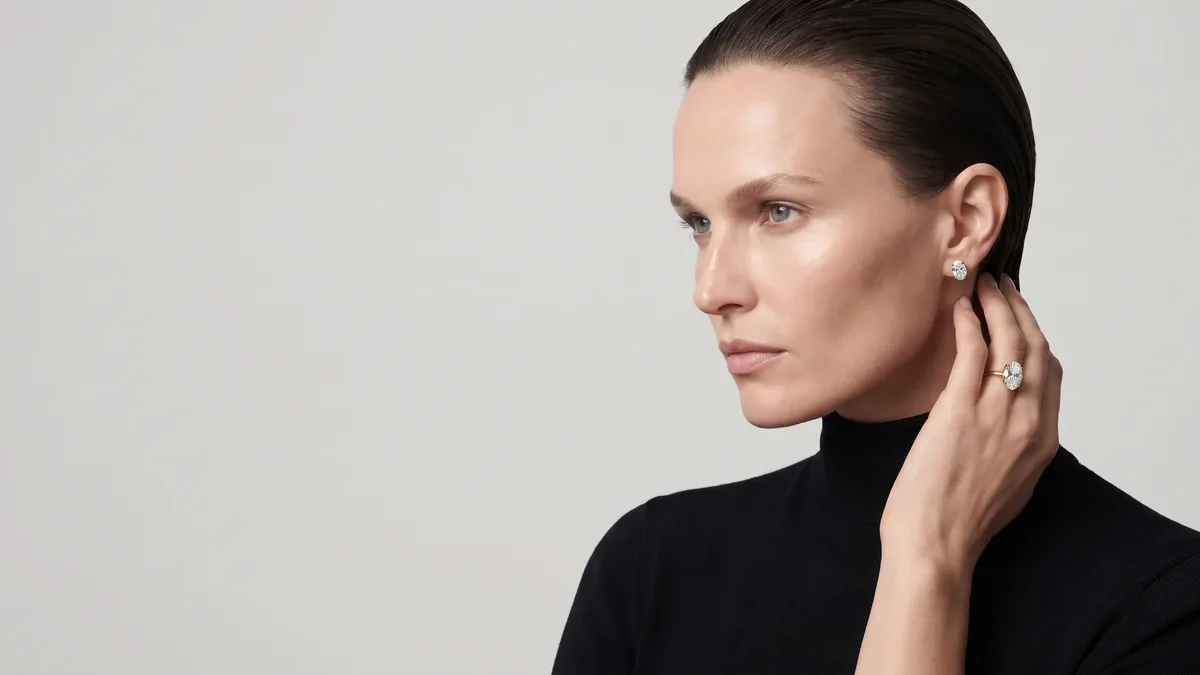
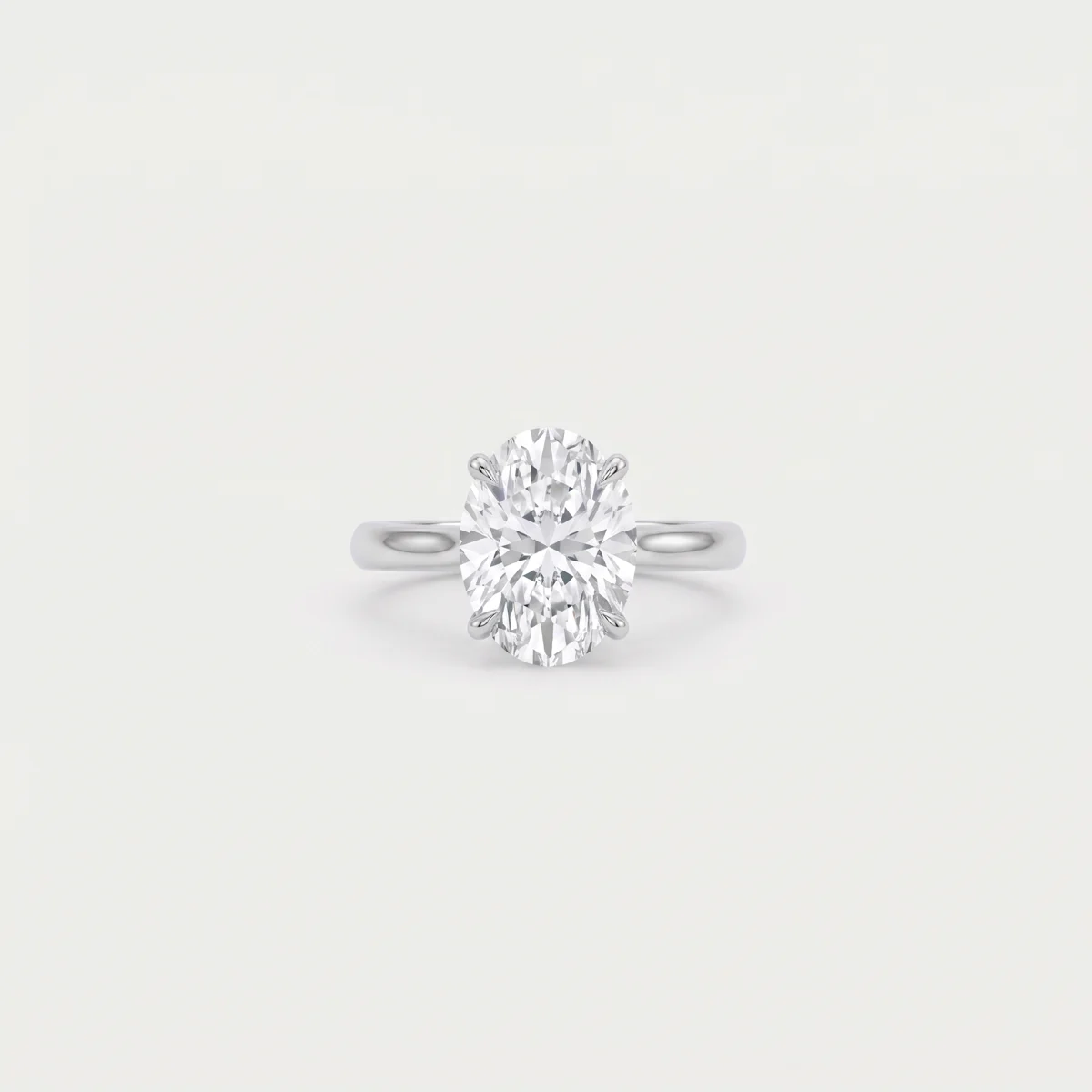
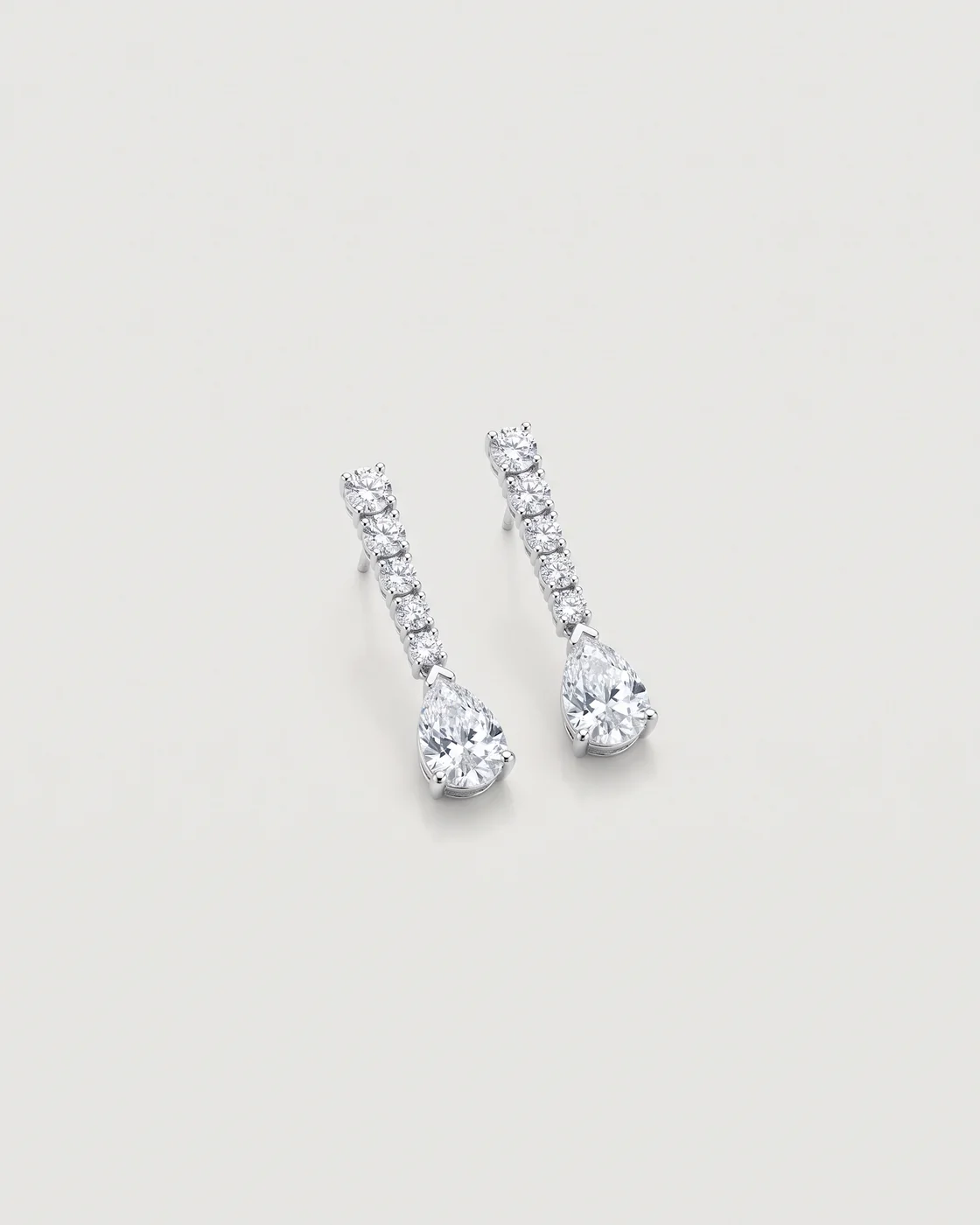
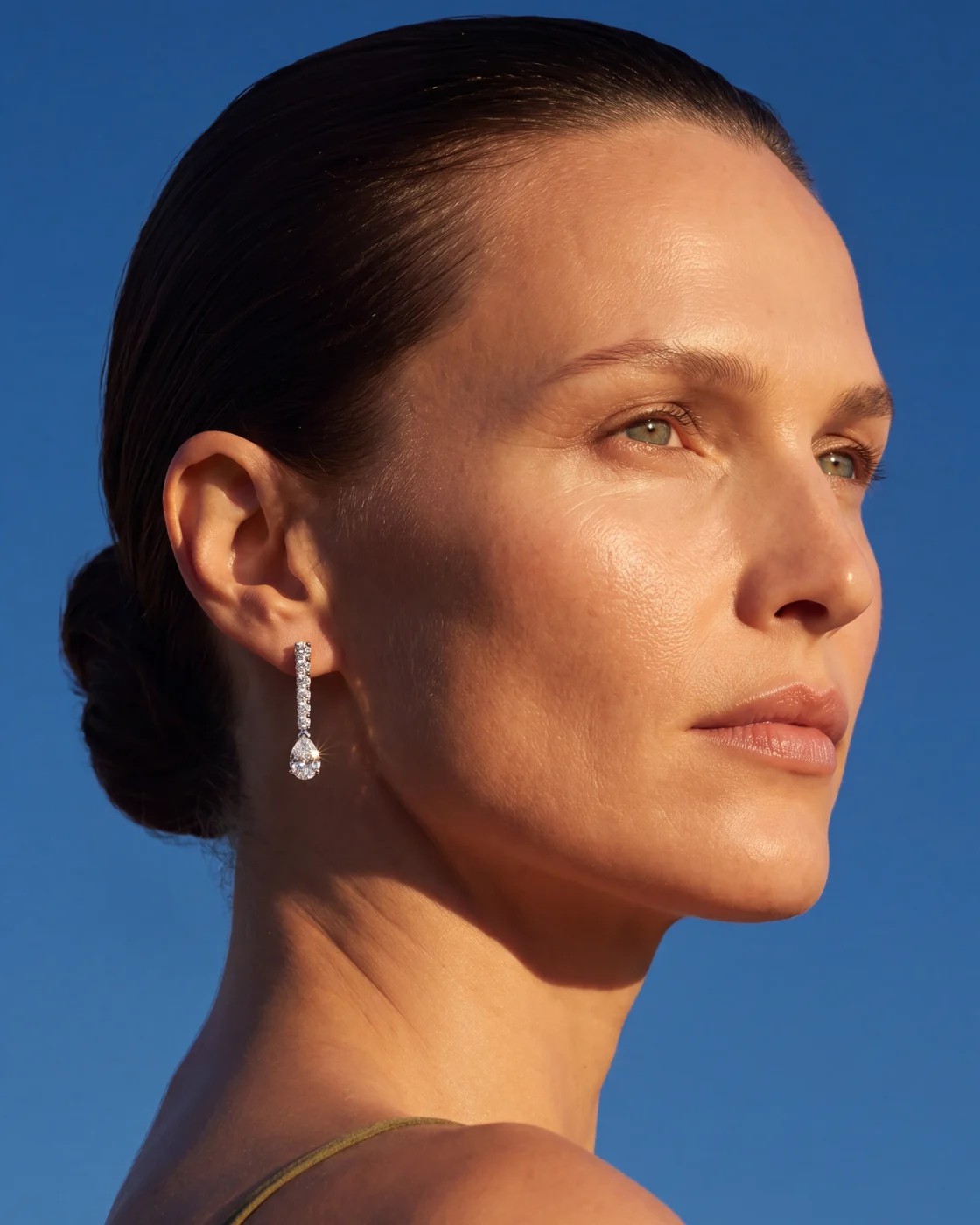
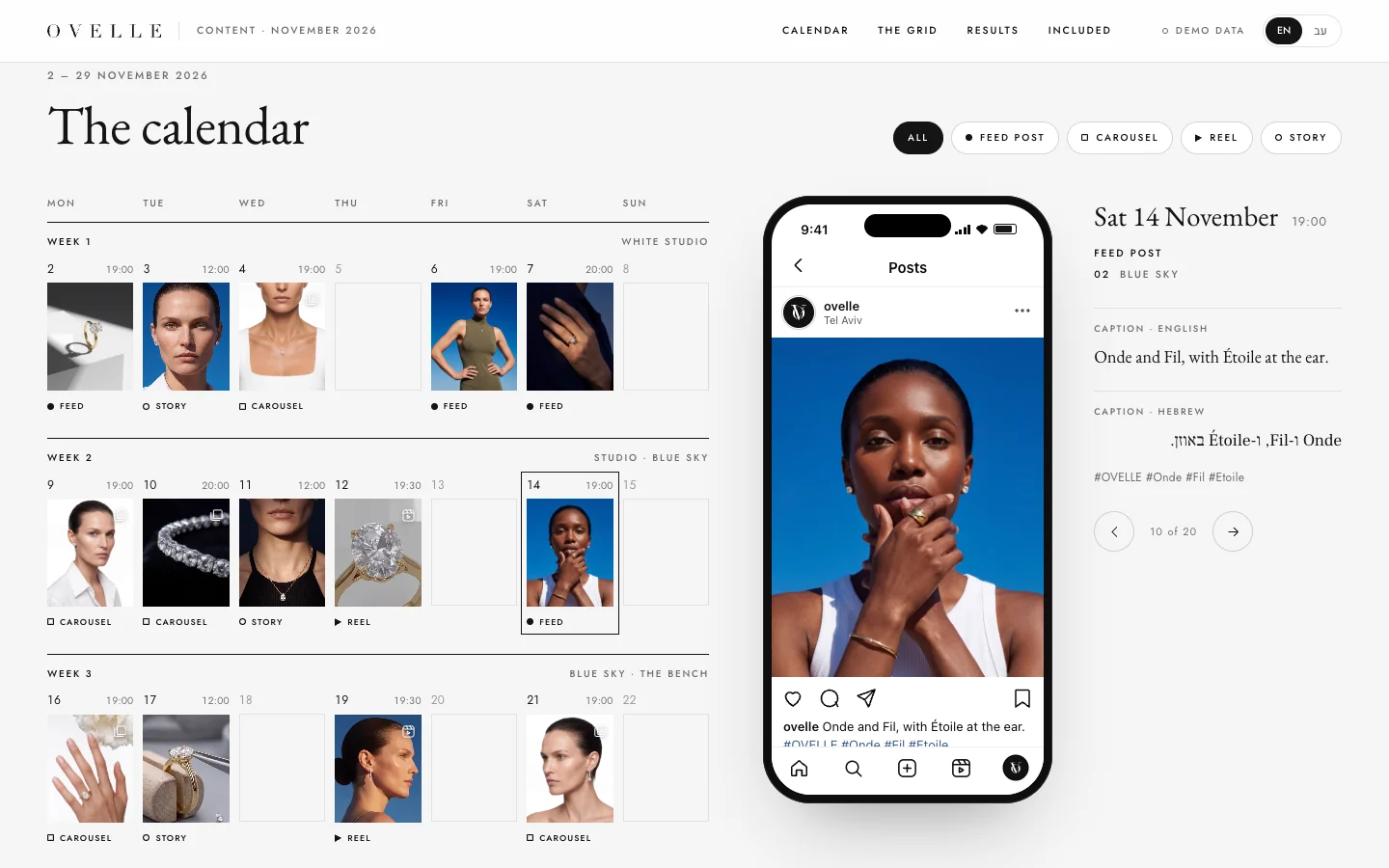
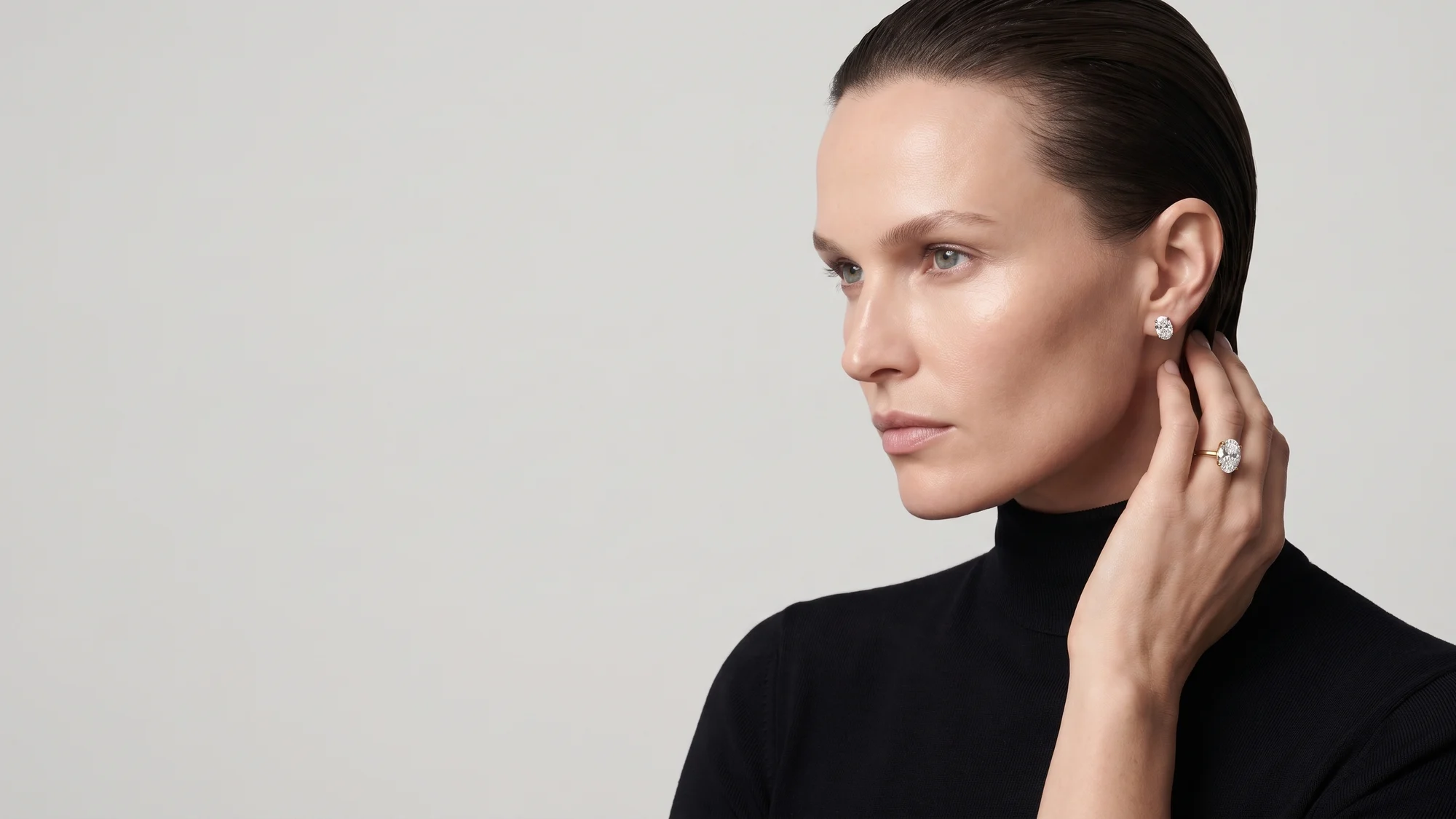
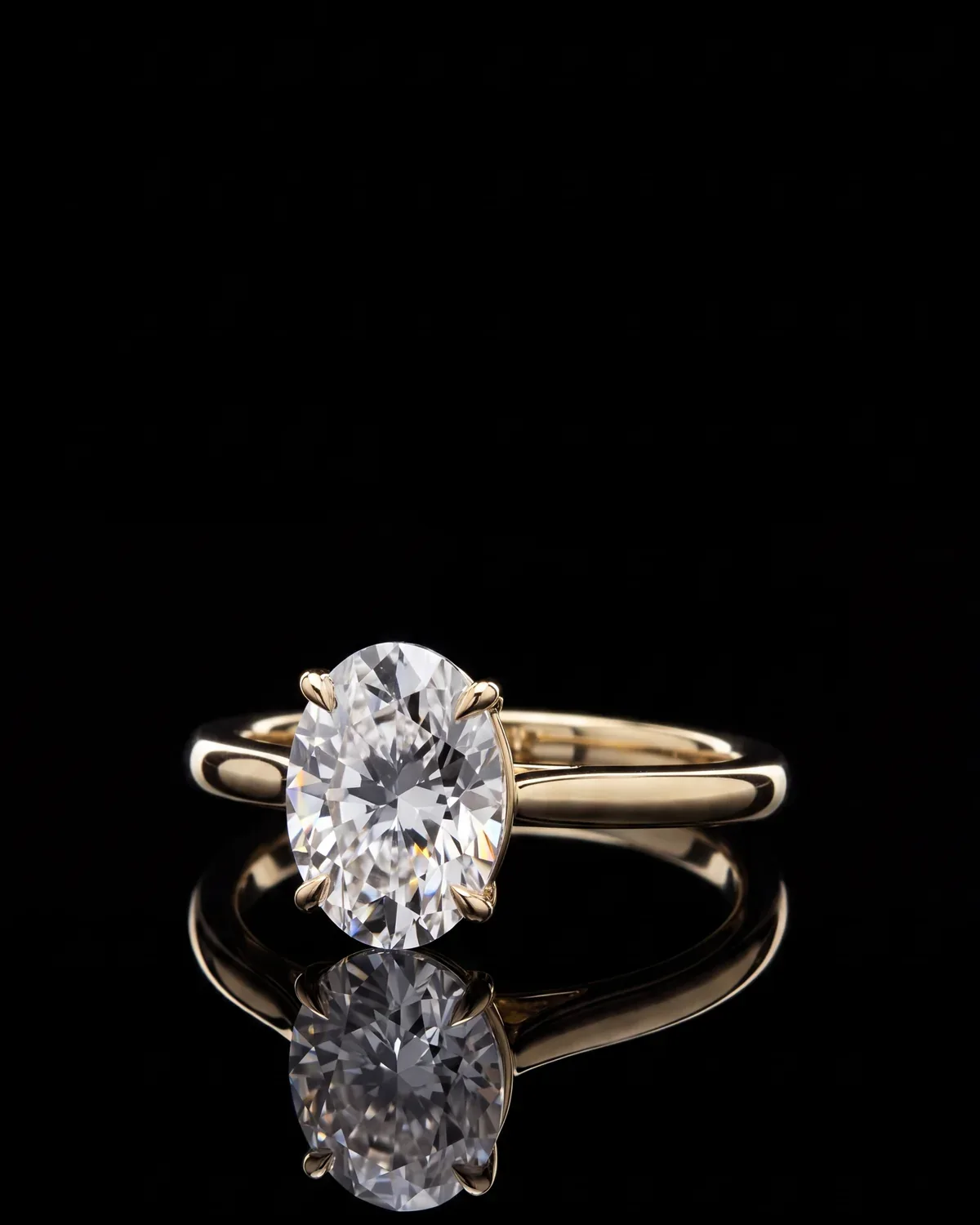
In the OVELLE store, a fictional jewellery house, every product is shown in the same setup: a light grey background, one angle and one light, like the earrings at the top of this page, so the collection page reads as one series. OVELLE’s monthly content shows the other side: the same products in lifestyle scenes, reels and stories. And the client workspace shows how images are approved with comments pinned to the picture itself. These are concepts we built with fictional businesses.
Product imagery at Libra
We produce product images for websites and stores, from photos of the real product to scenes and variations in AI, with one setup kept across the catalogue and delivery in the sizes your site, social channels and Google need. The work is described on AI content. For an exact price rather than a range, send a brief with your product list and images you like. We reply by email with a direction, a written price and a date.
No term matches.
Questions
How much does product photography cost?
There is no single price: it depends on the number of final images, the type of shoot (white background, lifestyle or on-model), the retouching level, usage rights and extras such as styling and location. To compare, ask each supplier for a price per final retouched image.
Is it better to pay per image or per day?
Per image suits a large catalogue of similar products on one background. A day rate suits lifestyle and model shoots. With a day rate, find out how many final images to expect and whether retouching is included.
How many photos does each product need?
It depends on the product: usually a main image plus a few angles and details, and for clothing an image on a person. Set a fixed number per product type in advance, so the catalogue is consistent and the quote is clear.
Who owns product photos after the shoot?
It depends on the country and the contract. In Israel, the creator of a commissioned work is the first owner unless agreed otherwise, and a transfer or exclusive licence must be in writing. Make sure the agreement states channels, duration and licence type.
Can AI replace product photography?
Partly. AI suits lifestyle scenes, settings and ad variations when it starts from real photos of the product. For packshots that must be faithful, and for details such as labels and settings, photography is safer, with every image checked against the product.
What size should product images be for Google Shopping?
Google Merchant Center requires at least 500 × 500 pixels and recommends around 1500 × 1500 or more, with no watermarks, promotional text or borders. For your own site, set the ratio and size by your template.
Getting started
Want this for your business?
Send a short brief: three required questions, the rest only if you like. We reply by email with a direction, a written price and a date.